

Audio By Carbonatix
A Frenchman who was sentenced to 20 years in prison in Mali for plotting an alleged coup in the West African country has now been granted a presidential pardon, it was announced on Thursday.
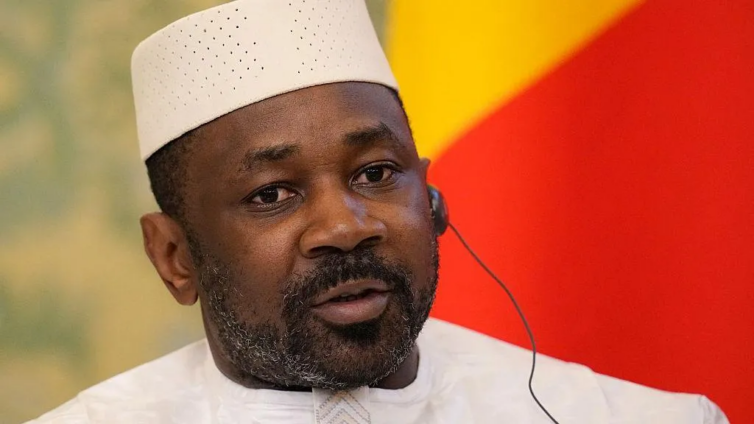
Yann Vezilier was accused a year ago of trying to destabilise President Assimi Goïta's government "on behalf of the French intelligence service" alongside a number of army generals and dozens of soldiers.
It is not yet clear what has prompted Mali's U-turn.
France's foreign ministry has yet to comment on the pardon, and previously said accusations that Vezilier was working in Mali as a French spy were "unfounded".
In a post on Facebook, the Malian government said: "This act of clemency, which does not call into question the facts established by an adversarial judgment rendered during a trial, where all rights of the defence were respected, is accompanied by the immediate removal of the individual from national territory."
Mali is a former colony of France, and has been gripped by a security crisis fuelled by an Islamist insurgency since 2012. It was one of the reasons given for Goïta leading a coup in 2021, but attacks by jihadist groups have continued and even increased.
At the time of the arrests last year, Mali's Security Minister Gen Daoud Aly Mohammedine said "fringe elements of the Malian armed security forces" had been detained for seeking to "destabilise the institutions of the republic".
"These soldiers and civilians" were said to have obtained "the help of foreign states", the minister said.
Vezilier was said to have acted "on behalf of the French intelligence service, which mobilised political leaders, civil society actors and military personnel" in Mali, according to the minister.
Political tension and the security crisis have worsened in Mali.
In April the country's defence minister was killed in an apparent suicide truck bombing on his residence near the capital, Bamako, during a wave of militant attacks. Goïta named himself defence minister shortly after, in an apparent attempt to consolidate his already considerable power.
When the capital came under siege by Islamist fighters, they managed to impose a partial blockade there and total blockades elsewhere, including the city of Ségou.
Last May, the junta dissolved all political parties following rare anti-government protests, which former Prime Minister Moussa Mara described as a severe blow to reconciliation efforts initiated by the military leaders.
Goïta had promised elections within two years of seizing power, but these have never been held.
Last July, the transition period was extended by five years, clearing him to continue leading the country until at least 2030.
Latest Stories
-
Anthropic seeks rehearing of case over Pentagon’s security risk branding
7 minutes -
NDC Deputy National Organizer Aspirant Hamza Umar targets grassroots mobilisation
52 minutes -
Partisan appointments won’t help restore trust in EC – Osae-Kwapong
3 hours -
Villarreal fight back to beat Napoli and end losing run
3 hours -
Tresoldi nets hat-trick as Club Brugge win Inter thriller
3 hours -
PSG’s Luis Enrique hopes Man City avoid sanctions
3 hours -
Lisandro Martinez issues scathing attack on Man Utd board – has he made things worse?
3 hours -
Saka responds to Arteta’s challenge with ‘huge impact’
4 hours -
Viking hold Bayern in thriller as Kane breaks Messi record
4 hours -
Gordon scores as Barcelona beats Galatasaray
4 hours -
Bumble bought for $1.3bn in ‘bet on the future of humanity’
4 hours -
Imagination Africa, Mentors Chess Academy to host second African Genius Chess Championship at Ghud Park
4 hours -
Paradigm Initiative steps up calls over digital rights, internet freedom in Africa
4 hours -
Saudi man charged with planting ‘sophisticated’ recording device in OpenAI office
4 hours -
Ghana wins UN Human Rights Council seat as calls grow for action against atrocities
4 hours