

Audio By Carbonatix
“Ghana’s main problem is not about the things we don’t know. It’s about the things we think we know which are not so”.
Ghana's roads are getting deadlier, not safer. The National Road Safety Authority (NRSA) reported 2,949 road crash deaths in 2025 - the highest toll in 35 years. This represents an 18.2% jump over 2024. Between January and August 2025 alone, 9,626 crashes were reported nationwide, involving over 16,000 vehicles and leaving nearly 2,000 people dead. Ghana's fatality rate now sits at nearly 26 deaths per 100,000 people - well above both the WHO African regional average of 19 and the global average of 15.
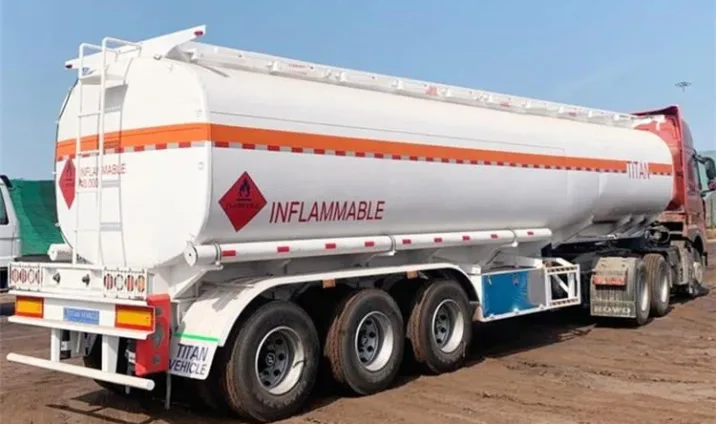
Heavy duty vehicles - fuel tankers, dump trucks, and articulated trailers, sit at the centre of this crisis. They are essential to Ghana's economy, moving fuel from refineries and depots, hauling gravel and laterite for the country's construction boom, and carrying freight along intercity corridors. But when they crash, the results are frequently catastrophic, and often for people who were never inside the truck at all.
Trailers, Tankers and Tipper Trucks
Heavy-duty trucks like tippers, tankers, and trailers rely on air brake systems rather than the hydraulic brakes found in ordinary cars. The reason for this compressed air brake system is due to the heavy cargo that these trucks carry. When these systems fail, the results are usually catastrophic given the vehicle's size and momentum. Air brakes work by using an engine-driven compressor to build pressurized air stored in cylinders.
When the driver presses the pedal, valves release that compressed air into brake chambers, which push pistons that activate the drum or disc brakes — a more complex chain of components than hydraulic systems, with more points at which something can go wrong. Common failure modes include leaks or blockages in the airlines that starve the brakes of pressure, overheated brakes from continuous heavy braking on long descents, incorrectly adjusted brakes that wear unevenly, and cracked or damaged brake drums. Repeated heavy braking at high speed can also cause "brake fade," where friction generates excessive heat, and the brake pads glaze over, sharply reducing stopping power — a particular hazard on hilly stretches where drivers ride the brakes continuously.
Overloading compounds all of these risks, since carrying weight beyond a truck's rated capacity places extra strain on the braking system and further diminishes its effectiveness, which is especially relevant for tippers and dump trucks routinely loaded with sand, gravel, or laterite beyond safe limits. Because a loaded heavy truck already needs far more distance to stop than a car, any degradation in braking capacity — whether from poor maintenance, a snapped air line, or glazed pads — can turn an ordinary need to slow down into an uncontrollable, high-speed collision, one frequently ending in a rear-end strike on stopped or slower-moving traffic ahead, given the crushing weight difference between a fully loaded truck and smaller passenger vehicles. This pattern shows up repeatedly on Ghana's roads.
Not long ago, an oil tanker overturned near Suhum, blocking the Accra-Kumasi highway. Out of the blue, a heavy-duty truck crashed into the tanker and other cars which were parked nearby, setting off an explosion and a fire.
In March 2026, a sand-laden tipper truck suffered brake failure on the Apire–Hemang stretch in the Ashanti Region, lost control, and crashed into two private vehicles, killing three people instantly, while a similar brake-failure crash near a UCC crossing sent a sand truck ploughing into two vehicles, a tricycle, and a pedestrian. In an earlier Kumasi incident, a truck driver admitted his brakes had failed a day before and were only partially repaired — the fix lasted just 300 metres before failing again, forcing him to steer into parked vehicles rather than a crowd of nearby shops.
A couple of weeks ago, a Tipper Truck rammed into a parked school bus with over 30 children on board near the Accra Mall. Several of the children lost their lives while several others sustained serious injuries. Within the same period, a similar fatal incident occurred at Ofankor on the Accra-Kumasi highway, killing about 12 people. Together, these cases point to the same underlying problem: heavy vehicles operating with brakes that were leaking, unbalanced, overheated, or inadequately repaired, often because routine air-brake maintenance is skipped or poorly executed until it fails at the worst possible moment.
Break-Failures Due to Leaking Brakes
Perhaps the most overlooked cause of road crashes involving heavy-duty trucks such as Tipper Trucks, tankers and trailers is that of leaking brakes. Some years back, I was involved in an accident at the Ofankor section of the Accra-Kumasi highway, in which a trailer smashed into the rear of my car twice. Only God knows how I survived that accident. This incident aroused a desire in me to investigate why these heavy-duty trucks keep crashing on our roads frequently. My personal research into these accidents involving this category of vehicles, from 2022 to date, uncovered that leaking brake systems contributed to about 90% of all such crashes.
These heavy-duty vehicles use compressed air stored in cylinders to operate large mechanical brakes. When the air pressure falls below 80 PSI (Pounds per Square Inch), the system becomes unsafe, and emergency brakes may engage. In reality, about 70% of these vehicles plying our roads are operating below 80 PSI.
Most heavy-duty vehicles plying our roads have leaking brakes. This makes it impossible to safely bring these trucks to a stop safely in emergency situations.
Causes of Brake Leakages
- Poor Maintenance – Most drivers and owners of these vehicles fail to carry out routine checks and repairs of the air cylinders and the valves that make up the braking system. As a result, a defect may not be discovered until the unfortunate happens.
- Postponement of Maintenance – A vast majority of drivers of Tipper Trucks and trailers are paid based on the number of trips made. This practice has created the situation whereby drivers ignore faults which they perceive to be minor, in order to prevent loss of earnings while the truck undergoes repairs.
- Tampering with braking system – Unqualified mechanics attempting repairs on such vehicles end up tampering with the air braking system, which leads to brake failures.
Recommendations
It is important to note that numerous factors contribute to accidents on our roads, and one cannot put the blame solely at the doorstep of heavy-duty trucks and their drivers. However, I believe the issue of leaking and faulty brakes accounts for a vast majority of accidents involving vehicles that use compressed air braking systems.
I would like to recommend that the Ministry of Transport, in collaboration with the MTTD and DVLA, formulate and implement a policy for mandatory periodic inspection of vehicles which use compressed air brakes.
-
Desmond Darko
(Author of “The Hidden Costs of Car Ownership”)
Latest Stories
-
AMA Mayor apologises to alleged extortion victim, orders refund
1 minute -
Akwatia MP defends GoldBod, says IMF report didn’t blame it for losses
4 minutes -
Building community after a merger: What UniMAC’s concord initiative can teach higher education
4 minutes -
UN security official meets GoldBod CEO Sammy Gyamfi
9 minutes -
Two detained after French influencer’s scorched body found in vineyard
10 minutes -
ORAL has been reduced to a tool for political convenience – Kwesi Botchway Jnr
11 minutes -
6 in 10 businesses fail to properly account for VAT – GRA
12 minutes -
US retail giant receives $1bn boost from tariff refunds
20 minutes -
Angélique Kidjo makes history for Africa with star on Hollywood Walk of Fame
20 minutes -
Know when to wait, verify and publish – GJA President tells journalist
36 minutes -
“If you think I’m a nobody, so be it” – Presidential aide responds after Disability Graduates reject petition handover
1 hour -
Rotary Club of Accra Ridge gets new president, vows to create lasting impact
1 hour -
GJA@77: Free press necessity for nation-building, not luxury – UNESCO Representative
1 hour -
‘No disrespect to Dr Ayeh but we demand engagement with senior government official’ – Graduates with disabilities
1 hour -
We can’t defend journalism’s credibility if journalists don’t uphold professional standards – GJA
1 hour