


Audio By Carbonatix
Merging institutions on paper is one thing. Building a community out of the people who inhabit those institutions is another. The University of Media, Arts and Communication (UniMAC) brings together three distinct institutes: the Institute of Journalism (IJ), the Institute of Film and Television (IFT), and the Institute of Languages (IL).
Each comes with its own history, disciplines, talents, experiences, and, inevitably, its own sense of identity.
But if we are to truly become one University, then our merger must mean more than sharing a name. It must also be reflected in how our students interact, collaborate, and see one another. That was the thinking behind Concord.
The idea
Concord was conceived through the Office of the Vice President of the UniMAC Students’ Representative Council with a simple objective: to turn our diversity into a source of collective strength. The inspiration was partly personal.
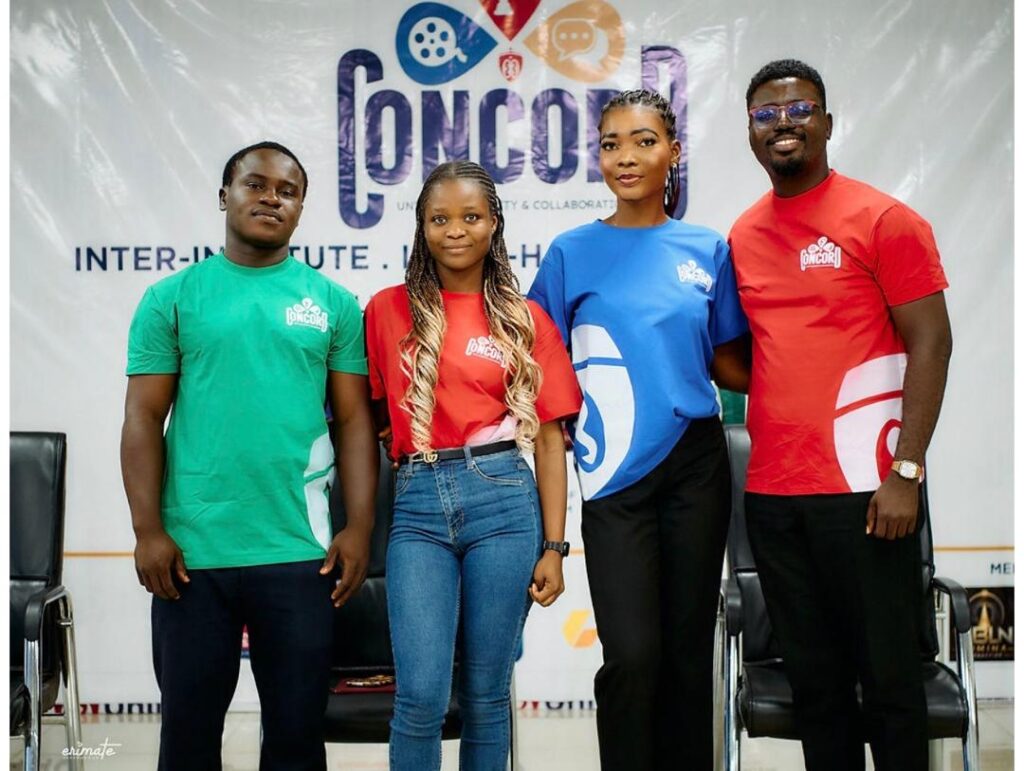
During my campaign for Vice President, I had to move across UniMAC’s various institutes, repeatedly introducing myself and building relationships in spaces where I had few existing connections. That experience taught me something. You can belong to the same University and still know very little about the people, disciplines, and experiences that exist on the other side of it.
A journalism student may know relatively little about the world of a film student. A film student may rarely have reason to interact meaningfully with a language student. And unless we deliberately create those encounters, students can complete their university journey having experienced only a fraction of the community to which they belong. I began to wonder: what could we build that would bring these worlds together? Concord became one answer.
Turning halls into bridges
As the first unified SRC, we also inherited an existing four-hall system: Osaagyefo Hall, Efua Sutherland Hall, Mandela Hall, and Yaa Asantewaa Hall. We saw an opportunity. Instead of allowing the halls to function merely as administrative or social structures, why couldn’t they become vehicles for integration? Students from IJ, IFT, and IL could belong to the same halls. They could compete together, solve problems together, and, in the process, learn about one another.
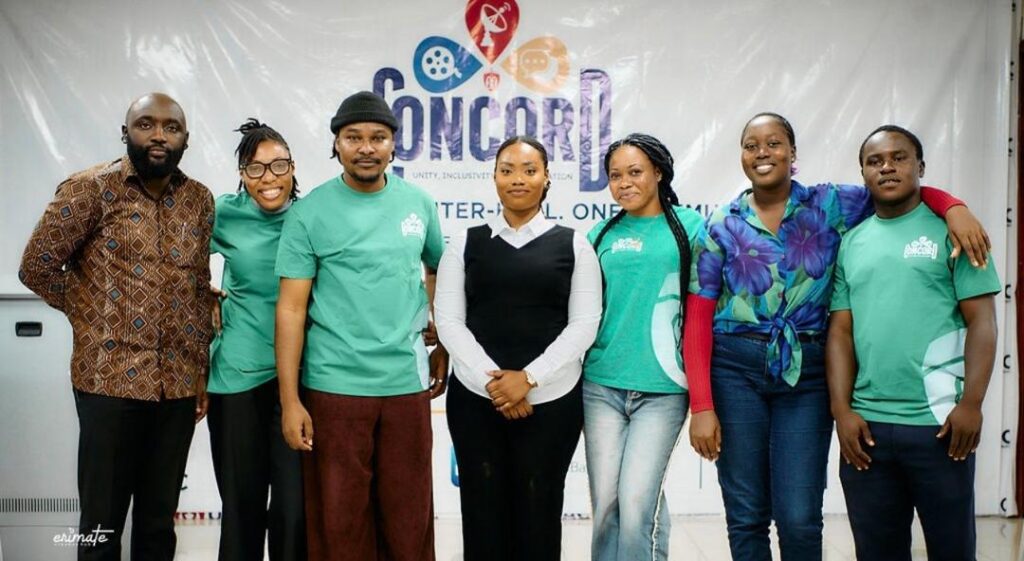
And so, Concord developed into a structured inter-hall academic competition.
Each of the four halls selected three students, with one representative drawn from each of UniMAC’s three institutes. The judging panel similarly reflected different areas of expertise. Students engaged across journalism, film, languages, debate, performance, and other creative and intellectual disciplines.
But winning was never the only point; the encounters were.
A filmmaker could encounter the perspective of a journalist. A language student could bring an entirely different dimension to a performance. Students from seemingly unrelated academic backgrounds could discover that their individual expertise became more valuable when combined with the expertise of others.
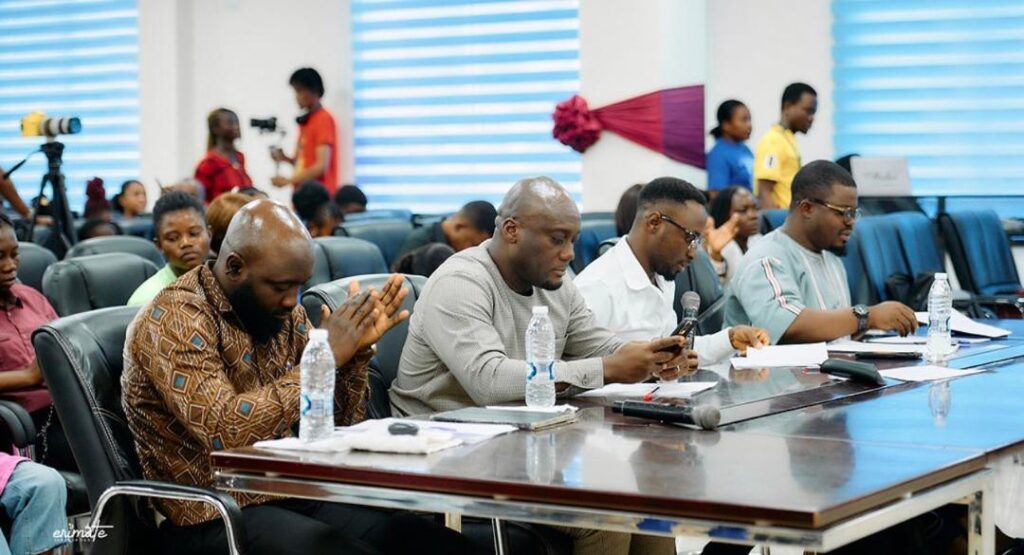
That principle of interdependence became the heart of Concord.
Building was the difficult part
Ideas are exciting when they exist in our heads. Building them is where leadership gets tested.
Concord was difficult.
Funding was one of our biggest challenges. We did not have unlimited resources, so priorities had to be established and alternatives explored. Our logistics and procurement teams had to be resourceful about securing what was necessary to execute the programme.
Responsibilities were also deliberately decentralised across publicity, logistics, public relations, social media and partnerships, while our external organisers, The Effect, contributed to the execution of the initiative.
There were moments when the difficulty of delivering what we had imagined became very real. But that experience reinforced something I have come to appreciate about leadership: leadership is not always about having everything you need. Sometimes, it is about discovering what can be built with what you have.
And we built.
When an idea becomes something people own
Perhaps one of the most encouraging outcomes was seeing students participate in something whose underlying purpose was bigger than the competition itself.
Concord contributed to increased participation and engagement within the hall system and exposed students to disciplines, talents, and perspectives beyond their immediate academic environments.
For me, that mattered.
Because integration cannot simply be announced by an institution. It has to be experienced by the people who make up that institution.
Students have to find reasons to cross boundaries.
They need spaces where an IJ student isn’t simply an IJ student, an IFT student isn’t simply an IFT student, and an IL student isn’t simply an IL student, but where all three can recognise themselves as part of something larger: UniMAC.
Concord gave us one such space.
And its success belonged to far more people than the office from which the idea originated.
It belonged to the students who participated, the teams who worked behind the scenes, the judges who shared their expertise, the various offices that supported us, our external organisers, and everyone who invested their time and belief in an idea whose outcome was never guaranteed.
To all of them, I remain deeply grateful.
Congratulations also to Ubuntu, Mandela Hall, for an outstanding performance, and to all participating halls and students whose creativity, determination, and collaborative spirit embodied what Concord sought to achieve.
Beyond Concord
The real test of an initiative like this is not whether people applauded when it ended.
It is whether something remains when the applause fades.
My hope is that Concord becomes bigger than the administration that conceived it.
Future student leaders should be able to inherit it, question it, improve it, and introduce dimensions that we never imagined. Future students should be able to enter UniMAC and find opportunities to build friendships and collaborations beyond the institutes in which they study.
Because there is a larger lesson here, not only for UniMAC but perhaps for institutions attempting to bring different communities together.
Structural integration does not automatically produce human connection.
You can merge institutions, departments, and systems, but people still need reasons to trust one another, learn from one another, and build together.
Those bridges must be intentionally created.
Concord was our attempt to build one.
It was difficult. It was demanding. It was imperfect.
But it demonstrated what becomes possible when people choose collaboration over separation.
We may come from different institutes, disciplines, and backgrounds, but our differences do not have to become boundaries.
They can become resources.
They can enrich our ideas.
They can deepen our understanding of one another.
And when deliberately brought together, our diversity can become our strength.
That, ultimately, is what Concord means to me.
Milady Olanda Micaiah is the Vice President of the Students’ Representative Council of the University of Media, Arts and Communication (UniMAC). Concord is an initiative of the Office of the Vice President through the UniMAC SRC.
Latest Stories
-
New York Times executive fatally shot allegedly by elderly in-laws
2 hours -
Teacher Payment Crisis: GES races to protect academic calendar
2 hours -
US prosecutors reopen case of alleged gang rape at Cornell University
2 hours -
Journalist to be crowned king in Uganda after bitter succession dispute
2 hours -
OpenAI scraps rollout of new model over safety concerns
3 hours -
Nigerian attempts to break world record by dancing non-stop for seven days
3 hours -
GES urges government agencies to end blame game over teacher payments
5 hours -
GES sets Oct. 5 deadline to resolve teachers’ payment dispute
5 hours -
GES working around the clock to get teachers back to class, says Daniel Fenyi
5 hours -
French PM warns against escalation of school protests after 164 arrested
6 hours -
UK tries to stop Trump’s diesel export ban
6 hours -
Late Olise goal gives France win over Belgium
6 hours -
Mancini enjoys first win since return as Italy boss
6 hours -
Interest payments to average a high 20% of government revenue over next 4 years
6 hours -
Anthropic warns AI may pose ‘existential risks to humanity’ in IPO filing
6 hours