

Audio By Carbonatix
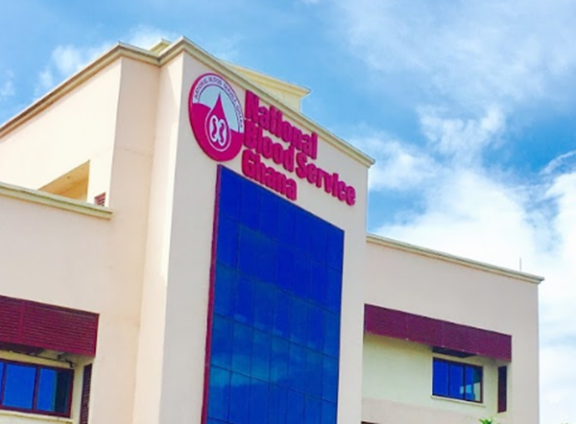
The National Blood Service, Ghana (NBS), has issued a correction over what it describes as “scientifically inaccurate” claims linking ejaculation and sexual activity to significant blood loss.
In a release dated August 20, 2026, signed by the Chief Executive Officer of the National Blood Service, Dr (Med) Shirley Owusu-Ofori, the NBS said the claims were medically inaccurate and risked misleading the public on critical health matters.
The NBS said its attention had been drawn to a Prime Morning discussion on Joy Prime aired on November 8, 2022, which was subsequently followed by a JoyOnline Health publication titled “Have sex twice every week - Health expert urges men".
According to the NBS, a guest on the programme, Dr Charity Twumasi, CEO of Chartma Herbal Health Centre, claimed that a single ejaculation released “400 million cells” and equated the volume of seminal fluid to “one pint of blood".
The NBS also said the guest asserted that regular sexual intercourse could result in life-threatening blood loss.
The NBS rejected those claims, describing them as scientifically inaccurate and potentially harmful to public understanding of blood donation, sexual health and prostate-related conditions.
‘Semen and blood are entirely separate fluids’
The NBS explained that semen and blood are produced by different anatomical systems and are not interchangeable.
It said semen consists of spermatozoa, seminal plasma, proteins and enzymes produced by the seminal vesicles, prostate gland and testes, while blood remains within the body's circulatory system.
The NBS further disputed the comparison between the volume of an ejaculation and a pint of blood.
It stated that a typical ejaculation contains millions of microscopic sperm cells, but the total volume of seminal fluid is usually between 2 and 5 millilitres.
By comparison, one pint of blood is approximately 473 millilitres, making the comparison between the two volumes, according to the NBS, “mathematically and biologically impossible".
‘Zero blood loss’
The NBS also rejected the suggestion that ejaculation causes depletion of the body's blood supply.
“No Circulatory Depletion: Blood is contained strictly within the circulatory system. Ejaculation does not deplete, draw from, or impact systemic blood volume. Standard sexual activity causes absolutely zero blood loss,” the service stated.
It warned that the spread of such claims could generate unnecessary fear and reinforce misconceptions about sexual and prostate health.
The service said such misinformation could also have wider public health consequences by confusing the public about how blood volume is lost or replenished, potentially undermining voluntary blood donation campaigns.
Latest Stories
-
I’ll work tirelessly with Bawumia to return NPP to power in 2028 – Paul Afoko
24 seconds -
Dismissal of our plea for adjournment strange – Adu Boahene’s cousel
1 minute -
Vigilantism threatens democracy, not individual political parties – Gbevlo-Lartey
3 minutes -
Ghana’s online passport application platform restored after technical disruption
11 minutes -
Moreshet Foundation, Canva Africa train Ghanaian youth in digital skills
23 minutes -
Falling inflation doesn’t mean lower prices – TUC official
29 minutes -
Hopeson Adorye calls for one-year mining ban as abandoned galamsey pits claim 23 lives in Ashanti Region
33 minutes -
Adu Boahene trial: Refusal to halt proceedings despite repeat injunction application unfortunate – Atta Akyea
35 minutes -
Gov’t unveils National Workplace Compliance and Safety Management System
40 minutes -
Judge NPP chairmanship candidates on merit, not geographical grounds – Paul Afoko
42 minutes -
IMANI calls for shift from natural resource dependence to diversified economy
54 minutes -
Development must not restart after every change of government – Dr Amoakohene
54 minutes -
I’ll be chairman for every NPP member, not one faction – Paul Afoko
1 hour -
GRA lists used fridges, air conditioners and underwear among prohibited imports
1 hour -
‘Ejaculation does not cause blood loss’ — National Blood Service corrects misinformation
1 hour