

Audio By Carbonatix
The government has introduced the National Workplace Compliance and Safety Management System (NWCSMS) to modernise compliance administration at the workplace and strengthen occupational safety and health standards across Ghana.
The initiative is expected to transform the country’s largely manual and fragmented workplace compliance system into an integrated, risk-based, data-driven and technology-enabled framework for workplace registration, inspection, enforcement, reporting and stakeholder engagement.
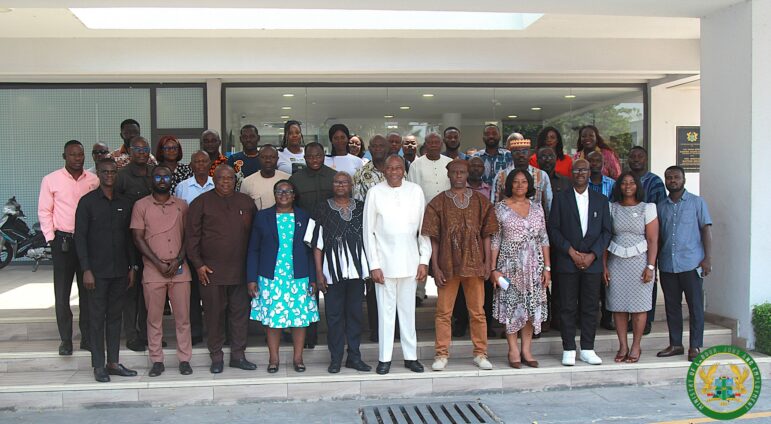
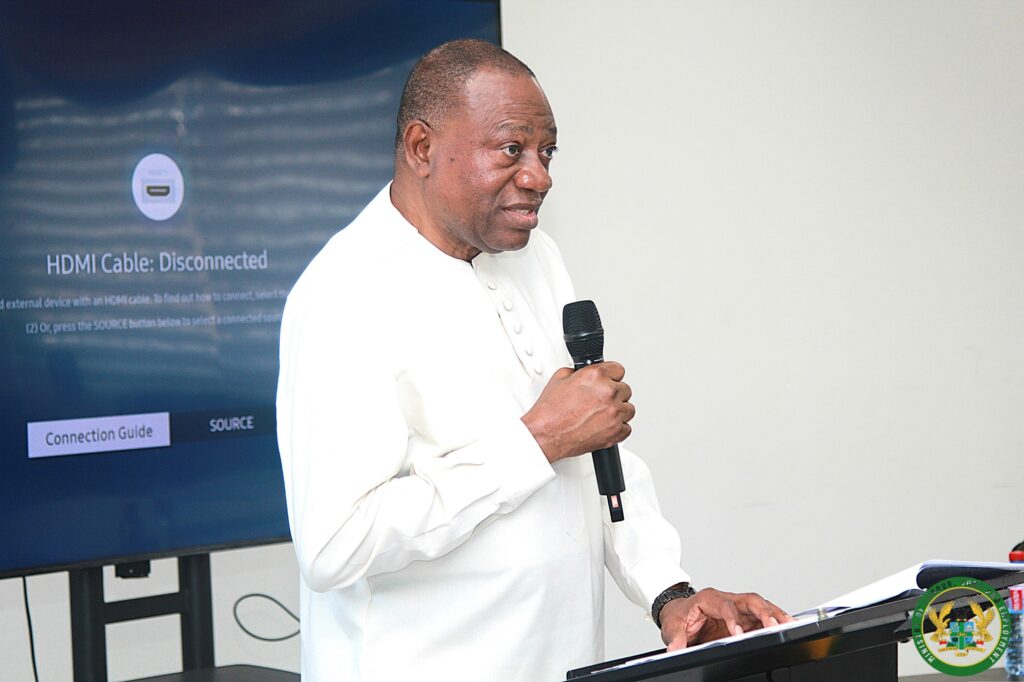
The Minister of Labour, Jobs, and Employment, Dr Abdul-Rashid Pelpuo, speaking at a stakeholder meeting on the introduction of the project, said the initiative formed part of government’s broader commitment to decent work, productive employment and safe and healthy workplaces.
The Minister stressed that decent work, occupational safety and health, productivity and sustainable economic development were mutually reinforcing, noting that a productive economy could not be built on unsafe workplaces.
Dr Pelpuo said Ghana had made progress in labour administration and occupational safety and health, but changing patterns of work, rapid technological development, the expansion of the informal economy, and new occupational risks required continuous modernisation of regulatory and institutional systems.
The initiative was also designed to address longstanding challenges in workplace compliance administration, including inadequate and fragmented workplace data, difficulties in maintaining an accurate national profile of workplaces, among other things.
He said the system would also address challenges in monitoring compliance and enforcement actions, limited access to timely compliance information, inadequate institutional and regional infrastructure, and weak coordination among institutions responsible for workplace safety and labour compliance.
“The objective is not simply to introduce a digital platform. It is to transform the way workplace compliance is managed, monitored and enforced in Ghana,” Dr Pelpuo said.
At the centre of the project was the strengthening of the Department of Factories Inspectorate (DFI), responsible for administering and enforcing occupational safety and health standards within its mandate.
The Minister said the project would support the DFI with improved workplace profiling and registration, risk-based inspections, field inspection logistics, inspectorate tools and personal protective equipment, compliance monitoring and institutional coordination.
The reforms are expected to allow inspectors to focus increasingly on high-risk workplaces and areas where non-compliance could pose significant threats to workers and the public.
He called on organised labour, employers, government institutions, professional bodies, development partners and private-sector actors to take ownership of the initiative and participate actively in its implementation.
Dr Pelpuo cautioned that technology alone would not guarantee the success of the project, saying institutional, organisational and human resource reforms would also be required.
These include reviewing organisational structures, strengthening regional operations, defining responsibilities, developing standard operating procedures, training personnel and establishing effective monitoring and accountability mechanisms.
Chief Director of the Ministry, Hamidu Adakrugu, urged participants to identify implementation risks, refine the proposed system, clarify institutional responsibilities and propose practical solutions to ensure that the initiative improved regulatory efficiency.
Latest Stories
-
Self-reliance driving Rwanda’s governance and service delivery — Paul Kagame
4 minutes -
NSMQ 2026: One-Eighth stage beckons as 81 schools chase national glory
7 minutes -
UCC launches Africa Ocean Institute to tackle growing coastal challenges
7 minutes -
George Dela Coffie elected Ghana YMCA National President
13 minutes -
Prudential Bank’s CIO calls for AI literacy and human‑centred skills at Ghana AI Summit
15 minutes -
Ghanaian politicians, wake up: The old communication playbook is obsolete
16 minutes -
Invincible Lives: 13-year-old Emma dreams of school but poverty forces him to beg for survival
18 minutes -
I’m not on NDC gov’t payroll; my work is sacrifice for nation-building – KSM
34 minutes -
IMF programme ends, Policy Partnership begins: Ghana’s next economic chapter
42 minutes -
EV boom: Ghana moves to standardise charging infrastructure to protect power grid
43 minutes -
See 3D photos of multi-purpose car park, hotels project at Accra International Airport
46 minutes -
I’ll work tirelessly with Bawumia to return NPP to power in 2028 – Paul Afoko
47 minutes -
Dismissal of our plea for adjournment strange – Adu Boahene’s cousel
48 minutes -
Vigilantism threatens democracy, not individual political parties – Gbevlo-Lartey
49 minutes -
Ghana’s online passport application platform restored after technical disruption
58 minutes