

Audio By Carbonatix
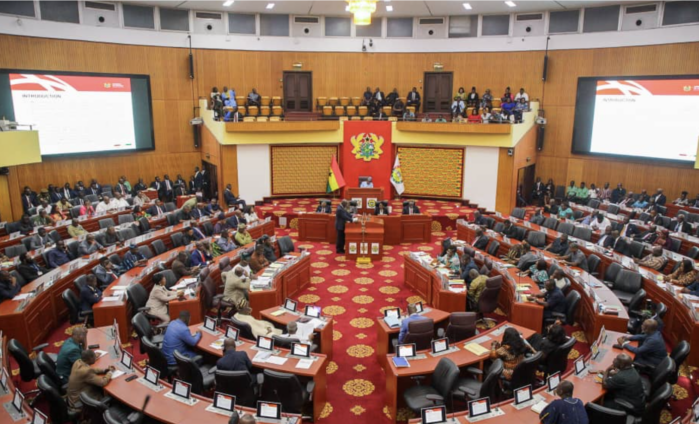
Democracy and Development Fellow with CDD-Ghana, Dr John Osae-Kwapong, has warned that continued allegations of misconduct involving MPs could further erode public confidence in Parliament and weaken its ability to perform its constitutional role.
Speaking on Joy News’ PM Express on Tuesday, Dr Osae-Kwapong said the issue should not be viewed solely through the lens of individual actions.
He said it raises broader questions about how Ghanaians perceive Parliament as the key representative institution in the country’s democratic system.
“Evans, as you rightly frame it, when you look beyond the individual that has triggered this broader conversation that we are having, it really goes to the heart of how we perceive the institution of Parliament, the key representative institution of the people,” he said.
Dr Osae-Kwapong pointed to public opinion data showing that Parliament is already facing significant challenges regarding trust and perceptions of corruption.
“When an institution like Parliament is facing what I call a crisis of confidence, very low trust and high perceptions of corruption, when these things come out, and they are alleged, right? Because at this point they are allegations,” he stated.
He said the allegations could reinforce existing negative perceptions about Parliament, particularly among citizens who already have concerns about the institution.
“But when these allegations emerge, what they do is, in the eyes of the public, it goes to reinforce an already held perception about the country’s key democratic representative institution in our democracy architecture.”
His comments come amid the public dispute involving Minority Leader Alexander Afenyo-Markin and GoldBod Chief Executive Officer Sammy Gyamfi.
Mr Gyamfi accused Mr Afenyo-Markin of being an “extortionist” and alleged that the Minority Leader was among critics seeking to pressure GoldBod.
Mr Afenyo-Markin rejected the allegations and threatened legal action, escalating the dispute into a public and legal confrontation.
For Dr Osae-Kwapong, however, the bigger concern is the possible institutional damage if such controversies continue to undermine public trust.
“And when that confidence and that trust continues to erode, a time would come where citizens may lose total faith in, you know, that institution,” he warned.
He said such a development would have serious implications for Ghana’s democracy because Parliament is expected to perform crucial functions on behalf of citizens.
“And that doesn’t augur well for our democracy, for those that you expect, for example, to hold the executive accountable, to provide oversight, to make laws on our behalf, etc., etc.”
Dr Osae-Kwapong said this is the central concern arising from the allegations, particularly at a time when Parliament’s standing among citizens is already weak.
“So, for me, that is really the worrying thing about these allegations: what it does to Parliament itself as an institution at a time when it is already not in good standing in the eyes of the public.”
Latest Stories
-
Fidelity Bank completes renovation of multipurpose auditorium at Police Public Safety Training School
12 minutes -
Oil prices slide 2% on Iran-Oman talks to reopen Strait of Hormuz
19 minutes -
Telecoms operator MTN eyes banking licences as it pushes deeper into lending
26 minutes -
Show us how allegations involving MPs end – Dr Dramani demands clear path from probe to resolution
34 minutes -
Mass arrests in global crackdown on West African cyber-crime networks
49 minutes -
Ethiopia submits official bid to host Afcon 2028
57 minutes -
We need leaders with integrity – Dramani warns supermajority Parliament over Afenyo-Markin allegations
1 hour -
Parliament scrutinises govt but cannot scrutinise itself – Dramani challenges MPs to apply their own standards
1 hour -
Partisan solidarity overrides accountability – Dr Dramani accuses Parliament of protecting its own
2 hours -
This goes beyond Afenyo-Markin – CDD warns fresh allegations could damage Parliament
2 hours -
Parliament is in crisis of confidence – CDD’s Osae-Kwapong warns fresh allegations could ceepen public distrust
3 hours -
Nigeria’s president orders rescue after mass kidnapping exposes security failings
3 hours -
Meta, US states have discussed settling teen social media harm case, Bloomberg News reports
3 hours -
All the best Savinho – welcome Savio… new club, new name for Spurs signing
3 hours -
Baleba completes £70m Man Utd move from Brighton
3 hours