

Audio By Carbonatix
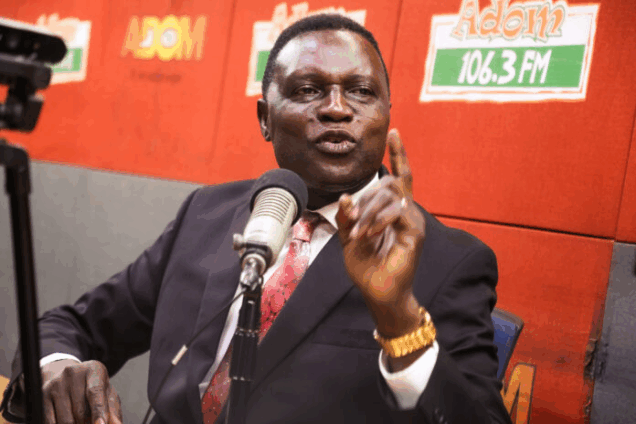
Former Education Minister, Dr Yaw Osei Adutwum, has clarified that the introduction of the double-track system in Senior High Schools (SHSs) was primarily intended to address high demand for places in popular schools, rather than a shortage of physical infrastructure.
Speaking on JoyNews’ The Pulse on Wednesday, September 9, Dr Adutwum explained that the policy was based on research which suggested that simply constructing new schools would not necessarily make them as attractive to parents as the already established Category A schools.
“The approach was very simple. What we mean, and based on research, was that just building a new school was not going to make it a Category A school that was highly desirable by parents,” he said.
According to him, not all schools were placed on the double-track system because of inadequate space.
“One of the things people may not know is that, in the case of the Ghanaian year-round schools, or what is called double-track, it wasn't created for lack of space in all schools,” he explained.
Dr Adutwum noted that a significant number of schools were not included in the system because they did not face the same level of demand.
“There are a number of schools that were not part of the double-track. About 40 percent of the schools that we began the double-track system in were not double-track schools. They continued to be single-track because they were not high-demand schools,” he said.
“Double-track was to solve a demand problem. It solved that.”
He cited the increased number of students gaining admission to high-performing schools such as Presbyterian Boys’ Secondary School (PRESEC) as one of the outcomes of the policy.
“If you look at the fact that the number of students who were able to get to PRESEC within a period of about eight years under us, every year you're getting 500 more students having quality PRESEC education that they couldn't have had,” he said.
The former Education Minister also argued that the increased enrolment of students in high-performing schools contributed to improved academic outcomes.
“When our test scores improved, some people did not also avert their minds to the fact that if more students are going to high-performing schools, then your test scores are going to be better,” he said.
He explained that students who gained access to schools such as PRESEC had significantly improved chances of achieving strong grades.
“When they go to PRESEC, they have a 97% chance of getting A1 to C6. Consequently, they are getting better opportunities,” he added.
Dr Adutwum further highlighted the experiences of students from communities who gained access to some of the country's leading schools, describing such opportunities as transformative.
“So, for a parent whose child went to Achimota, for the girl from Chira whose chief had to bring a delegation with her to Achimota, it's an opportunity of a lifetime, an opportunity they wouldn't have gotten, the community wouldn't have gotten, had it not been for double-track,” he said.
Latest Stories
-
Brent crude oil rises above $100 a barrel as Middle East conflict intensifies
5 minutes -
59,300 students receive GH¢210m in enhanced student loans – SLTF
11 minutes -
Trump gave $45,000 cash gifts to close aide Natalie Harp and others
12 minutes -
Beauty Kabukie Apedoe appointed CEO of Inter Tourism Expo Accra
37 minutes -
New Ghanaian movie ‘Two’ to explore crime, faith and moral ambiguity
43 minutes -
Indo-Ghana begins local liquid oxygen supply
43 minutes -
Atwima-Techiman residents decry poultry farm nuisance as assembly sues farmer over siting of farm
50 minutes -
Vice President urges Catholic youth to promote peace and prosperity across West Africa
51 minutes -
Double-track was about demand, not lack of space in all schools – Adutwum
58 minutes -
Adutwum proposes subject resits, transcript system for secondary schools
1 hour -
Teacher retraining needed to tackle social media jargon in WASSCE – Adutwum
1 hour -
Free SHS Secretariat official denies bribery allegations at Kumasi CSSPS Resolution centre
1 hour -
NPP Executive Elections: Full list of candidates and their ballot positions
1 hour -
SHS Assistant Heads demand payment of transfer grants and responsibility allowances
1 hour -
MTN, Telecel, Goal Telecom qualify for next stage of NCA spectrum auction
1 hour