

Audio By Carbonatix
A Nunyãdume Reflection on BECE and the Education System
In Nunyãdume, children travelled for nine years before reaching the gate of the Senior House.
Along the road stood teachers, headteachers, supervisors, inspectors, curricula, examinations, ministries and policies.
Some children struggled with words from the early years. Others wrestled with numbers. Yet year after year, the bell rang, they were promoted, and the journey continued.
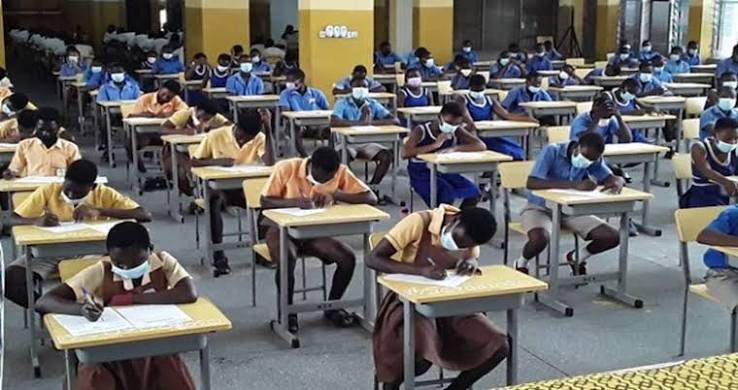
Then, in the ninth year, came the Great Examination.
One morning, the town crier announced:
“About fifty-five thousand children cannot enter the Senior House because they failed Mathematics or English.”
The village was disturbed. Some blamed the children. Others blamed parents, mobile phones, and falling standards. But the Old Teacher asked:
“When did fifty-five thousand children first begin to fall behind?”
Nobody answered. “And when we discovered it, what did we do?” The courtyard became quiet. For suddenly, it was not only the children who were being examined.
Nunyãdume itself had entered the examination hall.
The Stammering Linguist then remembered a famous photograph from a distant land. It showed a desperately vulnerable child on the ground, with a vulture nearby. The photograph received worldwide recognition, but it also provoked an enduring moral question about the responsibility of the person behind the camera towards the suffering being recorded.
“Our examinations are excellent cameras,” the Linguist said. “They can photograph educational weakness. They can tell us who obtained One, who obtained Nine, who may proceed and who must remain outside.” Then he asked:
“But if, after nine years, our greatest achievement is accurately measuring that fifty-five thousand children have not acquired essential competencies, have we educated them or merely photographed their failure?”
A camera may record a problem without being responsible for solving it. An education system cannot claim the same innocence. When a laboratory detects severe anaemia, the result does not end the consultation; it begins it. The physician asks what kind, why, and what can be done. Why, then, should education diagnose a child's weakness only to close the gate?
Where was the early detection? The targeted literacy and numeracy remediation? The support before weaknesses accumulated for nine years? And now that the gate has closed, where are the bridging programmes, remediation, reassessment and alternative pathways? This is not an argument for lowering standards. It is an argument for taking standards more seriously.
If Mathematics and English are important enough to stop a child's progression after nine years, they are important enough to trigger intervention long before the ninth year.
Perhaps, therefore, the most important question arising from the Fifty-Five Thousand is not:
“Why did these children fail?” It is:
“How did so many children travel through years of basic education before the system decided their learning deficits were serious enough to stop their progression?”
The Fifty-Five Thousand are not merely a statistic. They are a photograph of our education system. And when the photograph reveals something disturbing, wisdom demands more than blaming those inside the picture.
As darkness fell over Nunyãdume, the Stammering Linguist struck his staff upon the earth:
“When one child stumbles at the ninth bridge, examine the child. When fifty-five thousand stumble at the same bridge, examine the bridge, the road, and those who built them.”
For ultimately, the camera was never sent to school.
The child was.
Nunyãdume has spoken.
Latest Stories
-
Conviction should not be required to recover unexplained wealth – Agyebeng
1 minute -
Persistent SOE losses will no longer be absorbed by national budget – Mahama
4 minutes -
CAF CC: ‘Nations FC will do much better than we did in Mali’ – Dennis Korsah
16 minutes -
Digital fraud incidents rise 98% between 2022 and 2025 – BoG
30 minutes -
Only 72 of 148 state entities signed performance contracts in 2025 – SIGA
33 minutes -
38 African scientists, 17 global experts storm Kumasi as KNUST opens GPOL optics hub
36 minutes -
Forged certificate scandal in security recruitment poses grave threat to national stability – Jatikay Centre
47 minutes -
UK deepens reliance on Musk’s SpaceX, spending nearly $40 million on satellite services
1 hour -
Anti-corruption fight going nowhere without institutional independence – Kissi Agyebeng
1 hour -
Minority demands documents to account for GH¢49.7m South Africa evacuation cost
1 hour -
Iceland to propose whaling ban, leaving Norway and Japan isolated
1 hour -
‘Significant casualties’ after fire on cargo ship in eastern China
1 hour -
Ghana must build a national reading culture to drive knowledge economy—Educationist
1 hour -
When fifty-five thousand children fail, who else has failed?
1 hour -
Russian drone incursion delays Zelensky flight
1 hour