

Audio By Carbonatix
The Ghana Revenue Authority (GRA) has reiterated that there is no law limiting travellers entering Ghana to two duty-free mobile phones.
The Authority says Customs officers instead assess whether the phones and other goods being carried are genuinely for personal use or are effectively commercial imports.
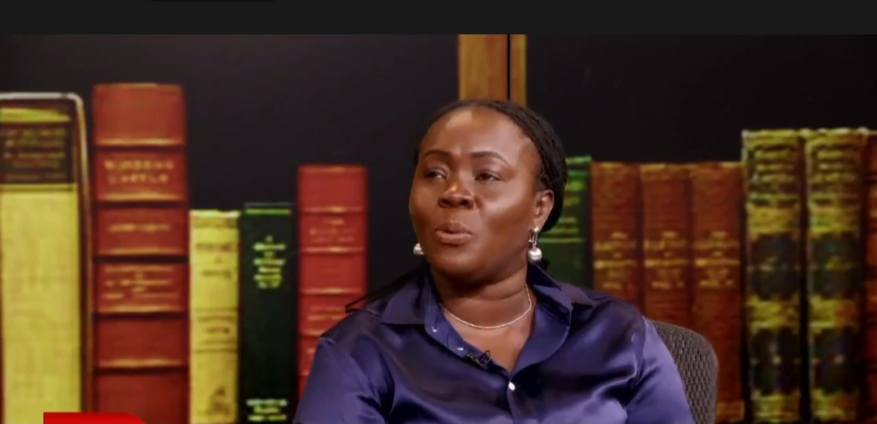
Technical Advisor to the Commissioner-General of the GRA, Elsie Appau-Klu, made the clarification on Joy News’ The Law on Sunday, September 13.
She said an earlier reference by the Commissioner of Customs, Aaron Kanor, to travellers carrying “two phones” had been misconstrued as a statutory limit.
“There is no law that says two phones and no more,” she explained.
According to Ms Appau-Klu, the number of phones carried does not by itself determine whether Customs duty is payable.
She said the reference to one phone for the traveller and another for a spouse, for instance, was intended to illustrate the principle of personal use, not to introduce a new tax rule.
The GRA had earlier clarified on September 3 that carrying more than two mobile phones does not automatically make a traveller liable to pay duty.
Instead, Customs considers the nature, condition and quantity of the items, as well as the circumstances surrounding their importation.
The Authority may consider whether the phones are used or brand-new, whether they remain in commercial packaging and whether several identical devices are being carried.
A traveller carrying a personal phone and a work device, for example, could present a different profile than someone carrying several identical phones in unopened boxes.
Ms Appau-Klu said the legal basis for the assessment is contained in Ghana’s customs and exemptions laws.
Section 107 of the Customs Act, 2015 (Act 891), provides for duty concessions on qualifying personal and household effects, while Section 17(1) of the Exemptions Act, 2022 (Act 1083), provides for exemptions on qualifying accompanying baggage, subject to applicable conditions.
She also pointed to Regulation 18(2)(b) of the Exemptions Regulations, 2025 (L.I. 2514), which gives the Commissioner-General authority to determine the quantity of accompanying baggage that qualifies for the passenger exemption.
Ms Appau-Klu stressed that this power does not amount to creating a new tax or imposing a numerical limit outside the law.
The issue has gained further attention following a constitutional challenge to Regulation 18(2)(b) at the Supreme Court. The challenge argues that the provision could amount to a power to waive or vary taxes, which under Article 174(2) of the 1992 Constitution requires prior parliamentary approval.
The Supreme Court is expected to determine that constitutional question.
For now, the GRA maintains that Customs is applying an existing legal standard rather than introducing a “two-phone” rule.
Ms Appau-Klu urged travellers who are uncertain about goods they are carrying to make the appropriate declarations and seek clarification from Customs officers.
Latest Stories
-
Government support for the arts industry is not enough — Aewura Arts
20 minutes -
Art can be lucrative, but have a side hustle – Aewura Arts to fellow artists
30 minutes -
No two-phone law – GRA clarifies Customs rules for travellers
31 minutes -
My parents opposed my decision to pursue art – Aewura Arts
42 minutes -
IShowSpeed’s manager said my artwork was one of the best he received on tour — Aewura Arts
53 minutes -
Chief of Staff directs ecological restoration of reclaimed Kpeshie Lagoon
58 minutes -
Driver convicted over concrete spill on Madina-Adenta Highway
1 hour -
Photos: Prospective homeowners turn up in numbers for final day of JoyNews–Republic Bank Habitat Fair
1 hour -
Aggrieved teachers demand payment of unpaid four-year legacy arrears
2 hours -
Skipping breakfast bad for your health?
2 hours -
Kpeshie Lagoon reclamation linked to first-ever flooding at Tse Addo – ISD
2 hours -
GRA announces major policy proposal under Modified Taxation Scheme initiative
2 hours -
TCL sues Samsung for false advertising over ‘Mini LED’ televisions
2 hours -
US embassy child abuse images suspect flown from UK before police interview
3 hours -
Payment dispute led to murder of Dr Jesse Amuah and wife at Asylum Down – Court told
3 hours