

Audio By Carbonatix
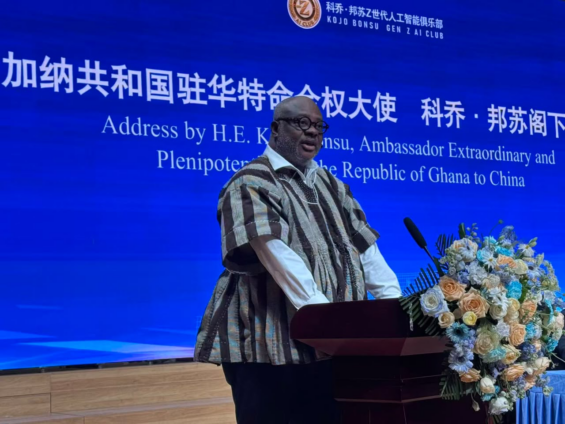
Ghana’s Ambassador to China, Kojo Bonsu, has launched a youth-focused Artificial Intelligence (AI) talent development programme aimed at equipping young Ghanaians with skills to build technology solutions for the country.
The China-Ghana Youth AI Talent Development Programme was launched during Ambassador Bonsu’s visit to Zhoukou, a major inland port and logistics hub in China.
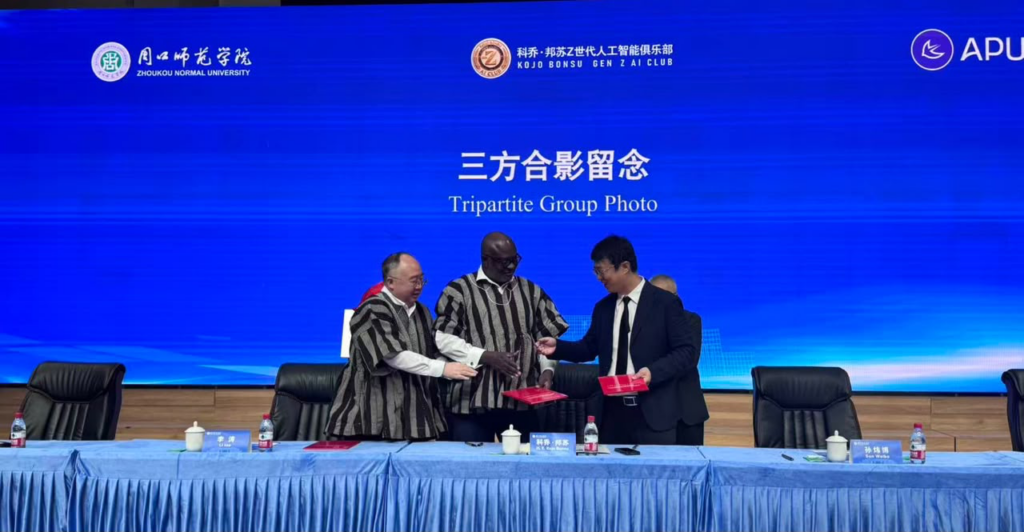
The programme is an expansion of the Ambassador’s Gen Z AI Club initiative and is being implemented in partnership with Chinese technology company APUS Technology Co., Ltd.
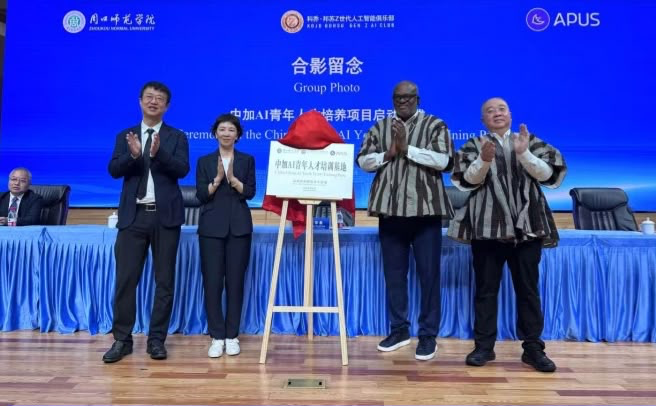
Under the initiative, Zhoukou Normal University will offer dedicated AI courses and scholarships to selected Ghanaian students.
The programme is intended to broaden Ghana-China cooperation beyond traditional areas such as trade and infrastructure by creating opportunities for skills development, technology and youth innovation.
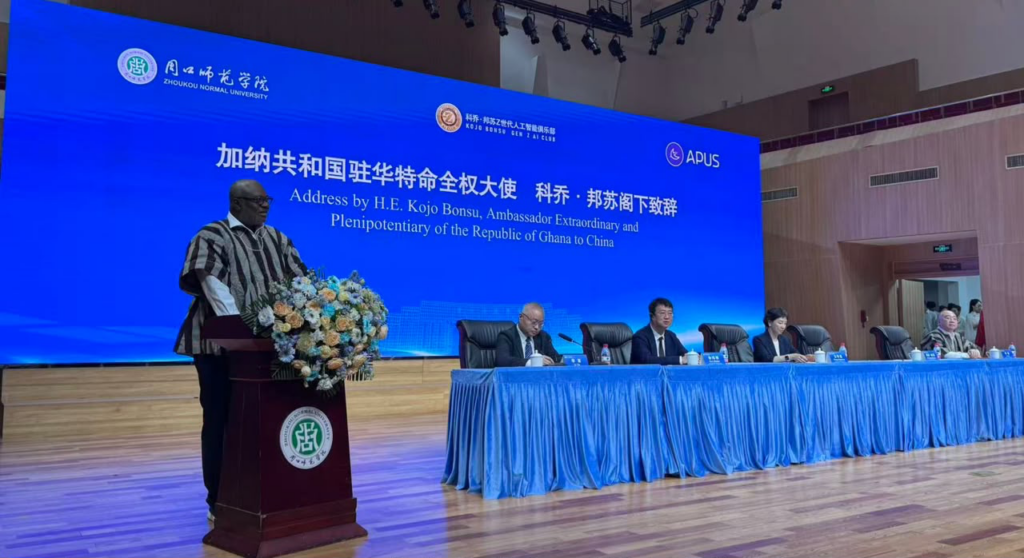
Speaking to students at the launch, Ambassador Bonsu highlighted Africa’s youthful population and the potential of young people to develop technology solutions tailored to local challenges.
“Africa has one of the world’s youngest populations, an enormous reservoir of talent, creativity and potential,” he said.
He said the programme would help young Ghanaians develop practical AI applications for key sectors of the Ghanaian economy.
“We want Ghanaian youth to build AI solutions for our farms, our hospitals, our classrooms.”
Ambassador Bonsu urged participants to approach the opportunity with a focus on learning, innovation and leadership.
The programme also seeks to connect training with employment and entrepreneurship opportunities.
APUS Technology Co., Ltd. is expected to offer outstanding students in China and Ghana internships and job contracts during the one-year programme.
The opportunities will be tailored towards the development of AI solutions relevant to Ghana’s economic and social needs.
The initiative is also expected to expose participants to China’s growing technology ecosystem while providing them with practical experience applicable to Ghana’s digital transformation efforts.
Supporters of the programme say it could provide a pathway for young Ghanaians to acquire specialised technology skills while contributing to solutions for challenges in areas such as agriculture, healthcare and education.
The initiative forms part of broader efforts to position young people at the centre of Ghana’s engagement with China, focusing on building skills and creating opportunities in emerging technologies.
Latest Stories
-
Ghana hotels see revenue per room fall by 19% between November 2024 and January 2025 – GSS
2 minutes -
Apple ordered to pay $5.7bn after losing vibration tech patent suit
4 minutes -
Hostels outperform hotels as accommodation demand shifts to lower-cost options – GSS
7 minutes -
Protect the school calendar while we address your concerns – Haruna Iddrisu appeals to striking teachers
11 minutes -
Jetour Africa Expedition 2026 takes guests on off-road adventure at Safari Valley
11 minutes -
S&P affirms Ghana’s “B-/B” credit ratings with stable outlook
23 minutes -
Alan Kyerematen urges Ghanaians to make a ‘strategic choice’ in 2028
24 minutes -
Akwasi Opong-Fosu proposes ‘3Vs’ plan for NDC grassroots empowerment and economic viability
27 minutes -
Government races to end teachers’ strike as Education Minister holds crunch talks with unions
27 minutes -
LA 2028: Black Queens to face Mauritius in Round Two of African qualifiers
38 minutes -
Three dead, including child, in Channel crossing attempt
41 minutes -
Woman charged with stealing from patients and staff at hospitals across Ontario
42 minutes -
Foreign tourists stay longer as domestic guests dominate Ghana’s accommodation market – GSS
43 minutes -
Ghana’s tourism accommodation market shows sharp regional disparities – GSS
48 minutes -
Ayalolo BRT to get contra-flow lanes on three major Accra corridors
52 minutes