

Audio By Carbonatix
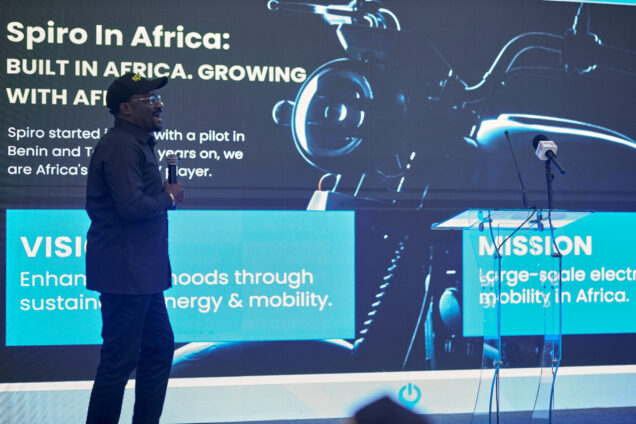
Electric mobility company Spiro says it will enter the Ghanaian market as part of an expansion across Africa.
The company plans to assemble electric motorcycles locally and establish battery-swapping stations, as it seeks to tap into growing interest in cheaper and cleaner transport in Ghana.
Spiro says its Ghana operations will include energy hubs, after-sales services, spare-parts supply and technician training.
The company has not yet announced a specific date for the start of operations.
Cutting transport costs
Spiro says its electric motorcycles could help commercial riders reduce their operating costs by as much as 40%.
For Ghana's large commercial motorcycle sector, particularly in areas where riders rely heavily on fuel, the potential savings could be significant.
The company says electric motorcycles can offer lower running costs because riders do not have to depend on petrol for every journey.
Instead of waiting for a vehicle to charge for several hours, riders using Spiro's system will be able to exchange depleted batteries for charged ones at designated swapping stations.
This model is intended to minimise downtime for commercial riders and fleet operators.
“Electric mobility is not simply about transportation. It is about empowering people, strengthening businesses, creating jobs and building a more resilient economy,” Spiro managing director Maxwell Dodd said.
Local assembly
Spiro intends to assemble motorcycles in Ghana rather than simply import finished vehicles.
It also plans to develop a local network of technicians and spare-parts suppliers to support the vehicles.
The company says its wider African operations could support more than 200,000 direct and indirect jobs within three years across areas including mobility, energy, logistics, maintenance and entrepreneurship.
It has not, however, provided a breakdown of how many of those jobs would be created in Ghana.
Spiro is already operating in seven African countries, according to the company.
It has more than 146,000 electric motorcycles and more than 2,500 battery-swapping stations across its markets, with more than 54 million battery swaps recorded.
What it means for Ghana
Ghana's transport sector remains heavily dependent on petrol and diesel, leaving operators exposed to changes in fuel prices.
The introduction of electric motorcycles could therefore create an alternative for some commercial riders and delivery businesses.
But the success of electric mobility will depend on more than the availability of motorcycles.
Companies will need to build enough charging or battery-swapping infrastructure, ensure a reliable supply of spare parts and batteries, and convince riders that switching from conventional motorcycles makes financial sense.
There are also questions around the initial cost of electric motorcycles, battery ownership and replacement, maintenance and the availability of electricity to support a growing network.
Spiro says it will work with local stakeholders as it establishes its Ghana operations.
The company sees Ghana as an important market in its ambition to expand into 20 new markets by 2027.
For Ghanaian riders and businesses, the key question will be whether electric mobility can move beyond being a cleaner alternative and become a genuinely cheaper and more practical way to do business.
Latest Stories
-
From despair to dance: Family of nurse Salomey Baffoe rejoices after GH¢100k bail granted
32 minutes -
Kejetia Phase III pricing talks loom as government moves to restart stalled works
1 hour -
Nchiraa Yam festival: Two killed, 14 injured as police restore calm
1 hour -
I draw inspiration for my songs from Reggae music – Lyrical Joe
1 hour -
AI must not replace human judgment in public spending – BoG Governor
1 hour -
Ghana should withdraw from 2027 AFCON – Kojo Addae Mensah
1 hour -
Team Ghana departs Accra for Angola ahead of Karting Africa Trophy
2 hours -
AIT President Prof Clement Dzidonu urges lifelong learning as AI reshapes work and education
2 hours -
FWSC to meet striking teacher unions on Tuesday
2 hours -
NPP won’t force candidates to step down – Miracles Aboagye
2 hours -
Black Stars: Building in the sinking sands
2 hours -
Low inflation on paper, high cost of living: How Presidents Mahama and Trump are facing stark economic reality
2 hours -
NPP will negotiate with popular non-politicians to secure winnable candidates – Miracles Aboagye
2 hours -
Only 5% of Ghanaians can afford housing without support – Gov’t
2 hours -
Nigeria launches rescue after military plane crashes with 32 aboard
2 hours