

Audio By Carbonatix
The management board of the DigiMarkt Project has made a strong case for the integration of Artificial Intelligence (AI) into Ghana's mainstream education curriculum, stressing that the future of work will be driven by AI and digital competencies.
According to the Board, the rapid evolution of Artificial Intelligence and digital technologies makes it imperative for Ghana to undertake deliberate and urgent reforms in its educational system to equip students with relevant skills for a fast-changing global economy.
The Ghana Coordinator for the project and Dean of the Faculty of Applied Sciences and Mathematics Education at the University of Skills Training and Entrepreneurial Development (USTED), Prof. Yarhands Dissou Arthur, made the call at the final conference of the DigiMarkt Project.
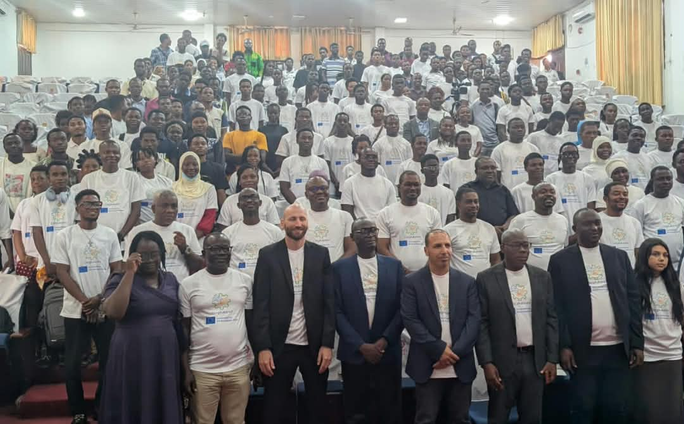
The event, held on the theme "Transforming the Digital Future of TVET in Ghana: The Role of the DigiMarkt Project," was hosted at the USTED campus in Kumasi and marked the climax of the two-year transformative initiative.
The project, co-funded by the European Union (EU) with a total grant of €394,185, sought to strengthen digital marketing and emerging technology competencies within Technical and Vocational Education and Training (TVET) in Ghana.
Addressing participants, Prof. Arthur warned that Artificial Intelligence is set to dominate every facet of life and industry in the next three decades, and Ghana risks being left behind if it delays its adoption.
He stressed that AI should no longer be perceived as an elective or the preserve of computer science specialists, but rather as a fundamental literacy that every student must possess, similar to reading and writing.
"In fact, AI is something that is taking over the world in the next thirty years, and we as a country cannot afford to wait until it has taken over before we begin to learn," he stated.
He therefore proposed that AI be made a common course across all public and private universities in Ghana, just like basic Information and Communication Technology (ICT).
"I will recommend that in this university and in all universities in Ghana, AI should become a common course, just like we have been learning basic ICT - learning PowerPoint, Access and all those things. Today, AI can create all those things for you, so why don't we learn how to use AI now?" Prof. Arthur stated.
Beyond the tertiary level, Prof. Arthur advocated for the early introduction of AI at the Senior High School level to build a strong foundation and digital confidence among learners before they enter tertiary institutions.
He believes such an early start will demystify AI, promote innovation, and position Ghanaian students to compete globally in an increasingly AI-driven economy.
"In fact, even in our secondary education, we need to include it in our curriculum because it is what is ruling the world. But the question we need to ask ourselves is, how must we teach AI?"
Prof. Arthur noted that the real debate should not be about whether AI should be adopted, but about ensuring its responsible application. He warned against creating panic and imposing outright bans on AI in schools, emphasizing that responsible usage comes only through education and training.
"We need to teach students how to make responsible use of AI. And to be able to teach them how to use it responsibly, teachers and instructors in the various schools must first learn how to use it themselves," he stressed.
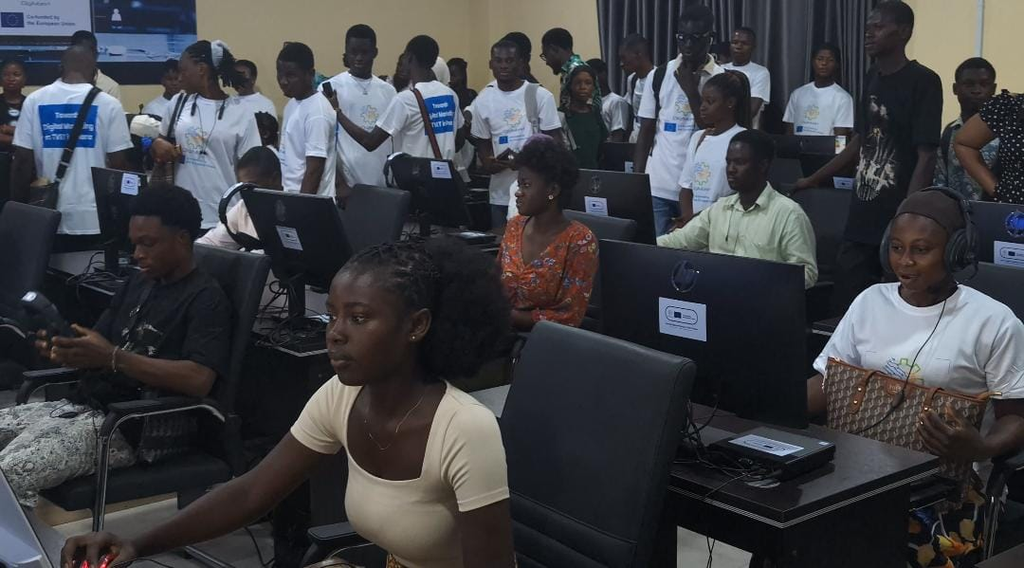
He disclosed that the University of Skills Training and Entrepreneurial Development (USTED), Cape Coast Technical University, and Bolgatanga Technical University (BTU), through the DigiMarkt Project and with support from the European Commission, have established a state-of-the-art AI and digital marketing laboratory to spearhead the initiative.
"This laboratory we have established is for that purpose. If you are a secondary school and you want your teachers to be well-trained in the use of AI, including its application in teaching, you can come here. We can agree on terms and conditions and, in the interest of sustaining the project, offer you something that will be of great value to your school," he explained.
The Dean added that lecturers at USTED are already benefiting from the programme, using AI to develop lecture notes, prepare PowerPoint presentations and compile research materials.
Drawing a direct link between AI education and Ghana's unemployment crisis, Prof. Arthur explained that the DigiMarkt Project was originally conceived to enhance the employability of TVET graduates within the digital economy.
"We are a TVET university, and it has always been said that TVET is the way to go when we talk about unemployment. Unemployment in this country is high, and one of the ways we can address it is to provide our students with the requisite technical education and training," he stated.
He argued that technical skills alone are no longer sufficient in a competitive market, and that graduates must also be equipped with the capacity to sell their skills and products.
According to him, the digital transformation agenda extends beyond TVET institutions, as every sector of the economy now requires digital competence to thrive.
Looking beyond the classroom, Prof. Arthur further underscored how AI and digital marketing could serve as a bridge connecting Ghanaian youth to opportunities in the global job market.
He disclosed ongoing engagements with German partners under the DigiMarkt Project to establish remote work pipelines for top-performing trainees, particularly in high-demand areas such as data analytics, digital marketing and cybersecurity.
He said the initiative, if successful, would allow skilled Ghanaian youth to work remotely for international companies without necessarily leaving the country, thereby curbing brain drain while earning foreign income.
He concluded with a strong appeal to policymakers, educators and parents to embrace the AI revolution rather than resist it.
"AI is taking over, and we need to be fast; otherwise, the world will leave us behind," he warned.
Build Networks, Leapfrog Mistakes
The Project Coordinator of the DigiMarkt Project, Dr. Jonathan Barth, has urged Ghanaians and Africans not to copy every step Europe took in its digital and Artificial Intelligence journey.
According to him, not everything that works for Europe is necessarily good for African countries.
Dr. Barth explained that while Europe offers valuable lessons in digital transformation, Africa must contextualise those lessons to suit its own realities, challenges and opportunities.
He urged stakeholders to build the next approach together, build strong networks and leapfrog past the mistakes made by developed economies.
He emphasised the need for collaboration, sharing of methods, challenging of ideas and retaining only what works for Ghana and the continent.
Dr. Barth said this collaborative approach is key to ensuring that the Digital Technical and Vocational Education and Training (DigiMarkt) initiative truly empowers training providers and learners with relevant skills in digital marketing, Artificial Intelligence and cybersecurity, as a sustainable strategy to bridge the skills gap and tackle youth unemployment in Ghana.
The final conference brought together academics, students, industry players and international partners to demonstrate how AI-powered digital marketing tools can transform skills training, enhance entrepreneurship, create sustainable jobs for Ghanaian youth and chart a sustainable path for its outcomes beyond the funding period.
The project, implemented by a consortium of partners from Ghana, Germany and Slovakia, is aimed at repositioning Technical and Vocational Education and Training (TVET) for the digital age.
It seeks to equip TVET students and staff with relevant skills in digital marketing, Artificial Intelligence, and cybersecurity as a strategy to bridge the skills gap and tackle youth unemployment.
Latest Stories
-
Techiman North MP fulfills promise with new CHPS Compound in Kokoago
10 minutes -
Enterprise Trustees, Sinapi Aba launch ‘Asetenapa Plan’ to promote retirement savings among informal workers
12 minutes -
Gov’t working to ensure GAUA strike is called off by October 16 – Haruna Iddrisu
16 minutes -
KAIPTC Commandant calls for continent-wide strategy to tackle Africa’s maritime security threats
28 minutes -
GRIDCo investigates Mallam substation fire as power restoration continues in Accra
29 minutes -
20% digital tax is not E-Levy – GRA boss
39 minutes -
Defence Minister calls for intelligence-sharing and regional cooperation to tackle maritime insecurity
43 minutes -
Afenyo-Markin failed to comply with procedural rules in defamation suit – Sammy Gyamfi’s lawyers
54 minutes -
GRA recovered GH¢1.3bn out of about GH¢1.4 bn unpaid VAT from ECG – Anthony Sarpong
56 minutes -
KMA to extend daily toll collection to nights and weekends
58 minutes -
Ghana secures second consecutive term on UN Human Rights Council
1 hour -
KATH Catheterisation lab targets December completion amid specialist staffing concerns
1 hour -
Government working to address economic challenges driving youth into galamsey – Mahama
1 hour -
Domestic Capital Africa campaign targets US$600bn pension funds for SME growth
1 hour -
Women leaders’ wisdom and work deserve recognition – Mahama
1 hour