

Audio By Carbonatix
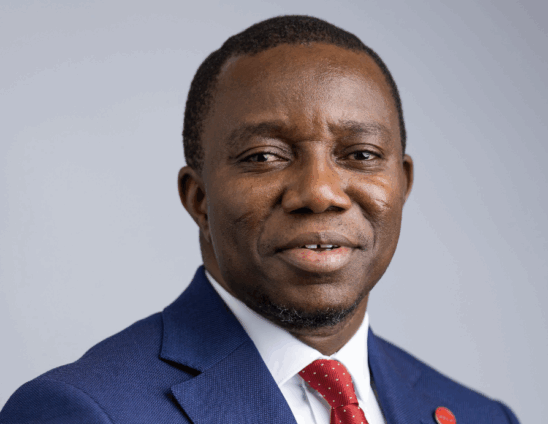
Executive Director and MD of Retail and Business Banking at Absa Bank Ghana, Kobla Nyaletey, has advised businesses in Ghana’s emerging recycling sector to start with smaller-scale projects and gradually expand to attract investor confidence and financing.
Speaking at the Landfills2Landmarks Summit, Mr Nyaletey said Ghana’s recent macroeconomic conditions made lending to businesses difficult, as high interest rates pushed many financial institutions to invest capital in safer alternatives rather than real-sector enterprises.
According to him, the cost of capital in Ghana about two years ago hovered around 25 to 30 per cent, a level he described as too expensive for many businesses to sustain.
“Maybe until recently, the macro situation in Ghana simply made it a bit more attractive for some banks to put their capital elsewhere and not in real business,” he stated.
He explained that recycling remains a relatively new industry in Ghana and therefore requires significant effort from project promoters to educate potential investors and financiers about the opportunities and risks involved.
Mr Nyaletey stressed that businesses seeking funding in unfamiliar sectors must dedicate time to carrying financial institutions along by helping them understand the industry and its long-term potential.
“As a new area, promoters must definitely invest a lot more time in carrying stakeholders along, including potential funders,” he noted.
He further encouraged entrepreneurs to adopt a phased growth strategy rather than seeking large sums at the initial stage.
Using lending examples from the banking sector, he explained that smaller projects are easier for banks to support because the associated financial risks are lower.
“Today, I am able to lend up to two million Ghana cedis without collateral and deliver that very quickly. So maybe if you come to me with a project worth about a million dollars, I may take the risk,” he said.
However, he cautioned that projects requiring significantly larger investments would naturally attract more rigorous due diligence processes.
“If your starting point is maybe 20 million dollars, then the due diligence cannot be short-circuited,” he added.
Mr Nyaletey encouraged businesses in the recycling and sustainability sectors to focus on building credibility gradually, while strengthening investor understanding and confidence over time.
Latest Stories
-
Banks accounted for 86% total enquiries for credit in 2025
4 minutes -
Over 25m enquiries conducted by financial institutions for credit appraisals, others in 2025
20 minutes -
Kpandai case sets the precedent – Habib Iddrisu challenges Speaker’s rejection of drug probe
1 hour -
Habib Iddrisu questions Speaker Bagbin’s rejection of motion after Parliament recall
1 hour -
More than 400 detained as France student protests escalate
2 hours -
Ballon d’Or Power Rankings: Lamine Yamal leads race for Golden Ball ahead of Rodri and Kane
3 hours -
‘Nothing worked for us’ – Gideon Mensah takes responsibility for Gambia defeat
3 hours -
Habib Iddrisu says rejected motion was exactly what triggered Parliament recall
3 hours -
Spain announces ban on evictions after protests over 87-year-old woman’s removal from flat
4 hours -
Habib Iddrisu ‘very surprised’ as Speaker rejects Parliament recall motion
4 hours -
Speaker’s decision to reject recall motion catches Dep Minority Chief Whip off guard
4 hours -
2026 Women’s Super Cup: FC Savannah beat Epiphany Warriors to win trophy for first time
5 hours -
Fifa accuses Uefa of ‘misinformation campaign’
5 hours -
Kane and Gordon give England victory over Czech Republic in Nations League
5 hours -
AFCON 2027Q: ‘The last time Ghana won was eight games ago’ – Carlos Queiroz
5 hours