

Audio By Carbonatix
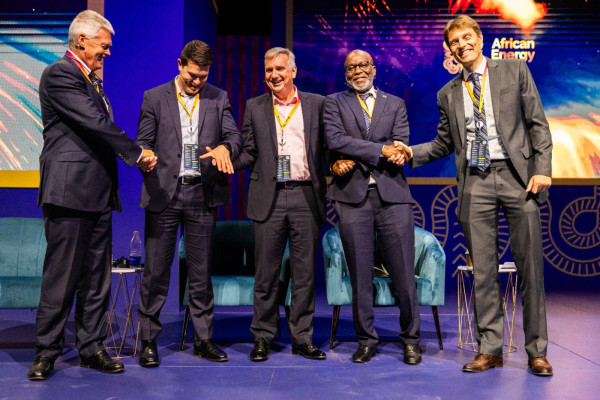
Across Africa’s proven and promising hydrocarbon basins, independent oil and gas companies are playing a central role in driving exploration, monetizing resources while getting large-scale projects off the ground. A panel discussion held during the African Energy Week (AEW) 2023 conference&exhibition explored these strategies while detailing the ongoing success of independents in Africa’s oil and gas market.
Independent oil and gas companies have been at the forefront of several impactful developments. In Namibia, companies to the likes of ReconAfrica are opening up the onshore Kavango Basin while in Zimbabwe, Invictus Energy is exploring the untapped Muzarabani Basin. These upstream campaigns are set to transform the regional landscape but are not without their challenges, of which the most notable is financing.
Scott Macmillan, Managing Director of Invictus Energy, explained how the company has managed to achieve the success it has in the market and how capital raising has been achieved. He stated that, “When Invictus first came into the market, we were looking at following the traditional route of a typical junior: to make an entry into a frontier jurisdiction. We have been very fortunate in terms of the acreage and opportunity we identified. It has been a combination of a few things, including timing.”
He added that, “You can be in the right place at the right time but the biggest thing for us is our risk versus reward profile. We are chasing an enormous prize and that is what has enabled us to capture the market and fund our activity.”
ReconAfrica, under efforts to raise further capital, is seeking a partner to help drive exploration. Robert Mwanachilenga, Country General Manager at the company, stated that, “In the next few weeks, we will organize a data room. We are looking for a partner in terms of equity to help us check balances. We are offering 45%, half of our 90% stake. That partner will help and bring strong contributions.”
Integrating innovation with technology and expertise, independents are leading the next wave of successful oil and gas projects. However, attracting these companies to the market comes with its own challenges. In the current energy transition climate, independents are being increasingly selective with their investments.
Tim O’Hanlon, Senior Advisor at Panoro Energy, acknowledged that, “The industry has adapted and exploration is still going on,” however he believes that, “It will be a tough enough gig from here on out, because of the general uncertainty associated with the industry.”
As such, fiscal reform has become necessary for attracting independents to markets. O’Hanlon expanded on this topic, stating that, “You need to knock their socks off in terms of attractive fiscal terms.”
Echoing these remarks, Ian Cloke, COO of Afentra, stated that, “The race for capital is on, and it’s a global race. Capital will go where it is easiest, so you need to make sure you’re the most attractive one.”
Macmillan detailed the choice that African governments will need to make going forward, specifically those with frontier oil and gas markets. He said, “Governments are facing the challenge of deciding whether to adjust fiscal terms, being able to utilize natural resources and beneficiate them for other industries, or leave them in the ground and rely on imports. Ultimately, the prize for government is developing fields rather than leaving them in the ground. So, making terms attractive and allowing fields to be developed in an appropriate timeframe is important.”
Rather than focus on frontier opportunities, both Panoro Energy and Afentra prioritize mature assets, with a business structure centered on maintaining production at producing fields. O’Hanlon explained that, “We don’t do frontier. We develop discoveries that were made years ago.” This creates significant opportunities for African countries, ensuring IOC divestment does not translate to rapid declines in output.
Similarly, Cloke explained that, “Afentra was set up for mature assets. We see a long journey from a transition perspective in Africa and we see these big assets producing for a number of years.”
The panel concluded that through appropriate fiscal reforms, African countries comprising both frontier and established markets will be able to attract independents, leveraging their expertise to unlock new opportunities for energy security.
#AEW2023 – organized by the African Energy Chamber – takes place this week in Cape Town under a mandate to make energy poverty history by 2030. Keep following www.AECWeek.com for more exciting information and updates about Africa’s premier energy event.
Distributed by APO Group on behalf of African Energy Chamber.
Latest Stories
-
Interest payments to average a high 20% of government revenue over next 4 years
1 hour -
Strategy of accumulating foreign reserves, gold carries high fiscal cost – S&P Global
1 hour -
Weak institutional arrangements, high debt servicing constrain Ghana’s rating – S&P
1 hour -
Bond market: Turnover declined by 28% to GH¢1.56bn
2 hours -
Volta Region National Public Speaking contest advances drug prevention conversation
2 hours -
New health training facility at Ampoma-Jema to address admission shortfalls, but Minister flags missing amenities
2 hours -
Black Challenge unveiled with sights set on Amputee World Cup glory
3 hours -
Pay striking teachers before expressway spending, Dr Kingsley Agyemang tells government
3 hours -
Customs intercepts assault rifle, two pistols and 610 rounds of ammunition at Tema Port
4 hours -
PKO boxers secure wins at Odwira Festival
4 hours -
South Tongu Records Rise in Teenage Pregnancy
4 hours -
Cabinet threw out US health compact faster than anything I’ve seen – Mahama
4 hours -
MoFA urges Finance Ministry to reverse World Bank food programme withdrawal over GH¢643m commitments
4 hours -
NAGRAT demands signed timelines before calling off strike
5 hours -
National Investment Quiz: West Africa SHS, St. Louis SHS advance to semi-finals
5 hours