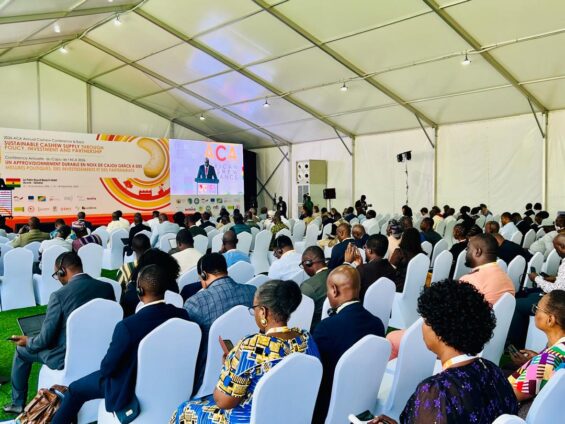
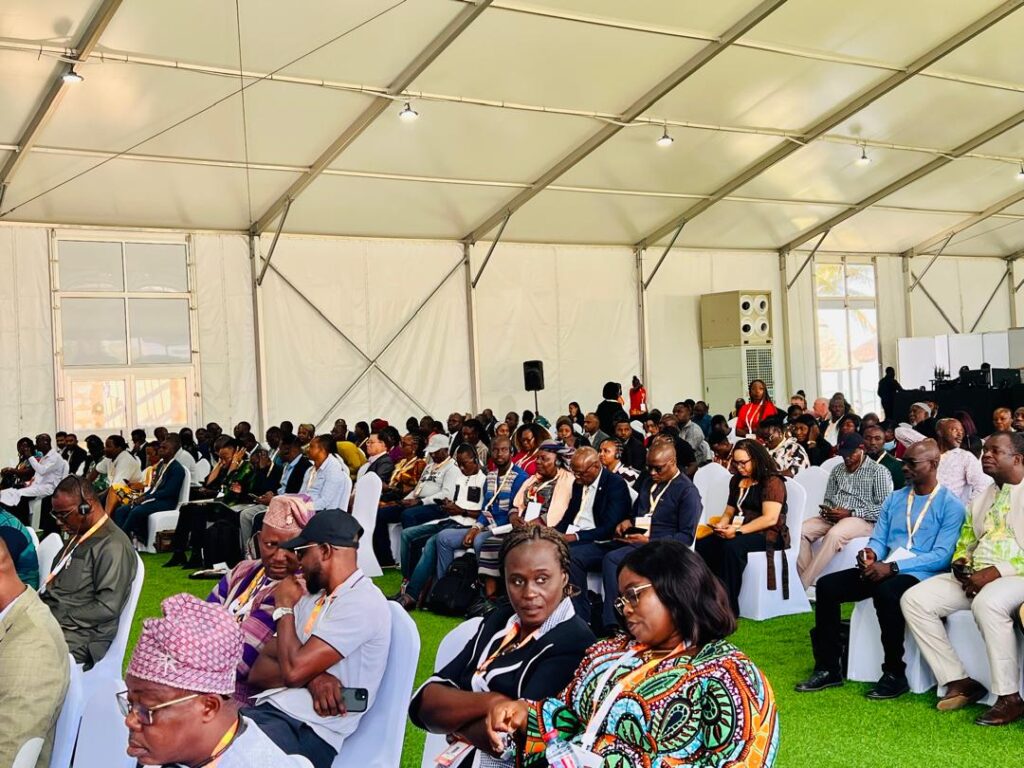
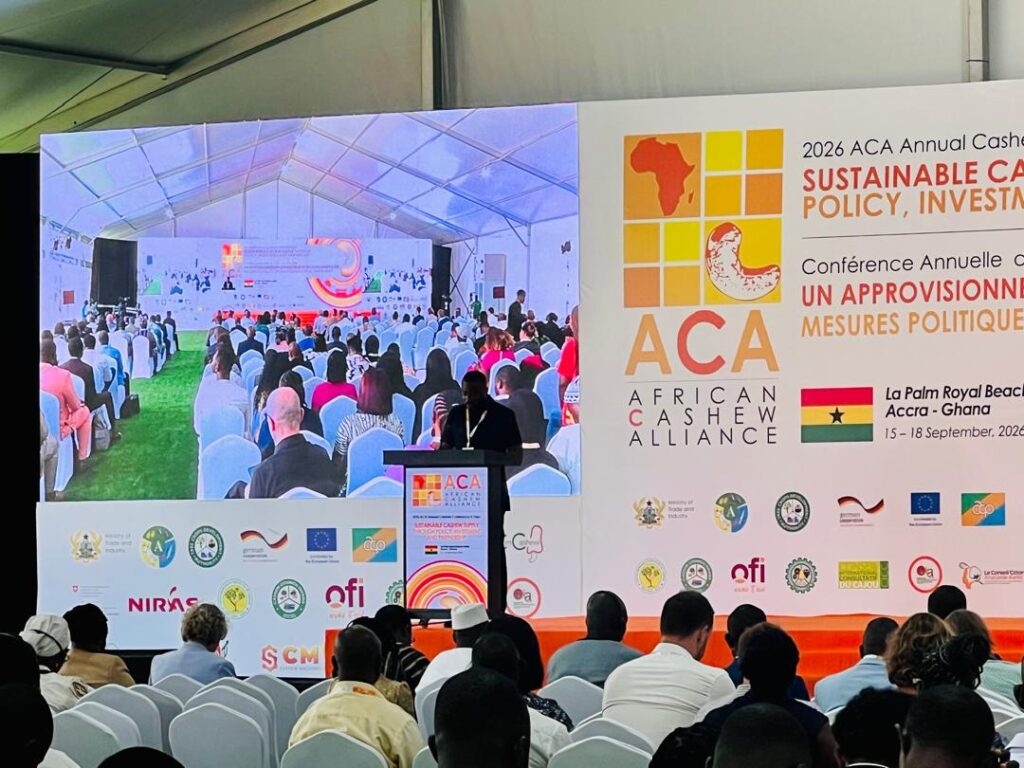
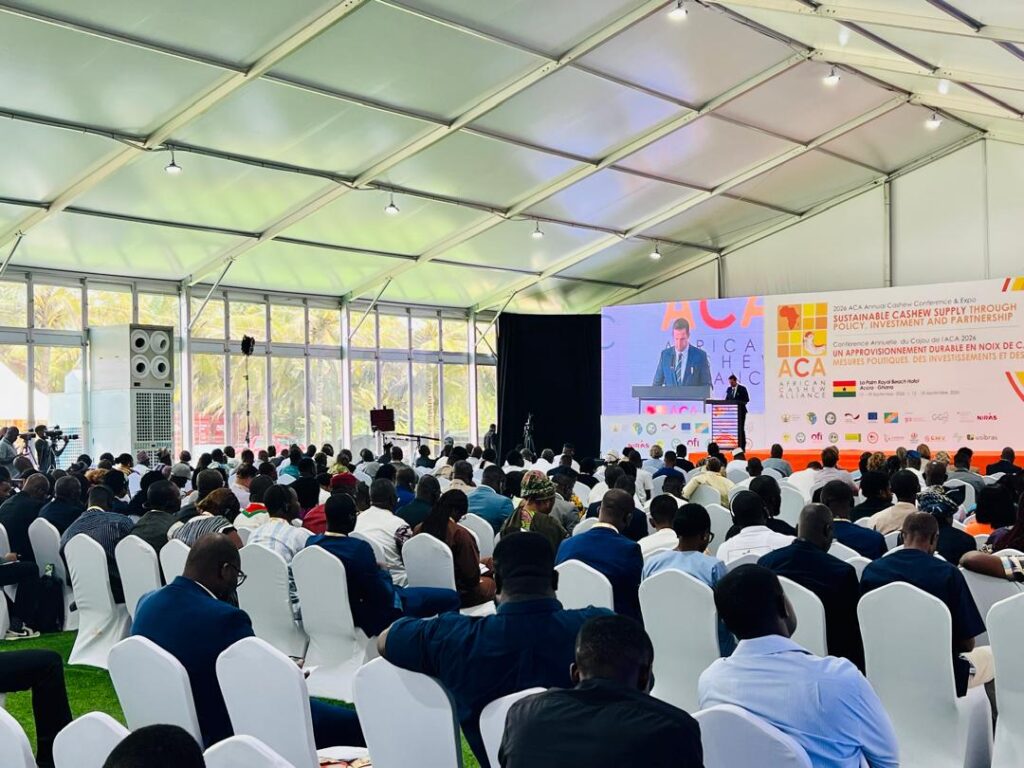
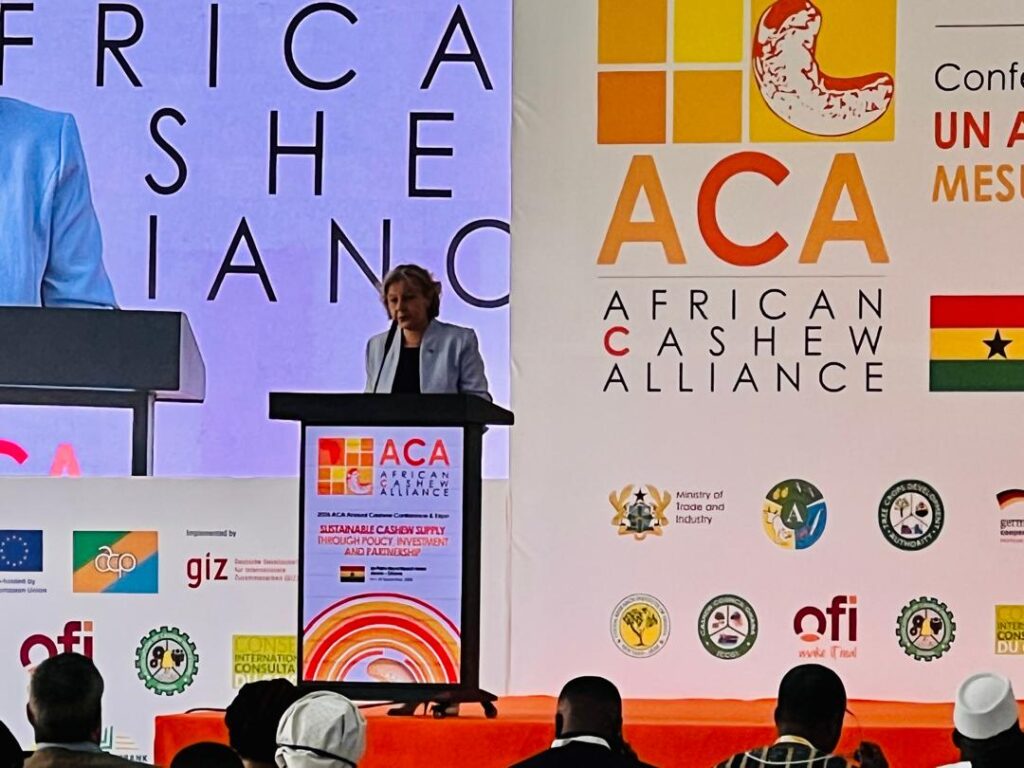
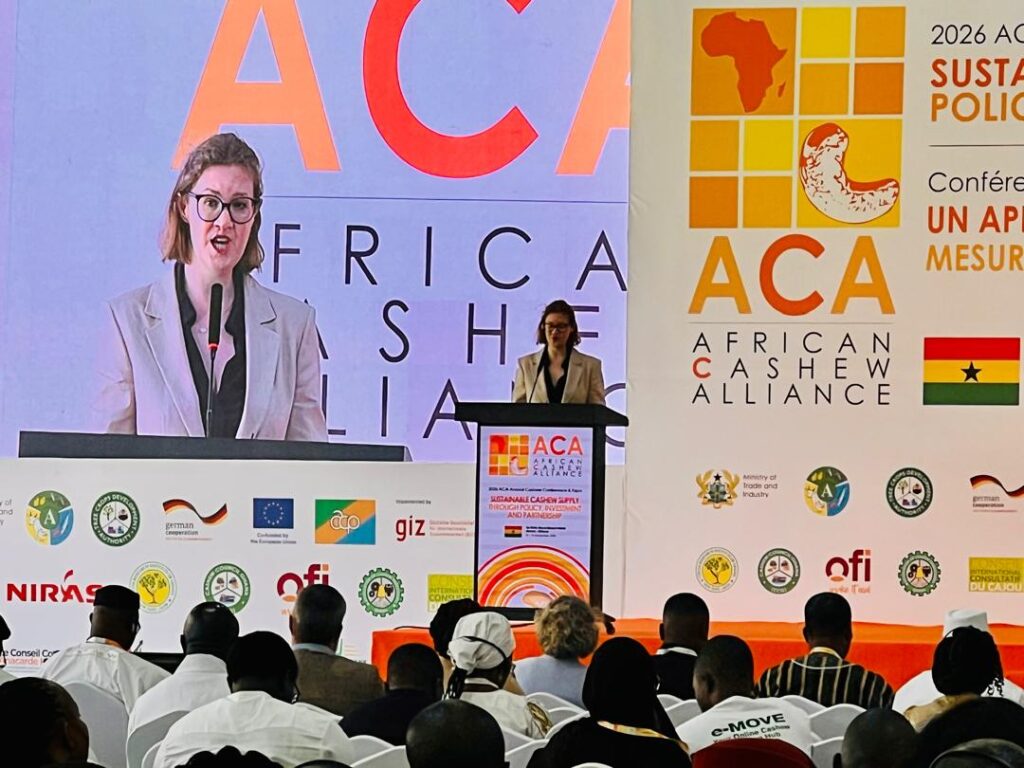
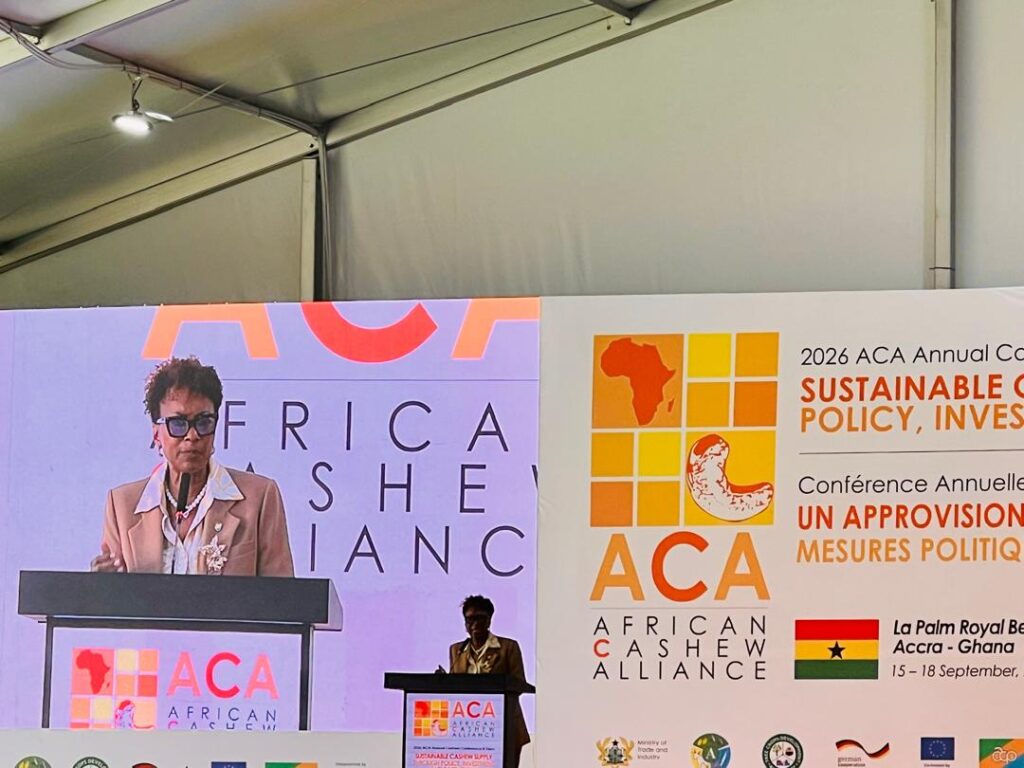
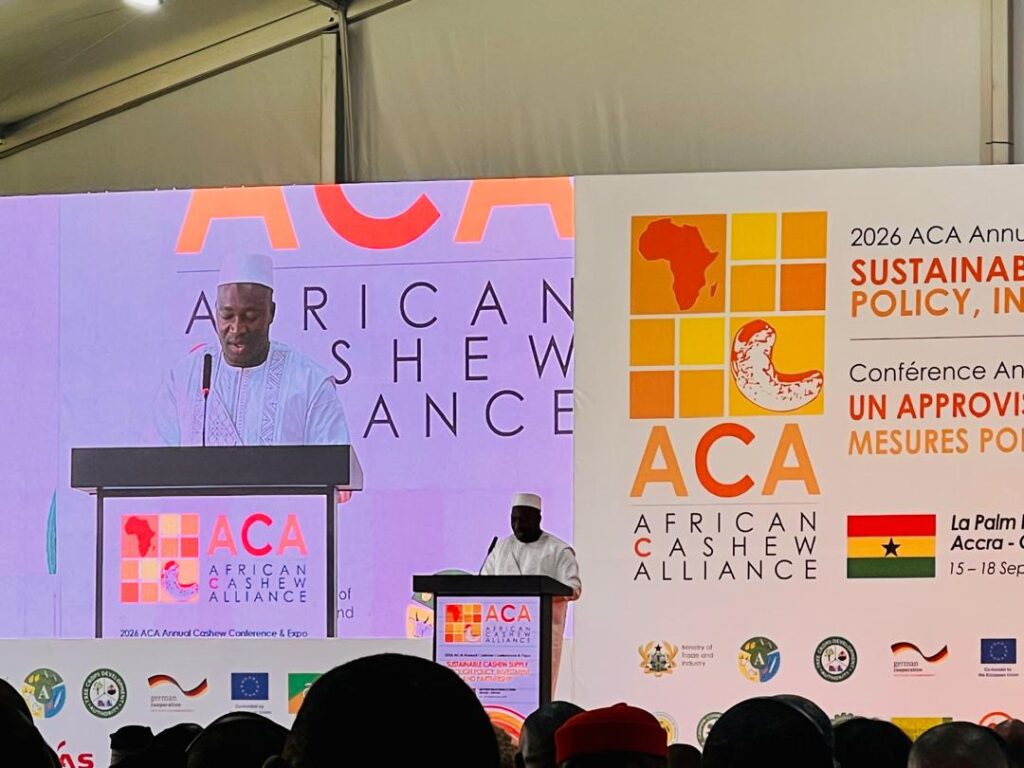
The 2026 African Cashew Alliance (ACA) Annual Cashew Conference and Expo has opened in Accra, bringing together key stakeholders in the cashew industry to discuss ways of building a more sustainable, competitive, and value-driven sector across Africa.
The four-day conference, which opened on Tuesday, September 15, at the La Palm Royal Beach Hotel, is being held on the theme “Sustainable Cashew Supply Through Policy, Investment and Partnership.”
The event is being organised in partnership with Ghana’s Ministry of Food and Agriculture and the Tree Crops Development Authority (TCDA), with support from the European Union (EU), the Organisation of African, Caribbean and Pacific States (OACPS) and the GIZ/MOVE Project.
It has brought together producers, processors, traders, exporters, buyers, policymakers, development partners, financial institutions, researchers and service providers from across the cashew value chain.
Opening the conference, the Deputy Chief Executive Officer of the Tree Crops Development Authority (TCDA), Dr Rich Kofi Kofituo, said the gathering came at an important time for Africa’s cashew industry, which continues to face growing demand for quality, traceability, sustainability and responsible sourcing.
He said although Africa produces the majority of the world’s raw cashew nuts, a significant proportion of the produce is still exported for processing outside the continent.
Dr Kofituo therefore called for a shift from the export of raw cashew nuts towards greater local processing, value addition and innovation.
“Africa must move decisively from being predominantly a supplier of raw cashew nuts to becoming a competitive global hub for cashew processing, value addition and innovation,” he said.
He said achieving this would require improvements across the entire value chain, including productivity, planting materials, extension services, climate resilience, market transparency and farmer incomes.
Dr Kofituo also called for stronger collaboration among African cashew-producing countries to address challenges such as pests and diseases, climate change, traceability, quality standards, market intelligence and regional trade.
He cited concerns over suspected powdery mildew disease affecting cashew in Ghana, stressing that such threats required coordinated regional responses because pests and diseases do not respect national borders.
According to him, Ghana is strengthening regulation, farmer and trader registration, quality assurance, market development and value addition in the cashew sector through the TCDA.
He said the country was also working with partners to improve productivity, build the capacity of processors and strengthen linkages between producers and processors.
Deputy Head of Mission and Head of Cooperation at the Embassy of Switzerland in Ghana, Magdalena Wüst, said sustainable growth in the cashew industry required stronger collaboration between the public and private sectors.
She said Africa’s position as the world’s leading producer of raw cashew nuts presented a significant opportunity for the continent to retain more value through local processing.
“Production alone is not enough. We need the right policies, access to finance, modern technology, digital traceability, climate resilience, and stronger market connections,” she said.
Ms Wüst also highlighted the need to improve opportunities for women and young people in the sector.
She noted that women participate at various stages of the cashew value chain but often have limited access to finance, technology and markets.
She said greater investment in women-led businesses and young entrepreneurs could contribute significantly to the growth of the industry.
Deputy Head of Mission of the German Embassy in Ghana, Leonie Reese, said Africa’s cashew sector had made significant progress in recent years, particularly in processing.
She said more than 700,000 tonnes of cashew, representing about 20 per cent of African cashew production, was processed on the continent in 2025, with about 70 per cent of that processing taking place in Côte d’Ivoire.
According to Ms Reese, local processing creates jobs, generates income and enables producing countries to retain more value from the commodity.
She said Germany had supported the development of Africa’s cashew sector for 17 years through initiatives aimed at strengthening competitiveness and resilience.
She noted that the support had contributed to the creation of more than 788,000 jobs in production, processing and trade across the continent, while nearly 800,000 farmers had been trained in good agricultural practices over the past 12 years under the MOVE Cashew programme.
The Assistant Secretary-General for Policies and Programmes of the Organisation of African, Caribbean and Pacific States, Sussan Branker Greene, said Africa needed to focus not only on increasing production but also on creating greater economic value from the commodity.
She said Africa accounts for more than 60 per cent of global cashew production but retains a disproportionately small share of the value generated along the global value chain.
“We produce, but too often others process. We export, but too often others capture the greatest share of the value,” she said.
Ms Branker Greene called for increased local processing, stronger enterprises, improved market access, investment and stronger regional value chains.
She also urged stakeholders to embrace digital technologies to improve traceability, connect farmers and businesses to markets, facilitate access to finance and support better policymaking.
President of the ACA Board of Directors, Ibrahim Sanfo, said the Alliance was entering a period of transformation aimed at achieving greater self-reliance and stronger ownership by the industry.
He said the ACA, established in 2006, had supported the sector through policy advocacy, market information, technical assistance and knowledge sharing.
However, he noted that the Alliance had relied significantly on donor support over the years.
“We must also recognise that donor support alone cannot provide the foundation for the long-term sustainability of an industry organisation,” he said.
Mr Sanfo said the ACA was therefore working towards greater industry ownership, including reopening direct membership to companies across the cashew value chain.
He urged participants to use the conference to build sustainable business partnerships and identify practical solutions that could strengthen the industry beyond the four-day event.
Delivering the keynote address on behalf of the Minister for Food and Agriculture, Eric Opoku, Deputy Director in charge of Crops Services at the Ministry, Harry Bleppong, said Ghana recognised the strategic importance of cashew to the country’s agricultural transformation agenda.
He said cashew had become an important source of livelihood and income for farming communities, particularly in the Bono, Bono East, Ahafo and Savannah regions.
Mr Bleppong said the government would focus on productivity, quality, sustainability, value addition and competitiveness.
“The greatest opportunity before Africa's cashew industry is value addition,” he said.
He called for increased investment in modern processing facilities, storage, packaging, logistics, quality laboratories, technology, automation and research and development.
He said processing should also be viewed as a rural development opportunity capable of creating jobs for women and young people while stimulating local economies.
The 2026 ACA Annual Cashew Conference and Expo continues through Saturday, September 18, with discussions expected to focus on policy, investment, processing, sustainability, market access, innovation and partnerships across the African cashew value chain.
DISCLAIMER: The Views, Comments, Opinions, Contributions and Statements made by Readers and Contributors on this platform do not necessarily represent the views or policy of Multimedia Group Limited.
DISCLAIMER: The Views, Comments, Opinions, Contributions and Statements made by Readers and Contributors on this platform do not necessarily represent the views or policy of Multimedia Group Limited.