

Audio By Carbonatix
African journalists have been called upon to adopt a more positive and balanced approach to reporting the continent’s stories to help reshape perceptions about Africa and project its development achievements.
Yakubu Akuka, the Upper East Regional Programme Officer of ActionAid Ghana, said journalists had a responsibility to move beyond predominantly negative portrayals of Africa and highlight the continent’s successes, resilience, culture, and development initiatives.
He said the way African stories were framed had significant implications for how the continent and its people were perceived by the rest of the world.
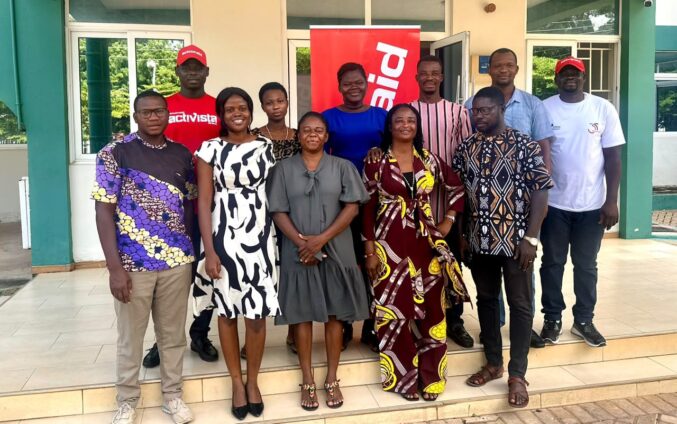
Mr Akuka made the call on the sidelines of a media training in Bolgatanga for selected journalists in the Upper East Region on anti-racist storytelling.
The engagement also focused on social justice reporting, anti-racism reporting, and ways of amplifying the voices of vulnerable and marginalised people.
“If we portray Africa as a dark continent, if we portray Africa as a continent full of barbaric things or full of so many vices, that is how the world will see us,” he said.
Mr Akuka noted that although the media had a duty to report problems and expose wrongdoing, journalists should also give adequate attention to positive developments and stories that demonstrated the continent’s potential.
He said the media had a critical role to play in ensuring that Africa’s development story was told by Africans themselves in a manner that was truthful, balanced, and reflective of the continent’s realities.
“There are a lot of good things in Africa that we don’t portray like the way we portray bad things. Sometimes we just focus on the wrongs or the bad things, and we forget about the beautiful things that we see in Africa,” he said.
He said the training had helped to rekindle a sense of patriotism among journalists and encouraged them to tell stories that presented a more balanced picture of Africa, Ghana, and the Upper East Region.
Mr Akuka said ActionAid Ghana, as a social justice organisation, depended on the media to bring development concerns from communities to the attention of policymakers and other stakeholders.
He explained that many vulnerable people, particularly survivors of gender-based violence, often lacked platforms to articulate their experiences and therefore needed the media to amplify their voices.
“If you look at women, for example, who are being traumatised or taken through some forms of gender-based violence, you will get to realise that most of them don’t even have anybody to talk to,” he said.
Mr Akuka said stronger collaboration between ActionAid and the media would enable journalists to identify and report issues affecting vulnerable people at the community and district levels, thereby supporting advocacy and campaigns for social change.
He stressed that ActionAid was not interested in using the media merely to publicise its activities but wanted journalists to tell the stories of communities and people affected by development challenges.
Public Relations and Communication Officer at ActionAid Ghana Jacqueline Parditey, who took participants through the training on ethics and anti-racist storytelling, urged journalists to tell African stories in a dignified manner.
She encouraged journalists to consider the language, images, and perspectives they used in reporting on Africa, particularly when covering vulnerable and marginalised groups.
The participants commended ActionAid Ghana for strengthening their capacity to report ethically on anti-racist issues and pledged to increase visibility on such issues.
Latest Stories
-
Tiptoe Lane’s tech takeover: The story behind Ghana’s booming informal phone market
49 minutes -
Abanga vows to use social media to counter NDC messaging ahead of 2028 elections
51 minutes -
Okai Mintah seeks Sabah Zita Benson’s support for NDC National Youth Organiser bid
1 hour -
Okai Mintah vows to strengthen NDC campaign machinery ahead of 2028
1 hour -
Mother of four and Jasikan teacher among new Telecel M’ahitti Promo winners
1 hour -
International Youth Shakers Conclave 2026 set to bring global young leaders to London
1 hour -
Gov’t is committed to addressing teachers’ conditions of service, deprived-area allowance – Education Minister
1 hour -
GoldBod’s structure encouraging galamsey – Afenyo-Markin
1 hour -
Tullow starts selling Jubilee, TEN crude to Ghanaian refineries
1 hour -
Local Government Service authorises rationalisation, redistribution of staff
1 hour -
PURC assures consumers of working to ensure quality services in Northern Region
1 hour -
Ghana develops US$4.28bn water financing framework
2 hours -
Christian Council calls for protection of mission schools’ religious identity
2 hours -
Mahama holds discussions with India’s External Affairs Minister
2 hours -
Even when you cough, they come after you — Abanga accuses Mahama govt of criminalising free speech
2 hours