

Audio By Carbonatix
Young Africans are increasingly shaping the future of sustainable forestry through innovation, entrepreneurship and climate action, according to new findings from the AfricanYouth4Forests (AY4F) initiative.
Research conducted across Africa found that young people are already actively involved in forestry-related activities ranging from agroforestry and ecosystem restoration to ecotourism, non-timber forest product enterprises and environmental advocacy. However, the studies also identified significant barriers that continue to limit their participation and ability to scale up their initiatives.
The AfricanYouth4Forests initiative, implemented by the African Forest Forum (AFF), the Swedish University of Agricultural Sciences (SLU) and the Kenya Forestry Research Institute (KEFRI), aims to empower Africans aged 18 to 30 to transform scientific knowledge into practical action for sustainable forest management. The programme contributes to Africa’s Agenda 2063 and the United Nations Decade on Ecosystem Restoration.
Researchers found that youth participation in forestry is widespread across the continent but often remains informal and insufficiently integrated into formal planning, investment and value-chain development. While forests contribute significantly to livelihoods and local economies, many young people struggle to gain access to land, financing, markets and practical training opportunities.
According to the studies, restrictive land tenure arrangements and customary systems often favour older generations, making it difficult for young people to establish long-term forestry enterprises.
Access to affordable financing is also limited, while fragmented value chains and inadequate processing infrastructure restrict market opportunities.
Women and girls face additional challenges arising from gender norms and limited access to leadership positions and resources.
Despite these challenges, the research identified growing opportunities in Africa’s emerging green economy.
In Ghana, more than 9,000 young people are participating in cocoa-based agroforestry systems that integrate shade trees with climate-resilient farming practices, helping to enhance biodiversity while supporting livelihoods. Similar opportunities are emerging elsewhere on the continent through bamboo value chains, beekeeping, ecotourism, restoration services and circular bioeconomy enterprises.
The studies highlighted examples of youth-led innovation from several countries. In Cameroon and Morocco, ecotourism initiatives led by young people are generating employment while encouraging community stewardship of forest landscapes.
In Kenya, circular bioeconomy ventures focused on waste-to-energy conversion, organic recycling and forest-friendly value addition are creating green jobs while reducing pressure on forests.
Digital technology is also expanding opportunities for youth engagement. Young people are increasingly using geographic information systems (GIS), drones, satellite mapping, remote sensing tools and mobile applications for forest monitoring, climate data collection, restoration planning and environmental reporting.
Researchers noted that combining these technologies with indigenous and local knowledge is helping create more adaptive and inclusive forestry systems.
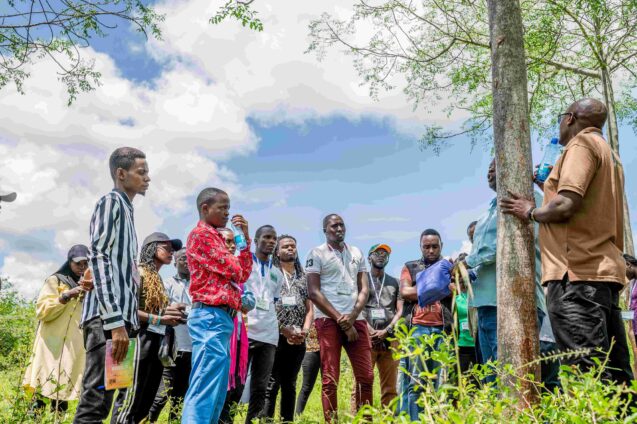
As part of the initiative, youth representatives from across Africa participated in workshops in Kenya and Cameroon during 2025.
The workshops brought together young people, scientists, policymakers and civil society organisations to discuss forest conservation, climate resilience and green economy opportunities.
Participants shared experiences from projects including mangrove restoration, bamboo enterprises, honey production, eco-tourism ventures and technology-driven conservation efforts.
The workshops culminated in a Combined Youth Declaration on Forests, Climate Action and the Green Economy. The declaration presents young people as leaders, innovators and entrepreneurs rather than passive beneficiaries.
It calls for greater youth participation in forest governance, expanded access to green financing, stronger environmental education and increased support for youth-led enterprises.
The declaration also emphasizes the importance of green jobs, indigenous knowledge, digital innovation and inclusive decision-making in shaping Africa’s forest future. Youth participants committed themselves to activities including forest restoration, agroforestry, ecotourism, bioenergy, carbon farming and community-based conservation initiatives.
Researchers stated that Africa’s young people possess the capacity to become innovators, custodians and leaders in sustainable forest management if supportive policies, financing mechanisms, training opportunities and governance reforms are put in place.
The findings argue that harnessing this potential will be critical for strengthening climate resilience, protecting biodiversity and advancing the continent’s green transition.
Latest Stories
-
Glut! Farmers count losses as prices crash, customers happy
17 minutes -
GSA postpones auction of unserviceable vehicles
20 minutes -
Man charged with attempted murder after stabbing
23 minutes -
World Cup visa scandal: Senyo Hosi says issue goes beyond calls for Sports Minister’s resignation
25 minutes -
Yaw Ampofo Ankrah hasn’t taken or received any money to facilitate visas – Lawyer insists
43 minutes -
World Cup visa scandal: Senyo Hosi urges focus on constitutional accountability
43 minutes -
La Beach demolition: Senyo Hosi condemns lack of consultation
54 minutes -
Russian glide bomb attack on Zaporizhzhia kills at least 15 people
1 hour -
Jinapor warns underperforming energy sector CEOs of consequences, says no protection for failure
1 hour -
Fire destroys head of tipper truck on Lower Volta Bridge
1 hour -
Palmer signs new Chelsea contract until 2034
1 hour -
World Cup visa scandal: Mahama will act on corruption allegations – Abass Nurudeen
1 hour -
Abass Nurudeen accuses Minority of ‘scandal scavenging’ over World Cup visa controversy
1 hour -
US Embassy recognised NSA, GFA and GTA as separate entities for visa applications – Sports Minister’s aide
1 hour -
Only 30% of Ghanaian teachers satisfied with their jobs – CAPCOE data reveals
2 hours