

Audio By Carbonatix
Sylvester Newton, a Clinical Microbiology, and MPhil candidate with the Global Health and Infectious Diseases Research Group at the Kumasi Centre for Collaborative Research at KNUST has revealed that some livestock farmers in the Ashanti region have antibiotic-resistant bacteria in their nostrils.
“Out of the 184 healthy livestock farmers sampled, 9% harboured Methicillin-Resistant Staphylococcus aureus. 28% of the bacteria showed resistance to at least one antibiotic agent in three or more antimicrobial categories,” Sylvester revealed.
He shared these insights while speaking at the maiden Public Health Alliance for Genomic Epidemiology (PHA4GE) Conference held in Cavalli Estate in Cape Town, South Africa.
The Conference was on the theme, “Developing collaborative Bioinformatics solutions for Public Health & Beyond”.
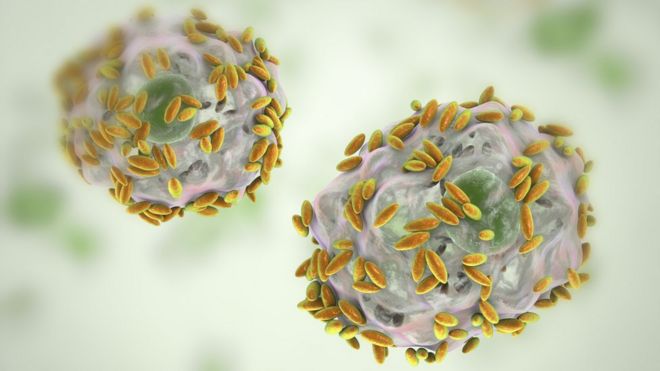
Staphylococcus aureus (staph) is a type of bacteria found on people’s skin. Staph bacteria are usually harmless, but they can cause serious infections that can lead to sepsis or death. Methicillin-resistant Staphylococcus aureus (MRSA) is a cause of staph infection that is difficult to treat because of resistance to some antibiotics.
Sylvester further explained, “The study aimed to determine the prevalence of Staphylococcus aureus and Methicillin-Resistant Staphylococcus aureus (MRSA) in livestock farmers on commercial and smallholder farms in the Ejisu-Juaben Municipality and Asante Akim North District. This would help us describe their antibiotic resistance pattern.”
“You see, Staphylococcus aureus is one of the most important microorganisms that has increasingly become resistant to the most commonly used antimicrobials,” he added.
Sylvester Newton continued, “The carriage of resistant bacteria by people in close contact with animals such as livestock farmers has been widely reported. This could possibly lead to outbreaks on farms and within the community.”
“Unfortunately, few studies have reported on resistant pathogens among farmers in the Ashanti Region, Ghana. However, we are looking at how to curb this. We need to put in control measures to be able to prevent the spread of MRARS especially on livestock farms and in the communities,” he concluded.
The conference delved into a wide range of topics crucial to public health and genomics, including discussions on quality assurance in public health laboratories, harmonizing pathogen data collection, priority pathogens, one health, computational tools for pathogen surveillance, and other priority areas in bioinformatics and genomics.
The Public Health Alliance for Genomic Epidemiology (PHA4GE) is a global coalition actively working to establish consensus standards; document and share best practices; improve the availability of critical bioinformatic tools and resources; and advocate for greater openness, interoperability, accessibility, and reproducibility in public health microbial bioinformatics.
Latest Stories
-
Gov’t to suspend GH¢1 D-Levy on diesel for October and November
19 minutes -
Fire destroys belongings in Akweteyman apartment
49 minutes -
Baffour Awuah to turn himself in to EOCO today – JoyNews sources
55 minutes -
Government identifies payment discrepancy holding up teachers’ strike resolution
1 hour -
BoG signals no FX intermediation for October as GoldBod plans $1bn support for banks
1 hour -
When share ownership becomes personal: The African mindset of the Dangote IPO
1 hour -
Why MFWA Legal Fund matters to Ghana’s democracy
1 hour -
Fuel prices to rise from October 1; diesel could hit GH¢19.60 – COMAC
1 hour -
Parliament must investigate how 3.9 tonnes of cocaine left Ghana undetected – Samuel Jinapor
1 hour -
Government pledges to pay striking teachers as payment dispute is resolved
2 hours -
Government cannot investigate drug exports under its own watch – Abu Jinapor
2 hours -
Government extends GH¢2 diesel subsidy for two more months
2 hours -
GTEC flags over 100 tertiary institutions as unrecognised
2 hours -
Agric Committee chair commends NAFCO for turnaround from GH¢20m debt to GH¢96m profit
2 hours -
NPP: Judicial office requires judges to surrender some personal freedoms
2 hours