

Audio By Carbonatix
The recent violence that marred the Ablekuma North parliamentary rerun election on Friday, July 11, has ignited discussions on Ghana's political landscape, with former New Patriotic Party (NPP) presidential aspirant Dr Arthur Kennedy making a startling claim about the origins of some political party militias.
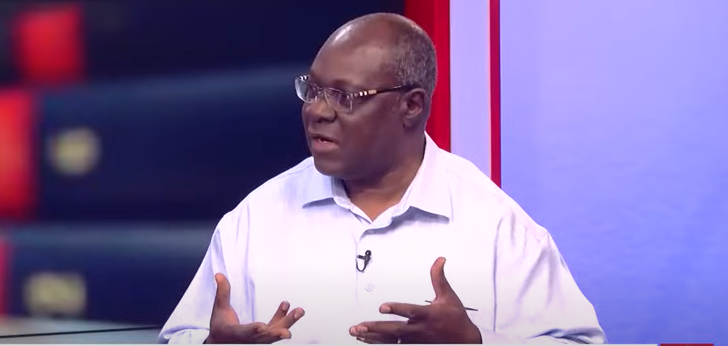
Speaking on JoyNews’ AM Show on Monday, July 14, Dr Kennedy (Arthur K) not only condemned the violence but also diffused any suggestions of returning to the era of the use of political party militia for protection and other purposes.
The Ablekuma North rerun, a rerun of 19 polling stations necessitated by a court ruling, was intended to be a democratic exercise, but quickly devolved into scenes of chaos. Reports indicated instances of intimidation, physical assaults on citizens and media personnel, and disruptions at polling stations.
Notably, former Minister of Fisheries and Aquaculture, Mavis Hawa Koomson, was attacked while Deputy National Organiser of the New Patriotic Party (NPP), Chris Lloyd Nii Kwei Asamoah, was also brutally assaulted.
Azorka Boys and NPP roots
In a particularly striking moment, Dr Kennedy delved into the contentious history of political party militias in Ghana, making a claim that challenges common narratives.
While the "Azorka Boys" are widely recognised as a group affiliated with the opposition National Democratic Congress (NDC), particularly in the Northern Region, Dr Kennedy asserted a surprising historical connection to the NPP.
"The government is responsible for security. I do not think it is progress for Ghana, for the NPP to go and form a vigilante group or an Azoka Boys or whatever. I go far back in the NPP, and people don't know it, the Azoka Boys used to be NPP boys. I have a Batakari sent to me by Azorka (the leader of the Azorka Boys) as a gift. When you cut your tongue and chew it, you are not chewing meat. This thing we are doing is inconsistent with national development and reconciliation."
Dr Kennedy's frustration was palpable as he lamented the recurring cycle of violence and the lack of accountability.
He called for a fundamental shift in the mindset of political leaders: "What must change is that governments must understand that they are not partisans fighting for power anymore. They are responsible for security in the state. People ought to be able to get up at home, go to vote and go home peacefully. We need to count our votes. And no drop of Ghanaian blood is worth anybody's ambitions."
While research generally associates groups like the Azorka Boys with the NDC and others like the Invisible Forces and Delta Force with the NPP, the phenomenon of party-affiliated militias has deep roots in Ghana's political landscape, predating the Fourth Republic.
These groups, often composed of unemployed youth, are used by political parties to provide "security" during campaigns, rallies, and elections, and sometimes to intimidate opponents or disrupt electoral processes.
The pervasive problem of political militias in Ghana
Political vigilantism remains a significant threat to Ghana's democratic stability.
Despite the enactment of the Vigilantism and Related Offences Act 2019 (Act 999), which criminalizes the formation, operation, and funding of such groups, their activities persist.
Challenges in enforcing this law, including a perceived lack of political will and the difficulty in prosecuting high-profile individuals, have contributed to a culture of impunity.
The impact of these groups is severe:
- Electoral Violence: The 2020 general elections, for instance, recorded at least eight deaths directly linked to electoral violence, with the 2024 elections also seeing at least six fatalities. These incidents often involve physical assaults, ballot box snatching, and intimidation, creating an atmosphere of fear.
- Erosion of Trust: The involvement of party militias and the perceived inaction or complicity of state security agencies erodes public trust in democratic institutions, including the police and the Electoral Commission.
- Undermining Rule of Law: When political actors resort to extra-legal means to achieve their objectives, it fundamentally undermines the rule of law and the principles of fair competition.
- Disenfranchisement: Fear of violence can deter citizens from participating in elections, leading to lower voter turnout and undermining the legitimacy of electoral outcomes.
Latest Stories
-
Bobby Banson condemns EOCO’s attempted arrest Nana Agyei Baffour Awuah
3 minutes -
When Kumasi begins to look like somebody is in charge
3 minutes -
Parliamentary probe into cocaine seizure would be a waste of time – Inusah Fuseini
9 minutes -
Cocaine seizure: Focus on Ghana’s reputation, not partisan blame – Osae-Kwapong
15 minutes -
Two Invitations, Three Interrogations: Did Baffour Awuah tell the whole story?
25 minutes -
Drug cartels may be seeing Ghana as easy route – Lenin Anane Agyei
1 hour -
Ghana risks gaining notoriety as drug-trafficking hub – Bobby Banson
1 hour -
Government dismissed my drug trafficking warning, then tried to arrest me – Ntim Fordjour
1 hour -
Day Two: 3rd Republic Bank-JoyNews Habitat Fair Clinic underway at Junction Mall
1 hour -
NACOC addressing inherited gaps in fight against drug trafficking – Deputy Director-General
2 hours -
Taekwondo goes to school as GTF launches five-region youth campaign
2 hours -
The issues Mourinho is struggling to fix at Real Madrid
2 hours -
Hundreds throng EducationUSA College Fair in Kumasi in pursuit of abroad studies
2 hours -
Drug bust: NACOC should be part of port inspection team – Twum-Barimah
2 hours -
Ward appointed Liverpool’s sporting director
2 hours