

Audio By Carbonatix
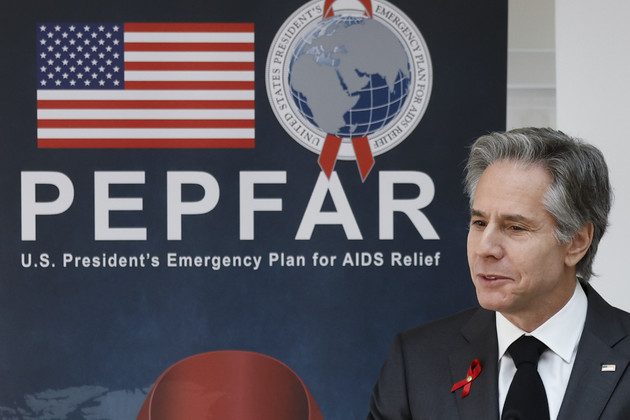
The Biden administration plans to cut funding by more than 6 percent in fiscal 2025 from the President’s Emergency Plan for AIDS Relief, the 21-year-old program credited with saving millions of lives in Africa, a senior PEPFAR official told POLITICO.
The State Department, which oversees the program, confirmed the cuts. The department has gradually spent down a glut in the PEPFAR budget from years in which funding from Congress exceeded State’s ability to spend it, said a department spokesperson who, like the PEPFAR official, was granted anonymity to discuss sensitive program decisions. Now the glut is gone and Congress in March held the program’s $4.4 billion budget flat.
PEPFAR grantees and AIDS relief activists accuse the department of not doing enough to shield key initiatives, such as those targeting people most at-risk of the disease.
The reductions in programs for key populations — which include men who have sex with men, people who inject drugs, prison inmates, sex workers and transgender people — range from 3 percent in the Democratic Republic of the Congo to 29 percent in Burundi, according to preliminary figures seen by POLITICO.
Advocates said the State Department should have protected programs serving those groups, because they’re often abused in the countries where they live.
“People are getting attacked, arrested, brutally assaulted, and it’s legitimate to ask what is PEPFAR’s strategy around communities, and how is it possible to implement a robust strategy when the math is going in the opposite direction,” said Asia Russell, executive director of Health GAP, an international advocacy organization focusing on access to HIV treatment.
Initiatives for at-risk groups will see an average 3.4 percent reduction compared with a 6.2 percent average decrease across the broader program in fiscal 2025, the PEPFAR official said.
The official didn’t explain why some countries would see double-digit reductions.
“PEPFAR is a data-driven program and every country has different HIV epidemiology in different contexts, so I can’t speak specifically to any particular country,” the official said.
Why it matters: Men who have sex with men, people who inject drugs, sex workers, transgender and incarcerated people are often at higher risk of contracting HIV and developing the disease the virus causes, AIDS.
Ensuring people who are HIV positive in these groups are getting treatment that keeps them alive and helps prevent more people from contracting HIV puts countries closer to achieving the United Nations’ 2030 target of ending HIV as a public health concern.
But many African countries discriminate against LGBTQ+ people, putting their health and that of others at risk. They often have difficulty obtaining condoms and HIV testing or treatment out of fear of harsh criminal penalties, which include lengthy jail time and even the death penalty.
In Burundi, where people in same-sex relationships face up to two years in jail, President Évariste Ndayishimiye said last year gay people should be stoned.
Russell said some PEPFAR-funded clinics closed in Kenya because of attacks, threats of violence and persecution.
A member of Kenya’s parliament introduced a bill last year to punish gay sex with prison or even death, similar to a law in neighboring Uganda.
Russell pointed to the State Department’s plan to increase funding by 4 percent in the next fiscal year for key populations in Uganda as evidence that the department could do more to protect at-risk groups broadly.
U.S. Global AIDS Coordinator John Nkengasong, who leads PEPFAR, told the Senate Foreign Relations Committee in May the program is focused on bringing down HIV rates in adolescent girls and young women, children and key populations.
The State Department declined to make him available for an interview.
Brian Honermann, the deputy director for public policy at amFAR, the Foundation for AIDS Research, who has analyzed the proposed program cuts, called for a strategy on how to close the treatment gaps among at-risk groups, given the difficulties they face.
“You have to come up with a programmatic understanding of how these differences matter and how we’re gonna programmatically respond,” he said.
Latest Stories
-
Labour Minister wants SOEs to help shape new public pay system
3 hours -
IPEC will ensure Equity and Sustainability in SOEs Compensation
3 hours -
White House bars CNN from travelling with Trump on Air Force One
4 hours -
Fennis wins second consecutive ITF J60 title in Accra
4 hours -
Spain beat England in thriller after Kane penalty miss
4 hours -
GPL 2026/27: Zaidan’s late goal ends Hearts of Oak unbeaten start
4 hours -
CEOs demand clarity on pay harmonisation, board autonomy as FWSC engages SOEs bosses over IPEC transition
4 hours -
2026 Women’s Super Cup: FC Savannah, Epiphany Warriors maintain top spots ahead of final group games
4 hours -
‘Is EOCO responsible for determining lawyers’ fees?’ – Baffour Awuah
5 hours -
David Beckles claims second J60 Accra title
5 hours -
No France cocaine suspect linked to Mahama, Vice President’s security details – NACOC
5 hours -
Anwelle Foundation launched in Jirapa to tackle poverty, youth unemployment
5 hours -
Joy Sports Editor Fentuo Tahiru Fentuo to moderate inaugural Music Meets Football Summit in Zambia
6 hours -
Court premises too volatile for Baffour Awuah’s attempted arrest by EOCO – Inusah Fuseini
6 hours -
Drug bust: Under no circumstances will NACOC leadership be compromised – Twum-Barimah
6 hours