

Audio By Carbonatix
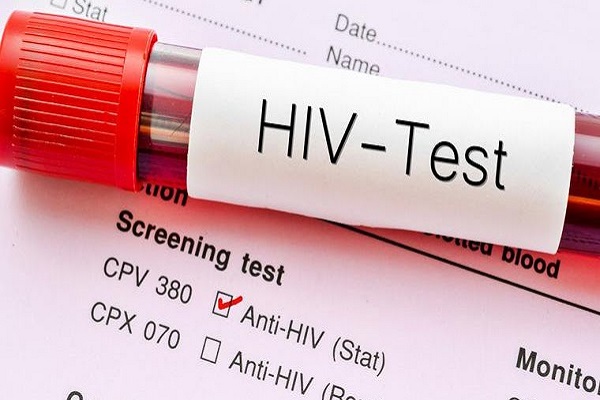
The Bolgatanga Municipality in the Upper East Region remains a hotshot for HIV infection, health experts have said.
Sulemana Majeed, Regional HIV Coordinator, who disclosed this at a media briefing, said, “Bolgatanga has always been above the national figure, which calls for an increase in sensitisation and education.”
The media engagement was part of a series of activities by the GHS and the Ghana AIDS Commission to solicit the support of journalists to increase public awareness on HIV and help prevent, control and manage the spread of the virus among the public.
Mr Majeed said the Regional figure for HIV infection was 1.9 per cent and noted that the disease was gradually becoming more urbanised with lots of population influx with activities, including commercial sex activities at certain areas within the Bolgatanga township.
He emphasized that the HIV hotspot was not static and peculiar to certain areas in the Region but had over the years swung among the Districts, adding that Navrongo in the Kassena-Nankana Municipality used to be a hotspot.
“It moved to Sandema in the Builsa North Municipality for about five years and to the Bolgatanga Municipality. So if you go by the HIV Sentinel Survey (HSS) data, Bolgatanga will be considered as our hotspot,” the HIV Coordinator said.
He said per the HSS sites of HIV prevalence, the Bolgatanga Municipality recorded increases from 2.8 per cent in 2018 to 3.6 per cent in 2019, and indicated that though there was a decrease to 2.6 per cent in 2020, the prevalence rate was still high in the Bolgatanga Municipality.
He said Navrongo recorded a constant figure of 1.6 per cent in 2017 and 2018 respectively, with increases to 2.0 per cent in 2019, and 2.2 per cent in 2020, while the Builsa North Municipality saw a consistent increase from 1.0 per cent in 2017 to 1.1 per cent in 2018 and from 1.2 per cent in 2019 to 1.3 per cent in 2020.
The situation, he noted, was not different in the Bawku Municipality as it equally recorded increases from 0.4 per cent in 2017, to 0.6 per cent in 2018, 1.2 per cent in 2019, and 1.3 per cent in 2020.
On the number of positive HIV cases per population, Mr Majeed said the first five hotspot Districts were Nabdam, Bolgatanga East, Builsa North, Bongo, and Bolgatanga Municipality.
Nabdam District, he said recorded 214 HIV cases per population, “So per every 100,000 population in Nabdam, 214 of them would be HIV positive, Bolgatanga East is 175, Builsa North is 152, Bongo 149 and Bolgatanga Municipality is 112 per 100,000 population.”
Dr Josephat Nyuzaghl, Deputy Regional Director of the GHS in charge of Public Health, called on journalists, especially broadcast journalists at various radio stations across the Region, to support the Health Directorate to educate and increase awareness of HIV among members of the public to curtail the spread.
Latest Stories
-
Trump says he is considering firing US ambassador to Greece
4 hours -
Man City bananas ‘brought fun back’, says Varadi
4 hours -
Meta releases Muse Wonder AI models to challenge Anthropic and OpenAI
4 hours -
Daily Insight for CEOs: The CEO as Chief Decision Maker
4 hours -
Burnham had formal meeting with Man City chair while mayor
5 hours -
Is Ghana producing too many lawyers? What is the best lawyer-to-citizen ratio?
5 hours -
NDC sinking Ghana’s democracy with Emelia Agbenyo’s appointment – Miracles Aboagye
5 hours -
Seedorf back in football as Corinthians head coach
5 hours -
Hincapié and Zubimendi injured in post-match training session
5 hours -
Fridges in French supermarkets hit by cyberattack
5 hours -
Qantas flight grounded after bedbug outbreak
5 hours -
Reality Zone with Vicky Wireko: International Day of the Girl, shaping today’s girl for tomorrow’s future – ZONTA Clubs lead the way
6 hours -
Global health must be led by countries, not designed for them – Mintah Akandoh
7 hours -
Mahama honoured at 2026 World Health Summit in Berlin for global health leadership
7 hours -
Breast cancer is not a death sentence – Besease Kontire Obaapanin, Magmina Foundation lead awareness campaign
7 hours