

Audio By Carbonatix
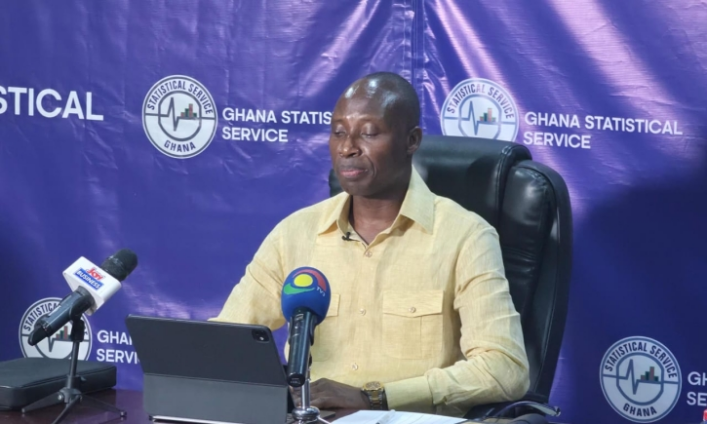
Ghana's year-on-year inflation rate rose to 5.3 percent in June 2026, up from 3.7 percent in May, marking a 1.6 percentage point increase largely driven by rising non-food prices, according to the Ghana Statistical Service (GSS).
Despite the increase, inflation remains significantly lower than the 13.7 percent recorded in June 2025, indicating that price pressures are still easing compared to the same period last year.
Data released by the GSS today showed that the Consumer Price Index increased to 270.8 in June from 257.3 in the corresponding period last year.
On a month-on-month basis, inflation slowed to 0.2 per cent, down from 1.1 percent in May, suggesting that while prices continued to rise, the pace of increase moderated.
Non-food inflation remained the main driver of overall price increases, climbing to 6.3 per cent from 4.1 per cent in May and accounting for 68.5 per cent of total inflation. A breakdown of non-food inflation shows that transport fares recorded the highest contribution, accounting for 10.5 per cent of headline inflation.
Rents followed closely, contributing 8.4 percent, while secondary school fees contributed 7.2 per cent. Other notable contributors included accommodation services such as hotels at 4.0 per cent. The non-food category was largely driven by services inflation, which stood at 9.4 per cent, reflecting continued pressure in the services sector.
Food inflation also edged up, rising to 3.9 percent from 3.3 percent the previous month.
The data further showed that locally produced items recorded a year-on-year inflation rate of 6.7 per cent, up from 5.0 per cent in May, contributing 86.6 per cent of headline inflation. In contrast, inflation for imported goods rose to 2.3 per cent from 0.9 per cent.
Services continued to experience stronger price growth than goods. Services inflation stood at 9.4 per cent, although it eased slightly from 9.9 per cent in May. Goods inflation, however, increased sharply to 3.7 per cent from 1.4 per cent.
Regionally, the North East Region recorded the highest inflation rate in June at 10.2 per cent, while the Bono East Region recorded the lowest at -4.4 per cent, reflecting a decline in average prices over the period.
Latest Stories
-
Ghana Psychological Association calls for greater involvement of people with lived experience in mental health care
29 minutes -
Ablakwa says Ghana could evacuate more citizens from South Africa if the situation worsens
57 minutes -
Violence against girls must be tackled through individual responsibility – Gender advocate
1 hour -
Ghana’s BRICS bid must be guided by national interest – International Affairs Analyst
1 hour -
Journalists look back on a decade of breast cancer reporting in Ghana
2 hours -
President Mahama ends Resetting Ghana tour of Ahafo Region
4 hours -
African negotiators seek delivery of climate commitments at COP31
4 hours -
BoG develops AI rules for financial sector
4 hours -
‘Big Push’: Government assures contractors of prompt payments
4 hours -
Court fines miner for breaking into gold buying shop
4 hours -
Tarkwa court jails labourer for three years over GH¢123,000 theft
5 hours -
GAEC must retain nuclear scientists for Ghana’s nuclear ambitions – Minister
6 hours -
Man reportedly mistaken for game and shot by hunter dead in forest
6 hours -
19-year-old mason jailed 15 years for defiling seven-year-old pupil
6 hours -
Ghana’s banking sector assets rise 20.47% to GH¢500.2bn – BoG Governor
6 hours