

Audio By Carbonatix
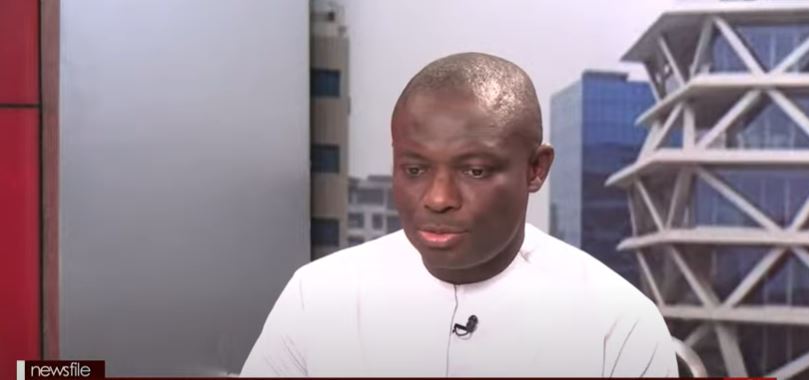
Communications Officer of the National Democratic Congress (NDC), Sammy Gyamfi has disagreed with the assertion that Ghana’s economy is run like a Ponzi scheme.
This follows former Deputy Finance Minister Kwaku Kwarteng likening the management of Ghana's economy to a Ponzi scheme.
According to Gyamfi, the current economic challenges at both national and household levels stem from decades of poor governance, marked by political mismanagement and economic inefficiency across various administrations.
In an interview on Joy FM’s Top Story, Mr. Gyamfi explained that this characterization does not apply to the NDC administration.
He pointed out that during Mr. Mahama’s tenure, the budget deficit was 6.1%, which was within acceptable limits.
Additionally, the debt-to-GDP ratio in 2016 was 56%, also within the acceptable threshold, while Ghana was still servicing its debt. Mr. Gyamfi noted that the NDC did not record a budget deficit that was considered reckless, unlike the NPP.
Read more: Audio: Kwaku Kwarteng explains ‘Ponzi scheme economy’ analogy and his criticism of NPP
"In 2018, under this government, documents they [NPP] submitted to the IMF in 2020 for the rapid credit facility of 1 billion dollars show that they recorded a budget deficit of 7.1% in 2018, before COVID. In 2019, they recorded a budget deficit of 7.5%, before COVID, indicating reckless spending...," he said.
He urged Mr. Kwarteng, who made the assertion about the economy, to acknowledge the differences in fiscal management between the administrations.
“You cannot say all governments are the same. Let’s call a spade a spade, not a digging tool. If your government has been reckless, you have to call them out. Don’t try to generalize and think all of us are the same,” he stated.
Mr. Gyamfi however agreed that the principle of Mr. Kwarteng’s argument is valid but noted that it applies specifically to the ruling NPP government.
“That is the argument we in the NDC have been making for a long time—that this Akufo-Addo-Bawumia-NPP government must learn to live within its means. The reckless expenditure, which led to excessive borrowing since 2017, was going to crash our economy. We sounded the alarm bells, advised the government, but they refused to listen, and that is why today, we find our economy in a mess,” he explained.
Latest Stories
-
Twelve women have been killed in one part of South Africa since July. Here’s what we know so far
2 minutes -
OMJ Foundation commits to supporting transport, safety and livelihoods of commercial riders in Akuapem South
5 minutes -
The Reciprocity crisis: Why Ghana welcomes British Professionals while the UK relegates ours
5 minutes -
GNAT rejects gov’t fresh assurances, demands implementation of August 31 agreement
15 minutes -
Gabriel Tanko Kwamigah-Atokple appointed Patron of NDC UK and Ireland Aldershot Branch
20 minutes -
Bawumia engages Ghana Medical Association on health workforce and licensing concerns
23 minutes -
SEC shuts down Nyak-City Hostels over unlicensed investment scheme
25 minutes -
The Ladder Project engages 60 UPSA student leaders on leadership and Ghana’s next chapter
27 minutes -
National Investment Quiz: St. Augustine’s, Prempeh College advance to semi-finals
32 minutes -
Leadership is about responsibility, not titles – Sammi Awuku tells UPSA students
34 minutes -
National Investment Quiz: Corpus Christi, Wesley Girls, advance to semi-finals
38 minutes -
Phone dealer murder: 3 suspects remanded as court adjourns Teshie case
41 minutes -
Seamless Technologies CEO Calls for Strategic AI adoption to transform Ghana’s financial services sector
44 minutes -
Cargill, ICI equip 111 youth with vocational skills to tackle child labour
45 minutes -
Council of State member donates $5,000 to NDC UK and Ireland Aldershot branch for water project
50 minutes