

Audio By Carbonatix
The Christian Health Association of Ghana (CHAG) has positioned its network of border health facilities as strategic national assets, saying they are not only expanding access to healthcare in underserved communities but also strengthening Ghana's health security across West Africa.
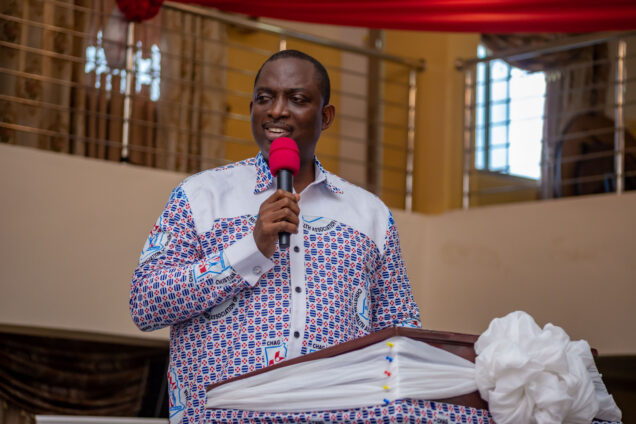
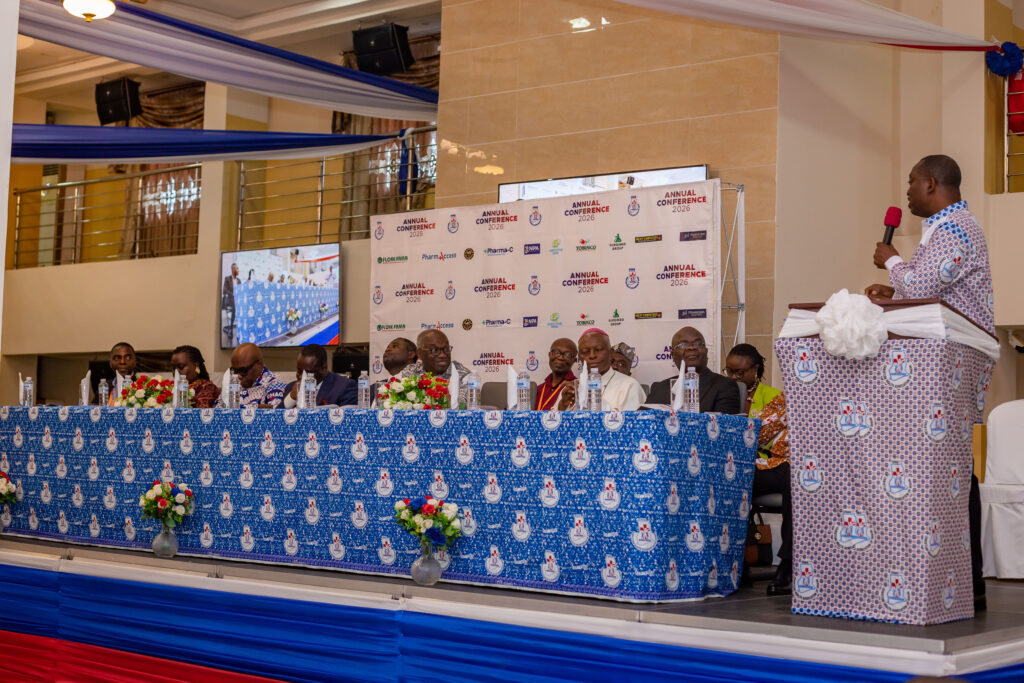
Speaking at the opening of the 2026 CHAG Annual Conference in Koforidua, Executive Director of CHAG, Dr. Peter Kwame Yeboah, said the association's contribution extends beyond healthcare delivery within Ghana, with several of its hospitals providing critical services to patients from neighbouring countries.
"Our contribution extends well beyond numbers. CHAG provides strategic value and vital leverage for Ghana's health security," Dr. Yeboah said.

He explained that several CHAG facilities located in border communities serve as referral centres for patients from neighbouring countries, helping strengthen regional health security.
Among them are the Presbyterian Hospital in Bawku in the Upper East Region, which serves patients from Ghana, Togo and Burkina Faso; St. Theresa's Catholic Hospital in Nandom in the Upper West Region, which provides healthcare to people from Ghana, Côte d'Ivoire and Burkina Faso; Presbyterian Hospital in Dormaa in the Bono Region, which serves communities in both Ghana and Côte d'Ivoire; and St. Martin de Porres Catholic Hospital at Eikwe in the Western Region, which also provides healthcare to patients from Ghana and Côte d'Ivoire.
According to Dr. Yeboah, these facilities have become an integral part of healthcare delivery beyond Ghana's borders.
"We provide critical health services in border communities such as Bawku, Nandom, Dormaa and Eikwe, thereby strengthening regional health security across neighbouring countries," he said.
The CHAG Executive Director noted that the association's role becomes even more critical during periods of instability.
"In conflict-prone environments, our facilities remain symbols of continuity, stability and hope," he said.
Dr. Yeboah said CHAG has deliberately maintained its presence in communities where access to healthcare remains limited, describing the association's commitment to rural and underserved areas as one of its defining strengths.
"For decades, we have deliberately chosen to establish our services in remote, underserved and often forgotten communities where, in many instances, CHAG facilities remain the only available source of healthcare and referral services," he stated.
He added that CHAG's deep roots within local communities have enabled it to earn the confidence of the people it serves.
"Most importantly, we are deeply rooted within the communities we serve. Through decades of faithful presence, we have earned what may be our greatest institutional asset - the trust of the people," Dr. Yeboah said.
Beyond its strategic role in border healthcare, Dr. Yeboah highlighted CHAG's broader contribution to Ghana's health system.
Although the association owns just about 7 per cent of the country's health infrastructure, it delivers between 30 and 40 per cent of healthcare services nationwide through a network of 375 health facilities across all 16 regions.
He said between eight and ten million people receive care annually through CHAG facilities, which provide preventive, promotive, curative, rehabilitative, palliative and specialist healthcare services.
Dr. Yeboah also underscored CHAG's contribution to developing Ghana's health workforce through its 22 accredited health training institutions.
"Every year, we produce about 3,400 professionally qualified and ethically grounded health professionals, including nurses, midwives, physiotherapists, orthotics and prosthetics technicians, and other middle-level health workers who continue to strengthen Ghana's healthcare system," he said.
He reaffirmed CHAG's commitment to supporting government's Free Primary Health Care initiative, describing it as a historic opportunity to expand access to quality healthcare, particularly in rural and hard-to-reach communities.
"The promise of Free Primary Health Care is unquestionable. Its aspirations are noble. Its vision is compelling. However, every great policy ultimately succeeds or fails at the point of implementation," he said. Dr. Yeboah called for stronger collaboration among government, development partners and healthcare providers to ensure the successful implementation of the policy and improve healthcare outcomes for all Ghanaians.
Latest Stories
-
MamaCare CEO warns unresolved conflicts among health workers could undermine maternal and neonatal care
23 minutes -
Health professionals urged to translate medical knowledge into practice to save mothers
30 minutes -
Conflicts among care providers linked to maternal, neonatal deaths – Expert
2 hours -
GIS marks 10th TIME conference, champions improved teaching practices
2 hours -
BRICS Or Balance? What Ghana’s bid really means
3 hours -
GPRTU wants full TRAFFITECH-GH implementation to start in 2027
3 hours -
Mahama announces plans to import electric wheelchairs for PWDs
3 hours -
KGL U17 Colts 2026: Western beat Prempeh Elite Academy to set up final final with Greater Accra Region
3 hours -
Late Solanke strike salvages 10-man Spurs draw at Man United
3 hours -
Gender Ministry to monitor welfare of Nana Akua Addo’s children amid domestic violence case
4 hours -
Benedict Okyere Yeboah: Ghana’s football problem goes beyond sacking a coach
4 hours -
GPL 2026/27: Darkwah Wiafe’s winner sees All Blacks beat Kotoko
4 hours -
ITF World Tour : Patel Wins Boys’ Singles Final at J100 Accra
4 hours -
Ghana must pursue BRICS partnership if it brings economic benefits – Kpebu
4 hours -
Success and Wright Claims J100 Accra Girls’ Doubles Championship
4 hours