


Audio By Carbonatix
Some months ago, I was tasked with facilitating training on Effective Communication in the Lecture Room for selected faculty members at the University of Professional Studies Accra (UPSA). That was when my research led me to the “Feedback Sandwich Model”, a model I believe can turn criticism into connection.
Picture yourself in a lecture room, your heart pounding after what you thought was a solid presentation on managing brand equity. Your professor leans forward and says, “Well done. Your delivery was confident and engaging. But your data sources are outdated and not very in-depth. Try harder next time”.
The words hit like a slap. You leave deflated, doubting your abilities rather than feeling motivated to improve. Now, imagine a similar situation, but with a different response from your professor: “Your delivery was confident and engaging. Good job. I especially liked how you tied the three strategic approaches to local examples. That said, bolstering your data with more recent peer-reviewed sources would make your argument even more compelling. Overall, this shows real potential, and I’m excited to see your next piece”. Suddenly, you feel seen, guided and energised.
This is the power of the Feedback Sandwich Model (FSM), a simple yet deeply human way to deliver criticism, sandwiching constructive feedback between layers of genuine positivity. Whether in a classroom or corporate setting where growth hinges on honest input, learning this technique can transform relationships, improve performance and build psychological safety. It is not some fluffy management gimmick; it is rooted in empathy and respect for the receiver's humanity.
So, what is the Feedback Sandwich Model? It is an approach to giving constructive feedback that begins with positive comments or acknowledgement of strengths, then addresses areas for improvement, and ends with a positive affirmation.
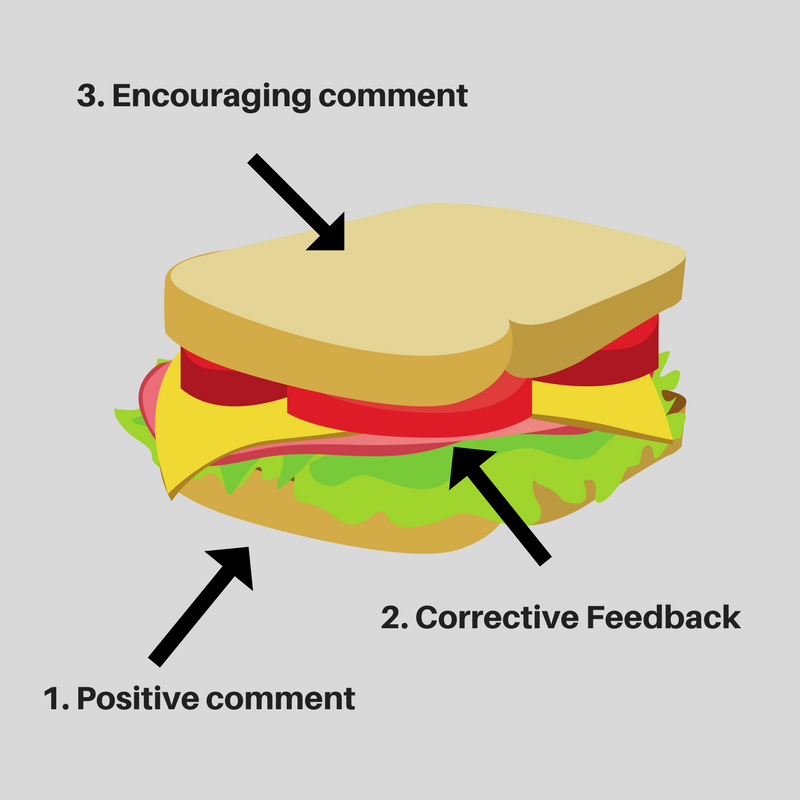
Source: https://coachingyoungathletes.com
Also known as the “positive-negative-positive” approach, the FSM structures feedback in three layers: (1) The Top Layer (Positive Opening) begins with specific, genuine praise that highlights effort, strengths, or achievements. It builds rapport and opens the recipient's mind to feedback.
(2) The Middle Layer, “The Filling”, clearly identifies the area for improvement, focusing on behaviours or outcomes rather than personal characteristics. Instead of attacking the person or the work, the focus is on providing constructive criticism about what can be improved and how one can get better, rather than on how bad one is.
(3) The Bottom Layer is where one wraps up with a positive statement that affirms belief in the person’s potential, reinforcing their value and motivation. It requires ending your feedback on a positive note or with encouragement.
This model is not about sugar-coating problems; it’s about delivering truth with dignity. Studies in organisational behaviour and educational psychology consistently show that individuals are more receptive to feedback when they feel appreciated rather than attacked. This can reduce defensiveness, a natural human response when we feel our competence is being challenged.
In an era of instant electronic communication, where emails and performance reviews can feel chilly and transactional, the sandwich brings warmth back to the workplace. It's a reminder that behind every report, every presentation, every project, there's a human being with hopes, insecurities and a desire to contribute something meaningful.
We are built for connection. According to evolutionary psychologists, social rejection activates the same brain regions as physical pain. Brutal, in-your-face critique can feel like rejection, which can halt learning. The sandwich model does the opposite. It activates feelings of safety and belonging. Dr. Carol Dweck’s work on growth mindset also supports this: people flourish when feedback focuses on potential and effort rather than on fixed ability.
The sandwich begins and ends well, saying, “You can do it”. This feedback helps you grow. It humanises the giver as well, showing vulnerability and care rather than wielding authority like a blunt instrument.
The purpose of good feedback is not a better product but human development. Whether it’s guiding a student through academic obstacles or helping a professional navigate career challenges, the sandwich model is empathy in action. It says I see you trying, I believe in your growth, and I’m invested in your success. So the next time you have to give feedback, pause. Think about the person in front of you. Their life, their struggles, their hopes. Write your feedback like a sandwich: filling, balanced and memorable. Your relationships, your teams and your organisations will be better for it.
***
Dr. Linda Narh, Senior Lecturer & Programme Coordinator, UPSA, Accra
Latest Stories
-
Ghana Medical Trust Fund, Hungary explore partnership to strengthen specialised healthcare
41 seconds -
Manhyia South MP Baffour Awuah pleads not guilty to EOCO charges, granted GH¢10m bail
4 minutes -
NPP conference: We need leaders to complement our efforts in Parliament – Annoh-Dompreh
6 minutes -
Sammy Crabbe steps down from NPP Chairmanship race, backs John Boadu
7 minutes -
NPP postpones constitutional amendments, including proposal on party leadership to next national conference
11 minutes -
NDC ‘running into opposition like Usain Bolt’ – Sammy Awuku
22 minutes -
Local pharma production can create jobs, strengthen Africa’s health security – Mahama
24 minutes -
Mahama calls for removal of barriers to boost Africa’s pharmaceutical industry
29 minutes -
NPP needs ‘war-like’ leaders to take fight to government – Annoh-Dompreh
32 minutes -
Mahama unveils HINGE digital platform to streamline health investment and regulation in Africa
39 minutes -
We won’t return to the classroom without concrete solutions – NAGRAT
45 minutes -
Mahama urges Africa to invest in local pharmaceutical manufacturing
51 minutes -
Akufo-Addo giving Bawumia space to assert himself as NPP leader – Gabby Otchere-Darko
56 minutes -
NPP delegates, not social media, will decide election winners – Miracles Aboagye
1 hour -
I have no interest in this election; I believe Bawumia will win 2028 election – NAPO
1 hour