

Audio By Carbonatix
The world says it wants a secure and diversified supply of critical minerals. It wants Africa’s lithium for batteries, copper for grids, manganese for cathodes, and bauxite for aluminium-intensive technologies.
But when the conversation moves from raw material supply to industrial capacity, the financing becomes thinner, shorter, and far more cautious. That is the contradiction at the centre of Africa’s place in the energy transition: global markets want the continent’s minerals, yet the financial architecture still does too little to help African countries capture more value beyond extraction.
That is why financing must move to the centre of the just-transition debate. Africa already supplies major shares of several minerals needed for clean-energy supply chains, yet it captures only a tiny share of the value generated from manufacturing clean-energy technologies and their components.
If the continent remains largely a source of ore and concentrate while others finance the processing, chemical conversion, component manufacturing, and technology platforms, then the transition may be green, but it will not be just.
The financing gap is visible in the wider energy economy. Africa is home to around one-fifth of the world’s population but attracts only a small share of global energy investment and an even smaller share of global clean-energy spending.
The cost of capital for energy projects in African countries remains far higher than in advanced economies and China. That matters for critical minerals because value addition is not only about a mine or a plant. It depends on the systems around them: reliable electricity, transport, water, industrial inputs, skills, and long-term finance that can absorb risk before commercial returns are immediate.
Ghana offers one of the clearest examples of both the promise and the financing challenge. The country’s long-standing ambition to build an integrated bauxite-to-aluminium industry is not irrational. Ghana has high-quality bauxite, an aluminum smelter through VALCO, and a political desire to retain more value at home.
Recent Ghana-focused analysis suggests that a fully integrated aluminum industry could have a much larger impact on output and employment than mining alone. But the same evidence shows that the economics depend on factors that are expensive to finance and difficult to coordinate: competitively priced power under a long-term bulk supply arrangement, major rail investments, access to ports, and very large upfront capital expenditure. The missing link is not ambition. It is bankable industrial finance on appropriate terms.
This is a lesson with continental relevance. Ghana’s aluminum ambitions show that mineral value addition is not a side project that can be bolted onto extraction later. It is an integrated industrial undertaking. If power is too expensive, if rail is missing, if industrial inputs are imported at high cost, or if the financing tenor is too short, the refinery becomes uncompetitive before it starts.
NRGI has warned that Ghana’s aluminum value chain ambitions could absorb almost all the country’s hydropower capacity unless new competitively priced electricity is brought onstream. That is precisely the kind of structural problem that private investors alone are unlikely to solve.
Ghana’s lithium debate shows the same problem from another angle. Public support for domestic lithium refining is understandable. Many Ghanaians do not want the country to discover a transition mineral only to repeat the old pattern of exporting raw material and importing value-added products.
But recent analysis by the Natural Resource Governance Institute shows that a refinery built in the next few years would face limited feedstock, higher costs than major competitors, especially in China, and uncertain demand conditions outside China.
Under one medium-price scenario, Ghana could earn at least USD 500 million less from its current lithium reserves by refining domestically than by exporting concentrate, and the refinery would likely create no more than about 200 direct jobs once operational.
That finding should not be read as an argument against value addition. It is an argument against forcing value addition before the financing and market conditions exist. Ghana’s lithium case is really a warning about how the wrong financing structure can turn a popular industrial idea into a fiscal burden.
NRGI's modelling shows that if a refinery pays the market price for feedstock, it makes a loss; if it pays below-market prices, the government effectively subsidises the refinery through lower revenue from the mine. The state could also step in with grants, cheap loans, subsidised energy or direct ownership, but that would still move risk onto the public balance sheet.
This is where financial governance becomes as important as financial volume. Ghana’s Ewoyaa lithium agreement already reflects an effort to secure a stronger public share through a 10 percent royalty, a 35 percent corporate income tax rate, free carried state interest, additional paid equity, and a community development contribution.
But when global prices fall, companies quickly seek concessions. That is exactly what has happened in recent discussions around Ewoyaa. The lesson is not that governments should never adjust terms. Any support to investors must be transparent, targeted, and conditional.
The wider African picture confirms that this is not only a Ghana problem. The International Energy Agency has shown that while mining in parts of Africa may be cost-competitive, the capital and operating costs of refining are often much higher because energy, logistics, and industrial inputs are more expensive or less reliable.
In its analysis of copper refining, the IEA found that projects in Africa can cost more than four times as much upfront as comparable projects elsewhere, while energy costs are significantly higher and account for a very large share of production costs. Africa does not only need more investment. It needs investment that changes the economics of industrial production.
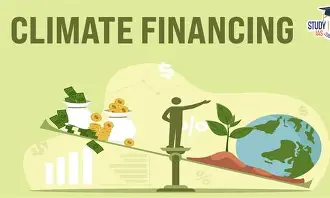
That is why climate finance, development finance, and private capital must be reoriented. Today’s financial architecture still finds it easier to support mines than the industrial ecosystems that make mineral upgrading viable. Yet the logic of a just transition points in the opposite direction.
If critical minerals are indispensable to global decarbonisation, then the infrastructure that allows African countries to process them, namely power generation, transmission, gas, rail, ports, water systems, industrial parks, skills systems, and first-mover plants, should be treated as part of the transition, not as unrelated commercial extras.
Development banks and climate funds should therefore create fit-for-purpose financing windows for mineral value addition and enabling infrastructure, with longer tenors, concessional tranches, guarantees, foreign-exchange risk mitigation, and serious project-preparation support.
The agenda should also go beyond isolated national plants. Many African countries do not individually have enough feedstock, infrastructure, or market scale to make every stage of processing viable. Finance should therefore support integrated project models and regional industrial corridors where the economics justify them.
Ghana’s aluminium case already points in this direction: the viability of refining and smelting improves when power, transport, and industrial planning are treated together rather than separately. More broadly, regional pooling can help improve scale, reduce unit costs, and make projects more bankable.
This is where the Africa Group of Negotiators has an important opening. In global forums, AGN should insist on four simple points. First, Africa’s critical minerals agenda must be treated as a just-transition issue, not merely a supply-security issue for importing countries.
Second, climate and development finance should support the industrial foundations of value addition, not only extraction.
Third, public de-risking must come with public safeguards so that African states do not carry the downside while others capture the upside.
Fourth, concessional and blended finance should help create commercially credible first movers, while leaving room for governments to course-correct where projects do not yet make economic sense.
Africa does not need another commodity boom that leaves behind a few pits, a few ports, and a long list of missed opportunities. It needs finance that helps convert mineral endowment into productive capability.
Ghana’s experience shows both why this is difficult and why it matters. Where the infrastructure is missing, the capital is too expensive, and the risks are loaded onto the public balance sheet, value addition will stall or become fiscally damaging.
But where finance is patient, infrastructure is financed as part of the industrial project, and public safeguards are built in from the start, the just-transition promise becomes more credible. Climate finance cannot stop at the mine gate. For Africa, it must also finance the industrial future beyond it.
Latest Stories
-
KGL U17 Colts 2026: Western beat Prempeh Elite Academy to set up final final with Greater Accra Region
10 minutes -
Late Solanke strike salvages 10-man Spurs draw at Man United
20 minutes -
Gender Ministry to monitor welfare of Nana Akua Addo’s children amid domestic violence case
27 minutes -
Benedict Okyere Yeboah: Ghana’s football problem goes beyond sacking a coach
36 minutes -
GPL 2026/27: Darkwah Wiafe’s winner sees All Blacks beat Kotoko
42 minutes -
ITF World Tour : Patel Wins Boys’ Singles Final at J100 Accra
54 minutes -
Ghana must pursue BRICS partnership if it brings economic benefits – Kpebu
58 minutes -
Success and Wright Claims J100 Accra Girls’ Doubles Championship
58 minutes -
ITF J100: America’s Wright wins J100 Accra Girls’ Singles Title
1 hour -
Expedition hopes to find aviator Amelia Earhart’s plane on remote island
1 hour -
US seeks changes to rejected $109m health compact with Ghana – Mahama
2 hours -
Nine dead in mass shooting at Pennsylvania home
2 hours -
‘Time for Ukraine to get new president,’ says Trump after Zelensky condemns diesel deal
2 hours -
Hincapie injury adds to Arsenal issues after Guimaraes rescue act
2 hours -
Henderson scores twice as Chelsea thumb Bournemouth
2 hours