

Audio By Carbonatix
Mechanised boreholes and piped water serving as the only potable water sources in rural communities are threatened by aging infrastructure, inadequate funding, and the lack of technical support.
The Network of Community Water Services (NETCOWAS), a national body of community-managed water services, decries the abysmal management of water utilities in small towns by government institutions.
With the rapid growth of population and settlement expansion, the body believes community management models would ensure effective supervision and sustainability of water utilities in remote communities.
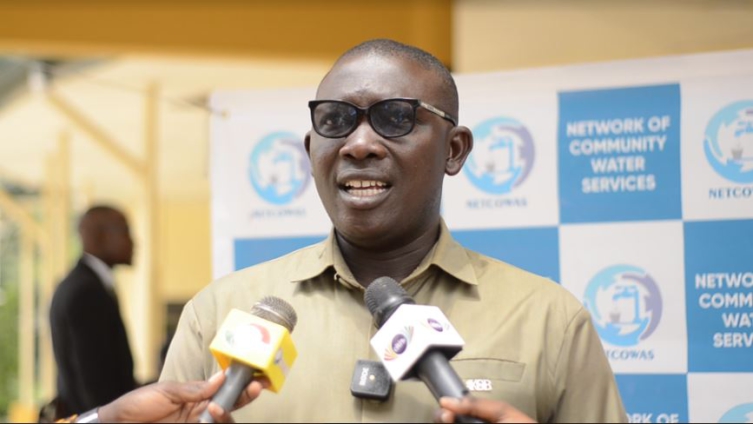
Director of Operations for the group, Fred Asafu-Adjaye disagrees that communities cannot manage their water systems.
“The National Community Water Service Provider delivered 1022 piped water systems and 28,659 boreholes fitted with hand pumps in the 20 years preceding the June 2017 reforms of Community Water Service Agency. With this achievement on the back of community management, how can anyone say the community management model has failed?” he said.
Since its inception in 1944, the National Community Water and Sanitation Programme has increased rural water access in Ghana to 74% in 2021.
Communities over the years developed local capacities for managing small water utilities and ensured continuous functionality of the water system through sale of water to finance operations and maintenance expenditure.
But most community-managed water supply are presently challenged with grant access, commercial and blended financing for critical capital expenditure, severed water distribution lines by contractors and lack of access to smart solar water meters.
Speaking at the first conference of the Network of Community Water Services, Director of Operations for the group, Fred Asafu-Adjaye, expounded some strategies to mitigate the challenges.
“The group will collaborate with Centre for Water, Sanitation and Hygiene to prepare specific project proposals and seek funding including impact funds for the implementation of key sustainability improvement interventions.
"We will work with Banks to provide easy access to affordable commercial and blended finance for community-managed piped water systems. There will be strong advocacy for increased responsibility of road contractors to cooperate with managers of community piped water services to prevent the destruction of water transmission and distribution lines during town road construction works,” he said.

Illegal mining activities continue to ravage water sources in most communities in the Ashanti Region.
Professor Braimah of the Department of Planning at KNUST chaired the History Conference/Learning Forum and also inaugurated the National Executive Committee of NETCOWAS.
Professor Braimah noted that the composition of the National Executive Committee of NETCOWAS reflects all the key stakeholders in community-managed piped water supply namely Chiefs, Queen mothers, Water Board/WSMT Chairmen, Honourable Assembly members, and System Managers.
“When they leave their water supply to the Ghana Water and Sewerage Agency they will run at a higher risk of pollution because Agency sources Water from these polluted water bodies. But with the community Water they get the water directly from groundwater. Even though this could also be infected, the community leaders can properly institute measures to ensure their only source of potable water is not contaminated,” he said.
Executive Secretary of NETCOWAS, Gifty Rhoda Afful, believes revenues accrued from water management systems could fuel progress of using the funds to service, manage and improve their water systems.
“Some communities have their water operating without prepaid meters even those who have them are confronted with issues. With the establishment of this association, we will be able to provide meters so the communities can generate revenues and help their communities. The profits from this community Water can help solve societal problems like payment of fees for some students in the community,” she said.
Vice President for the Association, Morsohemaa Nana Acheampomaa Anima Kotroka II, entreated communities with piped water systems to become members of the association for long-term sustainability of potable water.
“Chiefs, Queen mothers, and Honorable assembly members must ensure that all community-managed piped water systems within their jurisdictions register and become active members of NETCOWAS in order to guarantee the long-term sustainability of safe drinking water supply for their people and those yet unborn,” he said.
The conference was on the theme “Towards national recognition and government support for community-managed rural/small towns piped water supply as a critical water service provider group in Ghana”.
Latest Stories
-
Anti-LGBTQ Bill: NDC’s arrogance is worrying – Hassan Tampuli
8 minutes -
Let’s give OSP time to mature, not to scrap it – Hassan Tampuli
12 minutes -
Nigeria convicts 386 Islamist militants in mass trials
17 minutes -
Djibouti president wins election with 97.8% of vote, state media says
21 minutes -
We don’t have mandate to deduct tax from rent allowance of security services personnel – Interior Ministry clarifies
36 minutes -
Ablakwa receives Presidential Special Envoy on Reparations to advance global agenda
53 minutes -
Christina Koch becomes first woman to travel around the moon on Artemis II
1 hour -
Epstein survivors’ calls to meet King Charles and Queen harder to ignore as US visit approaches
1 hour -
UN Secretary-General names Ghana’s Anita Kiki Gbeho as South Sudan envoy
1 hour -
Mali withdraws recognition of Sahrawi Republic, backs Morocco’s autonomy plan
1 hour -
Gov’t distributes over 8,500 laptops to One Million Coders project
1 hour -
Julius Debrah, ‘man to beat’ as NDC’s James Agbey dismisses Musah Dankwah’s polls
1 hour -
GPRTU in Savannah Region to protest alleged eviction in Damongo
2 hours -
Re: Reinsurance does not replace process — A response to the SIGA–SIC defence
2 hours -
Gender Ministry supports Harriet Amuzu in ongoing abuse case
2 hours