

Audio By Carbonatix
Pre-existing conditions such as poverty, insecurity, weak governance and fragile infrastructure in low-and middle-income countries threaten to exacerbate the impact of Covid-19 if not immediately addressed.
UNDP’s Rapid Response Facility aims to help expedite and facilitate this urgent support.
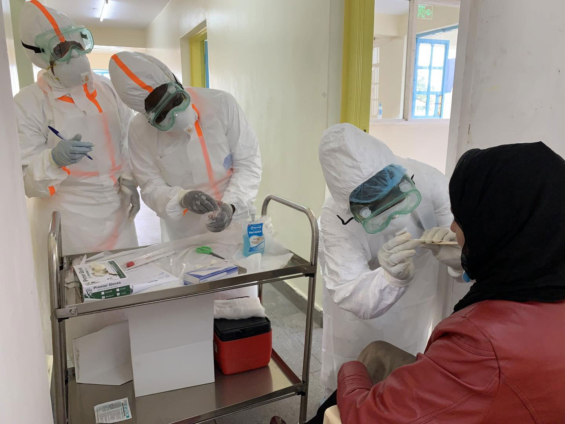
The support enabled by the Facility includes the purchase of essential medicines for patients, personal protective gear for healthcare workers, testing supplies, and local initiatives that aim to raise awareness and engage communities on the risk of Covid-19.
A month since the Facility’s launch, 83 countries have benefited, amounting to $23.3 million in committed resources.
Funding for support via the Facility comes from repurposed core resources, as well as funding provided by donors to UNDP’s crisis-response Funding Window.
In keeping with the One UN approach, all funding requests must align with the programmes and initiatives of the other UN agencies in the country under the leadership of the UN Resident Coordinator and, most critically, with the priorities of the government concerned.
“This Rapid Response Facility is fast-tracking life-saving efforts on the ground -- from the procurement of critical protective equipment and medical supplies to the promotion of digital solutions such as telemedicine,” said UNDP Administrator, Achim Steiner.
“UNDP anticipates a minimum $500 million need to support 100 countries to prepare, respond and recover from the devastating effect of COVID-19,” Steiner added.
UNDP’s overall support on COVID-19 includes three key elements: resources to help prepare for and help stop the spread of the virus, support to respond during the outbreak itself, and resources to cushion against the hardest economic losses and social disruption and help countries recover from the long-term impacts.
This seed money provided by the RRF is helping keep core functions in government operating, and funds are being used in 20 countries – including Bhutan, Cote d’Ivoire and Yemen – to provide digital and ICT solutions to allow governments to work remotely during the Covid-19 crisis.
Other innovations include using satellite imagery for response planning in Moldova, the systemic sanitisation of small business supply chains in Colombia and widespread support of informal enterprises in many countries switching their production to personal protective equipment (PPE).
UNDP’s work draws on its experience in delivering large-scale health programmes for the Global Fund and partners in more than 50 countries.
For example, from 2014 to 2017, UNDP provided health procurement and supply-chain strengthening services in more than 30 countries with US$1 billion in agreements, while generating savings of US$65 million in the procurement of HIV medicines alone.
Latest Stories
-
Interest payments to average a high 20% of government revenue over next 4 years
19 minutes -
Strategy of accumulating foreign reserves, gold carries high fiscal cost – S&P Global
34 minutes -
Weak institutional arrangements, high debt servicing constrain Ghana’s rating – S&P
40 minutes -
Bond market: Turnover declined by 28% to GH¢1.56bn
1 hour -
Volta Region National Public Speaking contest advances drug prevention conversation
1 hour -
New health training facility at Ampoma-Jema to address admission shortfalls, but Minister flags missing amenities
2 hours -
Black Challenge unveiled with sights set on Amputee World Cup glory
2 hours -
Pay striking teachers before expressway spending, Dr Kingsley Agyemang tells government
3 hours -
Customs intercepts assault rifle, two pistols and 610 rounds of ammunition at Tema Port
3 hours -
PKO boxers secure wins at Odwira Festival
3 hours -
South Tongu Records Rise in Teenage Pregnancy
3 hours -
Cabinet threw out US health compact faster than anything I’ve seen – Mahama
3 hours -
MoFA urges Finance Ministry to reverse World Bank food programme withdrawal over GH¢643m commitments
4 hours -
NAGRAT demands signed timelines before calling off strike
4 hours -
National Investment Quiz: West Africa SHS, St. Louis SHS advance to semi-finals
4 hours