

Audio By Carbonatix
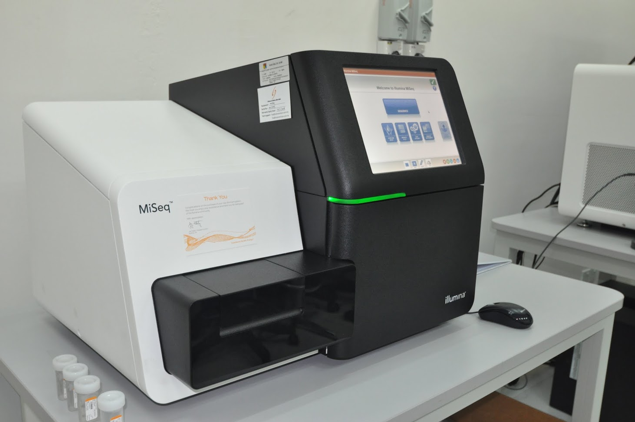
With several African countries now expanding COVID-19 testing, the World Health Organization (WHO) and the Africa Centres for Disease Control and Prevention (Africa CDC) have launched a network of laboratories to reinforce genome sequencing of the severe acute respiratory syndrome coronavirus 2 (SARS-CoV-2), the virus that causes COVID-19, in Africa.
Twelve specialised and regional reference laboratories in the network will provide sequencing, data analysis and other technical support services to the countries where they are located as well as to neighbouring countries and countries in their sub-regions.
“As we continue to tackle the COVID-19 pandemic in Africa, being able to not only track its evolution, but also assess the possible mutation of the virus is crucial to mounting an effective response,” WHO Regional Director for Africa, Dr Matshidiso Moeti, said.
“Through this new laboratory network dedicated to genome sequencing we can better develop vaccines and treatment which are tailored to Africans and eventually bring COVID-19 under control.”
Ongoing sequencing is already providing crucial information for determining the type of SARS-CoV-2 lineage circulating in some countries.
It has shown that most of SARS-CoV-2 genomes circulating in Africa are assigned to the B.1 lineage which emerged from the epidemic in Europe.
In Africa ten lineages have been identified and more than 80,000 sequences have been produced globally.
Grouping viruses from different countries into the same lineage or sub-lineage has indicated a linkage or importation of viruses between countries.
Countries such as the Democratic Republic of the Congo (DRC) and South Africa are experiencing localized transmission, while there is also importation of cases in the DRC from Ghana, Morocco and Senegal.
“In 2019, Africa CDC launched the Institute for Pathogen Genomics to support the integration of pathogen genomics and bioinformatics into public health surveillance, outbreak detection and investigations, and improve disease control and prevention in Africa.
The establishment of the COVID-19 sequencing network will help improve surveillance in the continent and help countries to effectively manage and control the pandemic.
As the COVID-19 pandemic curve flattens in Africa, we must be prepared for a possible resurgence as already observed in some countries.
With genomic sequencing we can have a better understanding of the pandemic through more precise identification of transmission clusters,” Director of Africa CDC, Dr John Nkengasong said.
Africa CDC and WHO together with other partners, are providing Member States with sequencing equipment, reagents and technical support to accelerate SARS-CoV-2 sequencing in Africa.
A total of 2016 sequences from 18 countries – Algeria, Benin Republic, Cameroon, DRC, Egypt, Gambia, Ghana, Kenya, Madagascar, Mali, Morocco, Nigeria, Senegal, Sierra Leone, South Africa, Tunisia, Uganda, and Zambia – have already been generated.
This WHO and Africa CDC partnership to establish a COVID-19 sequencing laboratory network is very important in determining the response to a given SARS-CoV-2 strain and in helping countries manage localized or imported transmission.
Latest Stories
-
BoG proposes tougher rules on loan repayment assessment
5 minutes -
Government plans mandatory drug tests for public service jobs — Muntaka
10 minutes -
Media urged to intensify awareness campaigns on breast cancer
15 minutes -
Interior Minister urges public to share drug intelligence
21 minutes -
Afadzato South DCE commissions water projects, teachers’ bungalow
26 minutes -
Council of State urges sustained dialogue, negotiations as teachers resume work
31 minutes -
We are committed to leaving a legacy in Mandari – Bole-Bamboi MP
35 minutes -
Greater Accra teachers resume work after strike suspension
43 minutes -
Education Minister assures teachers of salary adjustments by October 16
48 minutes -
Abass Osabutey declares bid for NDC Deputy National Organiser position
50 minutes -
Education Minister inaugurates NDU Governing Council, announces $25m seed funding
58 minutes -
THE LAW 101: La Beach Demolitions – The State’s own documents, the courts’ orders – and the bulldozers
1 hour -
DVLA contributes GH¢17.7m to Consolidated Fund in 2025
1 hour -
Why disaster risk reduction must connect early warnings, preparedness and financial protection to household-level resilience
1 hour -
Fentuo Tahiru narrates how 2018 Commonwealth Games visa scandal became an international embarrassment
2 hours