

Audio By Carbonatix
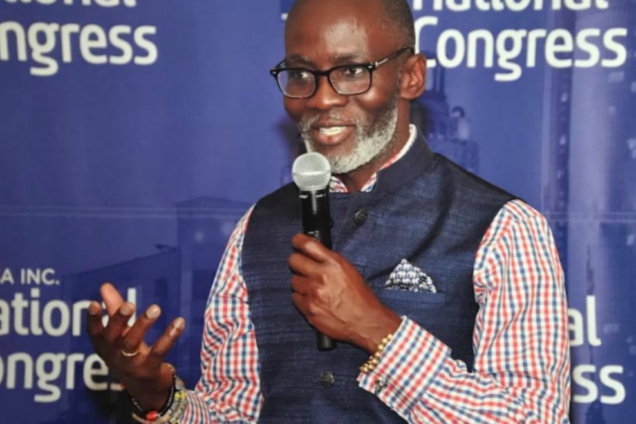
NPP stalwart, Gabby Otchere-Darko, has underscored the relevance of government's debt exchange programme in facilitating negotiations with the International Monetary Fund (IMF).
Ghana is currently in talks with the global lender for a deal to help salvage the country's ailing economy.
If approved, the deal will help Ghana to properly balance its books and project better prospects for the economy.
But according to Mr Otchere-Darko, this can be possible if government's domestic debt exchange programme is embraced by all and sundry.
In a tweet on Sunday, he therefore called on all individual bondholders to align with government towards a successful implementation of the said initiative.
"The debt exchange programme is voluntary for individual bondholders but a very necessary evil for our economy.
Its success is critical to restoring macroeconomic stability, securing an IMF prog. It hits those of us holding bonds very hard. A straight no to it is no solution!", he wrote.
Ghana's return to the IMF marks the country's seventeenth engagement with the Fund, since attaining independence in 1957.
The factors which have perenially led to Ghana-IMF interactions include the deprecation of the local currency, fiscal indiscipline, budget deficits and a host of other lapses in economic management.
In its current ongoing negotiation with the Fund, the depreciation of the local currency against other major trading currencies has been identified as one of the key triggers.
Also, the country's debt stock and rising inflation have collectively contributed to its recent IMF engagement, which started in July 1, 2022.
But government has consistently maintained that these factors would not have resurfaced had it not been for the Russia-Ukraine war and the ravages of the COVID-19 pandemic.
Over the period, government communicators and state officials have been explaining how the pandemic and the conflict jointly culminated in the downward spiral of the economy, which they claim was on a good footing prior to these twin disasters.
Meanwhile, according to critics, the country's 17th return to the IMF is due to government's own mismanagement, reckless borrowing and corruption.
It is however expected that, the engagements with the IMF will be concluded before the first half of the year, to aid government's plans of rebuilding the economy.
Latest Stories
-
Star Oil paid GH¢2.7bn in taxes, levies in nine months of 2026
5 minutes -
Samson’s Take: The rule of law is cheaper before the bulldozer
6 minutes -
GRA blames system failure for delay in issuing receipt over passenger’s customs duty
27 minutes -
Livestream: Newsfile discusses World Cup visa scandal, beach demolitions, education strikes, BRICS bid
31 minutes -
NC-PTAs welcomes end of teachers’ strike, urges parents to prepare children for Monday
41 minutes -
Government procures over 2,000 transformers as Ghana’s electricity access hits 89.13% – Energy Minister
1 hour -
UTAG-UG threatens strike on October 19 over unpaid allowance
1 hour -
Let The Constitution direct Chieftaincy to deliver “All Development Is Local”
2 hours -
John Jinapor outlines renewable energy, nuclear power priorities for 2027
3 hours -
Ghana explores centre of excellence for hearing, communication and cochlear implant care
4 hours -
Schizophrenia-related disorders lead mental health cases recorded in Ghana
4 hours -
Dutch authorities enlist Ghana in hunt for fugitive drug lord Bolle Jos
5 hours -
Ghana housing finance conference adopts communiqué to improve affordable housing access
9 hours -
Special Initiatives Minister urges Wa Technical Institute to enrol more girls as EU-backed solar training lab opens
9 hours -
In the matter of my first year at the Bar
10 hours