

Audio By Carbonatix
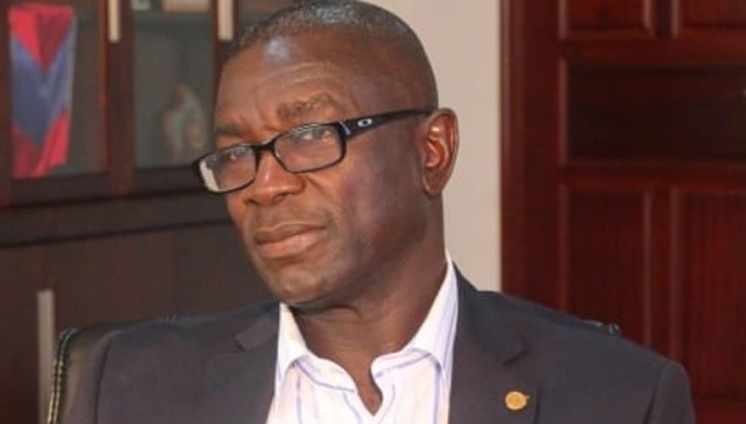
The co-Founder of defunct UT Bank, Prince Kofi Amoabeng, says the reason behind the closure of the bank might have partly been a political decision.
According to him, the Central Bank’s decision to collapse UT Bank might have been informed by his decision not to align with any political party.
Speaking on Citi TV, the former CEO stated that UT Bank could have received a bailout just like some other banks, but his lack of a strong political backing gave way for the Central Bank to close it down.
He told the host of the show, Bernard Avle, that his neutral pose had made him look anti-government no matter the governing political party.
“I don’t belong to any party…The interesting thing is that depending on who is speaking, they push you to the other side. Throughout the whole UT thing, depending on who is in power, I am [considered as being] on the other side.”
Though he admits that his bank was not faring well at the time of the banking sector cleanup in 2017, the ruling government could have done something about the situation to save the bank and the jobs of those working for it.
“The bank wasn’t doing that well at the time but the way the government acted, some banks were helped, some banks were closed. That is what irritates me,” he stated.
He added that he was disappointed by the decision of the ruling government and the Central Bank considering the immeasurable contribution the UT brand had made to Ghana’s financial sector.
“At UT, we created a Ghanaian brand which was respected internationally so to come to power to kill a local brand which is admired and used internationally [wasn’t the best]… You can bail it out and that is common [practice]. Initially, that was what was happening but that was the NDC time… For me, not because of my personal interest but I think for the country, we should have bailed it out,” he said.
Prince Amoabeng is currently in court hoping the court compels the Central Bank to reverse their revocation of UT Bank’s license.
He has petitioned the Legislature to conduct an investigation of the conduct of the Central Bank and Ghana Stock Exchange (GSE) for the revocation of UT Bank’s license and delisting the bank without due regard to the rules of Administrative Justice guaranteed under Article 23 of the 1992 Constitution.
The disgruntled CEO also wants Parliament to direct the restoration of his bank’s license and the remedying of the harms done to the shareholder’s property right as a result of the conduct of the BoG.
Mr. Amoabeng has been accused by the state of mishandling depositors’ cash by engaging in fictitious and unlawful activities which led to the collapse of UT Bank in 2017.
Latest Stories
-
Trump says he is considering firing US ambassador to Greece
28 minutes -
Man City bananas ‘brought fun back’, says Varadi
32 minutes -
Meta releases Muse Wonder AI models to challenge Anthropic and OpenAI
41 minutes -
Daily Insight for CEOs: The CEO as Chief Decision Maker
42 minutes -
Burnham had formal meeting with Man City chair while mayor
48 minutes -
Is Ghana producing too many lawyers? What is the best lawyer-to-citizen ratio?
51 minutes -
NDC sinking Ghana’s democracy with Emelia Agbenyo’s appointment – Miracles Aboagye
1 hour -
Seedorf back in football as Corinthians head coach
1 hour -
Hincapié and Zubimendi injured in post-match training session
1 hour -
Fridges in French supermarkets hit by cyberattack
2 hours -
Qantas flight grounded after bedbug outbreak
2 hours -
Reality Zone with Vicky Wireko: International Day of the Girl, shaping today’s girl for tomorrow’s future – ZONTA Clubs lead the way
2 hours -
Global health must be led by countries, not designed for them – Mintah Akandoh
3 hours -
Mahama honoured at 2026 World Health Summit in Berlin for global health leadership
3 hours -
Breast cancer is not a death sentence – Besease Kontire Obaapanin, Magmina Foundation lead awareness campaign
3 hours