

Audio By Carbonatix
Felix's Kumasi sprint earned the Black Stars jersey. Nketiah and Hudson-Odoi spoke only after qualification clinched.
Sankofa
There is an Akan symbol that captures what Ghana now faces better than any tactical formation or selection matrix ever could. The Sankofa bird flies forward while looking backwards, neck craned to the past, wings beating toward the future.
Its meaning is both instruction and warning: return and get it. You cannot build what comes next without understanding what you left behind.
As Ghana prepares for its 2026 FIFA World Cup campaign, the Sankofa bird is circling over the Black Stars. The debate over who truly earns the right to wear those stars, diaspora latecomers or qualification grinders, foreign passports, or homegrown hearts is not new. But it has never carried higher stakes, and it has never had a more human face.
That face belongs to Felix Afena-Gyan.
The gut punch
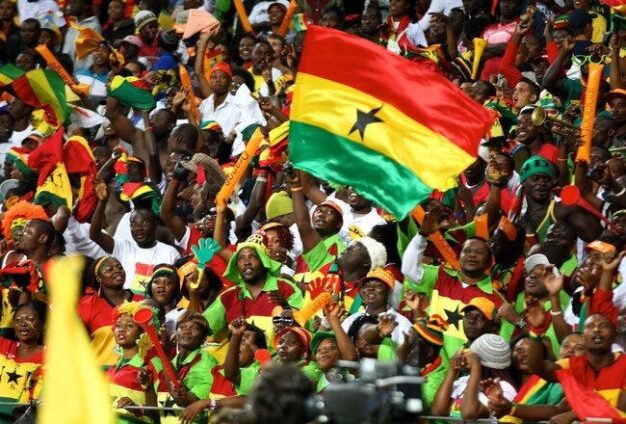
March 2022. Kumasi. The spiritual heartland of Ghanaian football, where the Ashanti crowd does not merely watch it, but will. Ghana versus Nigeria, a World Cup qualifier carrying the weight of a nation’s ambition, the smell of waakye and roasted plantain drifting through the Baba Yara stands, the drumming rising before kickoff like a second anthem.
A 19-year-old Felix Afena-Gyan, fresh from turning heads at AS Roma under José Mourinho, steps onto the pitch wearing the Black Stars jersey for the first time. Here is their homegrown hope, not borrowed, not redirected from another flag, but genuinely, irreversibly Ghanaian. He battles the Super Eagles’ physicality. He earns his stripes.
Eleven months later, Ghana named its squad for the 2022 FIFA World Cup in Qatar. Felix Afena-Gyan was not in it.
Players who had never featured in a single qualifier were. The boy who showed up when it was hard, uncertain, and unglamorous cut. That is not just an administrative decision. That is a statement about what Ghana values. In 2026, with Eddie Nketiah, Callum Hudson-Odoi, Francis Amuzu, Ernest Opoku, etc., all circling post-qualification, Ghana risks repeating that statement.
The timing indictment
In the weeks following Ghana’s 2026 World Cup qualification, two quotes emerged that told the whole story without meaning to.
Callum Hudson-Odoi, who had previously declined Ghana call-ups while pursuing an England future that never fully materialized, let it be known he had set his sights on Ghana. Eddie Nketiah, similarly quiet throughout the qualification campaign, offered something more revealing still: “The future will take care of itself.”
Read that again. Ghana qualifies. Nketiah’s future suddenly clarifies.
GFA President Kurt Okraku was unambiguous in an October 2025 interview with 3Sports: “I don’t want mercenaries coming to Ghana. I don’t want players jumping on board because we’ve qualified for the Mondial.”
Ibrahim Sannie Daara, former Ghana FA Communications Director, reinforced it: “Any player that will come must first pass the commitment to Ghana before we consider those players.”
MP Vincent Ekow Assafuah went further to honor the grinders who showed up when qualification was uncertain, not glamorous, and not guaranteed, warning that sidelining them for late joiners risks fracturing the unity Ghana has carefully built.
The timing of Nketiah and Hudson-Odoi’s interest is not incidental. It is the entire argument.
Pioneers of a global Ghana — and the FA’s own hypocrisy
And yet Ghana has been here before. Many times.
Trailblazers like Tony Baffoe set the pioneering footsteps decades ago, whose Bundesliga triumphs in the ‘80s and ‘90s paved the way for diaspora players. Figures like Eric Addo and Hans Adu-Sarpei weathered years of uncertainty and institutional challenges, their quiet persistence becoming emblematic of a nation’s desire to embrace its sons and daughters scattered worldwide.
These early moments forged a resilient blueprint that blended heritage and high-level football. But the blueprint came with a fault line the FA has never fully resolved.
Consider the man who delivered Ghana’s 2026 qualification, Otto Addo himself. Before becoming the coach who made history, Addo was a player who skipped Ghana’s qualifiers entirely, then started against the Czech Republic at the 2006 World Cup.
The institution that now speaks of loyalty and commitment validated that switch without hesitation. Addo became a legend.
The FA cannot selectively invoke loyalty. Its own history will not allow it.
The complicated middle
Not every diaspora case is the same. That distinction matters enormously and is too often lost in the noise.
Francis Amuzu previously rejected Ghana. He has now publicly and personally expressed his desire to represent the Black Stars not through agents or whispers but in his own voice.
That is a different moral category from quiet opportunism. It is closer to the Sankofa spirit, a diaspora son who flew forward, looked back, and chose to return for what he left behind.
Ernest Opoku presents something different again. He has openly said he remains genuinely undecided between Ghana and the Netherlands, and crucially, the Ghana FA has not officially contacted him.
Here is a Ghanaian-heritage player, eligible, talented, and open, and Ghana has not knocked on his door. If Opoku eventually chooses the Netherlands, the purists will call it betrayal. But whose failure is that really?
These cases expose what the binary of purist versus pragmatist gets dangerously wrong. This debate has never been black-and-white. It is a spectrum of commitment, circumstance, and institutional responsibility — and Ghana bears obligations in this conversation, too.
The human cost
History whispers warnings that demand to be heard.
Gerald Asamoah was born in Ghana, felt abandoned by the FA, and became a German legend instead.
That loss was not individual betrayal — it was institutional failure, and Ghana paid the price for decades. Kevin-Prince Boateng brought brilliance and chaos in equal measure; his talent was never fully harnessed within a setup that could not contain him.
And then there is Jeffrey Schlupp, the archetype too often overlooked in this debate. He kept answering Ghana’s call through years of organizational turmoil, loyal enough to show up, never quite embraced enough to truly belong. His story is not one of abandonment or opportunism.
It is something quieter and more damning — a player caught perpetually in the middle, neither fully claimed nor fully released.
And then there is Felix Afena-Gyan, the cautionary tale written in real time.
From Mourinho’s wonderkid at Roma to Black Stars qualifier hero to Qatar omission to Cremonese to Juventus Next Gen loan to Amedspor in the Turkish first division — his trajectory since that Qatar snub tells a story about what happens when a young player gives Ghana everything and receives institutional indifference in return.
After 981 days away from international football, he returned, quietly rebuilding. Eight caps. One goal. A career that should have been shaped by World Cups, instead marked by what might have been.
He has never spoken publicly about the omission from the Qatar World Cup. That silence is its own statement. His only related comment came in 2024, amid rumours he had quit the Black Stars entirely: “That’s not a fact, but let’s see what the future tells... We are on pause.”
On pause. A young man’s international career is on pause, while the debate about who deserves to wear his jersey rages around him.
If Ghana calls up Nketiah and Hudson-Odoi for the 2026 World Cup while Afena-Gyan watches from Turkey, that is not just a selection decision. It is a message to every young Ghanaian player about what commitment actually means in practice — and one Ghana cannot afford to send.
Quality matters. But when PL stars join the party after tickets are punched, while Felix sprinted pre-glory? That's not meritocracy. It's convenience.
Spirituality: The pulse connecting identity and performance
In Ghana, football is never only football. The Black Stars carry symbolic weight as embodiments of national hope and resilience.
Rituals, prayers, and ancestral blessings bolster team morale and fan engagement, underscoring that success transcends the physical and calls for divine favour.
This spiritual ethos shapes the diaspora debate in ways that statistics cannot capture.
Foreign-born players are expected to embody not just athletic skills but also a deep cultural connection.
When Asamoah Gyan stepped up against Uruguay in 2010, an entire continent held its breath. That moment was not about a footballer. It was about Africa.
Diaspora players inherit that weight whether they ask for it or not.
Anthony Baffoe, born and raised in Germany understood it; he did not simply become the first Ghanaian expatriate to wear the jersey, hee embodied what it meant.
That is the standard. Not passports. Not eligibility paperwork. Not even qualifier appearances alone. Embodiment. Those who arrive late must prove they feel it, too. That is something no table, no statistic, and no coach’s tactical calculation can fully measure.
Queiroz’s first test
Carlos Queiroz arrives freshly appointed, preparing for his fifth World Cup, inheriting this fault line on day one. His predecessor framed the stakes clearly. Otto Addo, the man who himself once made the late switch, warned that selection would be merit-based, with loyalty and commitment paramount: “We have perfect unity, and we don’t want to destroy it by bringing in players who don’t commit.”
There is something almost poetic about Addo saying those words. The man who benefited from Ghana’s diaspora flexibility became the coach who most forcefully defended its limits. Perhaps he understood better than anyone what the jersey truly costs.
Queiroz inherits that understanding alongside Ghana’s structural football problems. The pragmatist argument is not sentimental; it is tactical. Senegal’s spine runs through the diaspora. Morocco’s Atlas Lions, Africa’s first-ever World Cup semifinalists, are built on European-based talent with Moroccan roots.
Ghana’s 30 million-strong global diaspora is a competitive weapon, not a liability. Veteran journalist Michael Oti Adjei was unambiguous: “We need Eddie Nketiah and Callum Hudson-Odoi.”
Both things are true simultaneously. That is the complexity Queiroz must hold.
He cannot resolve the tension, but he can navigate it with wisdom, consistency, and the courage to communicate his criteria clearly and early so that no Felix Afena-Gyan moment repeats itself in silence.
Conclusion: return and get it
Ghana has always built its best teams at the intersection of the local and the global.
The 2006 squad that captivated the world in Germany was not purely homegrown. It was not purely diaspora. It was Ghana, plural, ambitious, and unified around something larger than individual stories.
The 2026 debate is not a crisis. It is a conversation Ghana has earned the right to have because Ghana qualified, and because Ghanaian football matters enough for people to fight over its soul.
But the Sankofa bird does not look backwards out of nostalgia. It looks backwards because something valuable was left behind, and it cannot be abandoned.
Somewhere in that looking back is Felix Afena-Gyan, playing in the Turkish first division, rebuilding quietly, waiting to see if his country learned anything from what it did to him in 2022.
That question deserves an answer before Carlos Queiroz names a single name.
“Se wo were fi na wosankofa a yenkyi.” It is not wrong to go back for what you forgot.
The stars belong to Ghana. The question is which Ghanaians get to wear them.
Latest Stories
-
He entered at eight. He is now 16: Ghana’s children growing up in prayer camps
4 hours -
‘Development must not always begin from Accra’ — Anwelle Foundation launched in Jirapa
4 hours -
PKO trio eye victories at Odwira Festival
6 hours -
346 Ghana Navy recruits pass out after 26 weeks of intensive training
6 hours -
Newsfile to discuss EOCO-MP arrest, drug trafficking, speech arrests and $235m water debt
7 hours -
JoyNews gets results as listeners raise GH¢40,000 to help 17-year-old student with cerebral palsy attend SHS
7 hours -
Vice President calls for stronger local pharmaceutical production to reduce medicine imports
8 hours -
The brewing tension at KNUST; Beware the Ides of October….
8 hours -
Health Ministry moves to integrate traditional medicine into mainstream healthcare
8 hours -
550 pupils in Kintampo South get educational lifeline as ‘Seeds of Hope’ reaches farming communities
9 hours -
Opoku Mensah urges Christian Council, House of Chiefs to speak up on democratic freedoms
9 hours -
Teacher unions’ strike: Minority demands immediate payment of teacher arrears, 20% deprived area allowance
9 hours -
The Accra-Kumasi Expressway: Building it right
9 hours -
Beyond gold exports: Building value and economic resilience from Ghana’s gold
9 hours -
2027 AFCONQ: Ghana under pressure as Gambia beat Somalia 2-1
10 hours