

Audio By Carbonatix
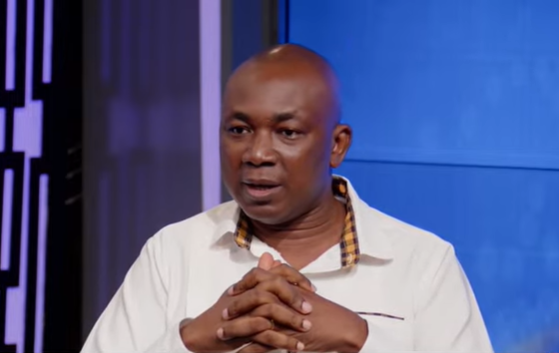
Economist and Professor of Finance, Professor Godfred Bokpin, has cautioned that the fight against digital fraud is not one that governments, banks or financial technology firms can ever claim to have completely won, describing it as a continuous battle against increasingly sophisticated criminals.
Speaking at the JoyNews-Hubtel dialogue on the impact of fraud on Ghana's digital economy on Wednesday, July 22, Prof Bokpin said cybercriminals are constantly evolving their methods, making it impossible for institutions to become complacent.
“I do not think that this is a war that you win,” he said.
“In this space, you don't sleep. Because the people are not sleeping, because the tools are available both to good people and to bad people.”
He explained that as the global economy becomes increasingly digitised, fraudsters are also adapting, investing in new techniques and following the growth of digital financial services.
“I'm sure as we are gathered here talking about this, some criminals are also hosting their own forum somewhere trying to see how they can improve,” he remarked.
According to Prof Bokpin, digital fraud has become a major global business, with criminals continuously researching new ways to exploit emerging technologies and financial systems.
“They also do research. They can see where the world is heading towards,” he said.
He noted that the future of finance, money and commerce is digital, making the sector an attractive target for organised cybercriminals.
“The future of money is digitisation. The future of currency is digitisation. In fact, the future of finance is digitisation,” he stated.
Prof Bokpin said because the digital economy is expanding faster than traditional sectors, institutions must see fraud prevention as an ongoing process rather than a one-time objective.
“So, I'm saying that this is not something that you are saying I'm going in to win. No, it doesn't work that way,” he stressed.
“The FinTech companies will all agree that it has to be continuous improvement, systems improvement and all of that.”
Despite the growing threat, he acknowledged that Ghana has made significant progress in strengthening digital security and improving public awareness.
He observed that banks, regulators and financial service providers have intensified customer education, while users have also become more cautious in protecting their personal information.
“I think that in Ghana we've made a lot of progress,” he said.
Prof Bokpin, however, urged stakeholders to remain vigilant, warning that the lucrative nature of digital fraud means cybercriminals will continue to innovate, requiring constant upgrades to security systems and sustained public education.
Latest Stories
-
Reality Zone with Vicky Wireko: International Day of the Girl, shaping today’s girl for tomorrow’s future – ZONTA Clubs lead the way
28 minutes -
Global health must be led by countries, not designed for them – Mintah Akandoh
1 hour -
Mahama honoured at 2026 World Health Summit in Berlin for global health leadership
2 hours -
Breast cancer is not a death sentence – Besease Kontire Obaapanin, Magmina Foundation lead awareness campaign
2 hours -
EcoBank invests in digital education of 4 Garisson School to mark 40 years in Africa
2 hours -
AGI urges investment in skills and raw materials to strengthen local manufacturing
2 hours -
GPL 2026/27: ‘We have to rectify our mistakes’ – Boadu reacts to Aduana FC defeat
2 hours -
No disability access, no building permit – KMA declares
2 hours -
Asantehene to lead environmental restoration effort at Jimi Land Reclamation Site
2 hours -
Poor Ghanaians are being jailed because they cannot afford justice – Crime Check Foundation
2 hours -
No conflict in appointing Emelia Agbenyo as Deputy EC Chair – NDC
2 hours -
87-year-old man jailed 20 years for defiling 9-year-old girl at Ofankor
2 hours -
Sankofa Gold targets 70kg output after 9-month shutdown
2 hours -
Tamale, Bolgatanga had just one Legal Aid lawyer between them – Kwesimintsim MP
3 hours -
PAC orders eviction of former irrigation company MD from official residence
3 hours