

Audio By Carbonatix
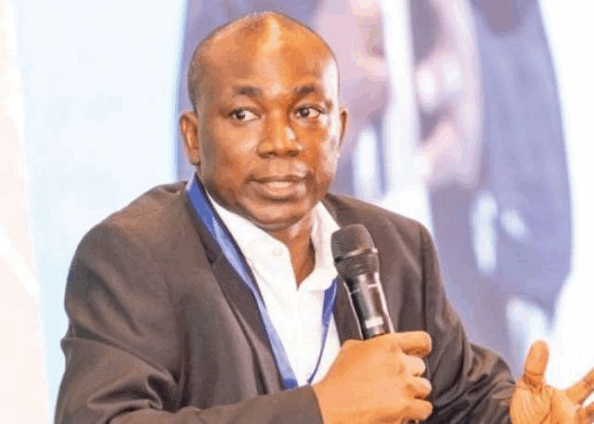
Economist Professor Godfred Bokpin says Ghana’s early Eurobond repayments are a positive sign for the country’s debt recovery efforts, but cautions that they should not be interpreted to mean government is fully on track with all of its financial obligations.
Speaking in an interview on Joy FM's Middaynews on July 7, on the implications of government’s latest debt settlements, Prof. Bokpin said the payments signal progress under Ghana’s debt restructuring programme and demonstrate some commitment to meeting obligations to external creditors.
“It comes with some positive story and shows that we are on track when it comes to our debt obligations,” he said.
However, he stressed that government’s broader fiscal position remains under pressure and that meeting debt service commitments does not necessarily mean it is adequately addressing obligations to all stakeholders in the economy.
“That does not mean that government is on track with all its obligations to various stakeholders. There are different stakeholders in this economy,” he noted.
Prof. Bokpin explained that while government appears to be current on some debt repayments, there are competing demands on public finances, including spending on roads, hospitals, schools and other public services.
He pointed to budget execution challenges as evidence that government’s fiscal pressures remain significant.
“If you look at the 2026 budget, the overall budget execution is around 73 per cent or so. So government is not totally on track when it comes to our payments and obligations to various stakeholders,” he said.
According to him, Ghana’s debt obligations represent only one part of a much larger set of demands on state resources, and prioritising debt repayments could limit the funds available for other pressing development needs.
Prof. Bokpin said Ghana’s current debt service path must be understood in the context of the major sacrifices already made by bondholders under the restructuring programme.
He noted that creditors had accepted significant losses and extended repayment timelines as part of Ghana’s debt workout, making it important for government to remain consistent in servicing the restructured debt.
Latest Stories
-
Fiscal policy implementation poses downside risk to inflation – BoG
19 minutes -
Organised Labour should seek fair adjustment, not excessive pay rise – Labour consultant
23 minutes -
BoG maintains medium-term inflation target of 8 ± 2%
30 minutes -
Sammi Awuku urges NPP Germany to unite ahead of 2028 elections
1 hour -
The Inconvenient Truth: We cannot pray for the cure while protecting the disease
2 hours -
MTN Ghana trains civil society organisations on artificial intelligence
2 hours -
GoldBod FX framework aims to make dollar supply predictable – Acheampong
3 hours -
How does a Ghanaian team make it to the BAL?
3 hours -
Ghana’s investment climate presents opportunities for industrial growth and job creation.
3 hours -
‘I paid thousands to a company for jobs that never came’
3 hours -
SSNIT intensifies informal sector enrolment drive with Techiman float
4 hours -
Ghana seeks long-term mining investments that benefit local communities – Armah-Kofi Buah
4 hours -
GHATOF demands compensation for 85 businesses affected by La Pleasure Beach demolition
4 hours -
Bono Regional Minister calls for investor education to drive economic growth
4 hours -
Ghana’s Ambassador to China, Kojo Bonsu, presents credentials to Nepalese President
4 hours