

Audio By Carbonatix
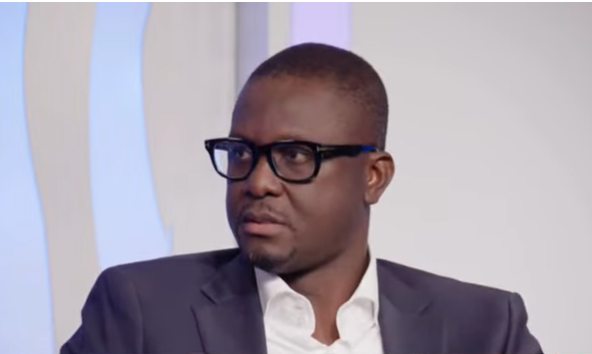
The Head of the Fintech and Innovation Department at the Bank of Ghana, Elhanan Owureku Asare, says Ghana's digital economy is not facing a trust crisis, but cautioned that failure to address rising fraud could erode public confidence in digital financial services.
Speaking at the JoyNews-Hubtel dialogue on fraud's impact on Ghana's digital economy on Wednesday, July 22, Mr. Asare said the country must remain vigilant and take proactive measures to prevent fraud from undermining trust in the rapidly growing digital ecosystem.
"I don't think we have a trust crisis. I think we need to be aware that there can be a potential trust crisis. And I think the fact that we acknowledge that there can be a potential trust crisis gives us all the tools and ammunition and the drive to be able to arrest the situation," he said.
He explained that while fraud figures may appear alarming in isolation, they should be viewed in the context of the significant growth in digital transactions since the introduction of mobile money in Ghana.
"We've seen a major growth in digital transactions. And just like any industry or any pattern where the attention is, that's where the fraudsters also get into," he noted.
According to Mr. Asare, the proportion of fraudulent transactions remains relatively small compared to the overall volume of digital transactions, but stressed that this should not breed complacency.
"I think if you really quantified the level of fraud which can actually impact trust and juxtapose it with the volumes that we are dealing with, on a per capita basis it is relatively slim. But we should not ignore the signal on the wall. We should not ignore the signal," he said.
He called for greater investment in public education, data analytics and artificial intelligence to detect suspicious transactions before they occur.
"We need to be able to ensure that we are educating, we are getting to where we have smart and fast tools to be able to curb this," he said.
Drawing comparisons with the banking sector, Mr. Asare said financial institutions have long used data to identify unusual customer behaviour, such as sudden changes in spending patterns, prompting immediate interventions.
"The moment your pattern of transactions changes, there's a call. Your card will be blocked because data is being leveraged," he said.
He urged digital service providers to adopt similar technologies, arguing that the increasing availability of artificial intelligence and advanced data capabilities presents an opportunity to strengthen fraud prevention.
"Now that we have AI tools and we have the data capabilities coming through, I believe service providers need to leverage on that so that we are more proactive than reactive," he added.
Latest Stories
-
Bond market: Turnover increases by 47% to GH¢4.07bn
12 minutes -
DVLA prepares electronic queue system to reduce congestion
18 minutes -
Hearts of Oak coach Kapor raises alarm over poor pitches in Ghana football
29 minutes -
Dorimon Traditional Council endorses policy to formalise female chieftaincy
32 minutes -
DVLA expands from 33 to 63 offices after opening 30 new service centres across Ghana
33 minutes -
State Housing Company offers 195 homes with a 5% discount; prices start at GH¢950,000
36 minutes -
Learn Deutsch opens German language examination centre in Accra
37 minutes -
Decline in external buffers complicates foreign exchange outlook – IC Insights
38 minutes -
Ghanaian filmmakers urged to tell local stories and take them to the world
42 minutes -
Educated but unable to communicate? The missing link in Ghana’s University education
46 minutes -
Informant demanded $20 million from NACOC for information on major drug consignment – Muntaka
52 minutes -
Gov’t introduces mental health and drug tests for security recruits amid suicide concerns – Interior Minister
52 minutes -
DVLA generates GH¢27.14m from dealer plates between January and September 2026
55 minutes -
DVLA registers over 7,700 excavators in Ghana under new tracking initiative
60 minutes -
DVLA introduces six Ghanaian languages for driving theory tests
1 hour