

Audio By Carbonatix
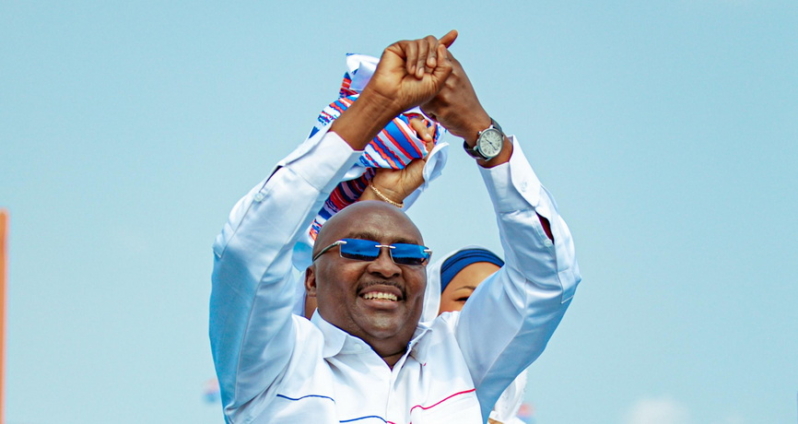
Former Vice President Dr. Mahamudu Bawumia has maintained his status as the clear favourite to win the NPP presidential primaries in January, according to a new survey by Konrad Adenauer Stiftung (KAS) Ghana.
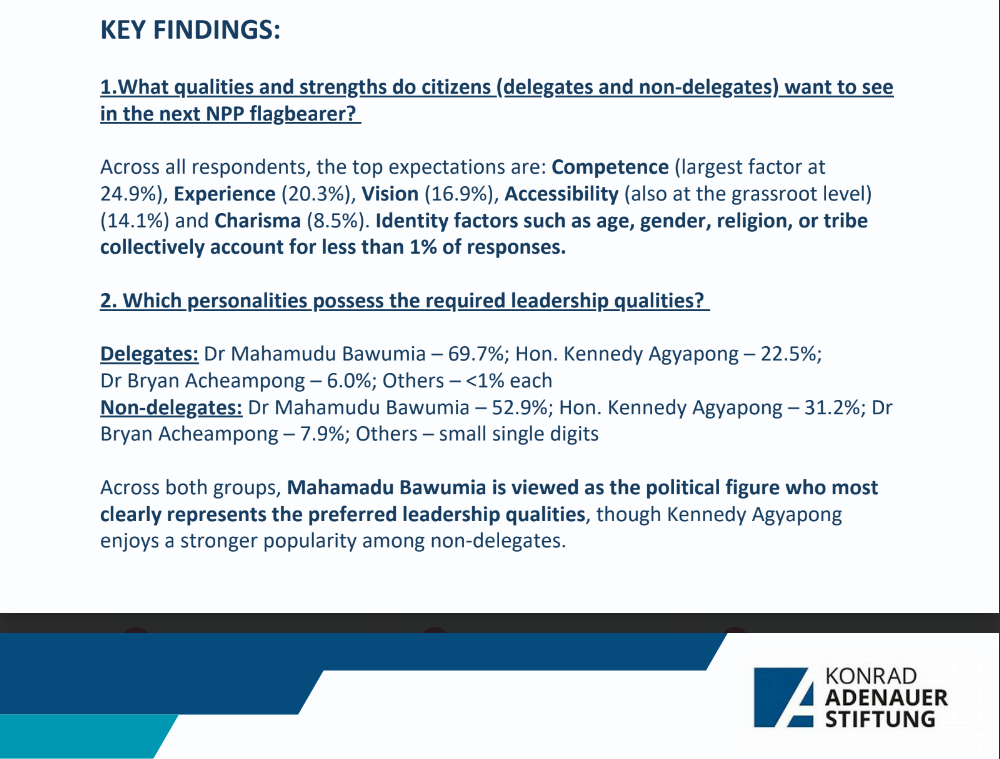
In its latest report, released on Tuesday, December 16, 2025, Dr. Bawumia retained his pre-primary status as the leading contender, recording an overwhelming 69.7 per cent lead over the other aspirants.
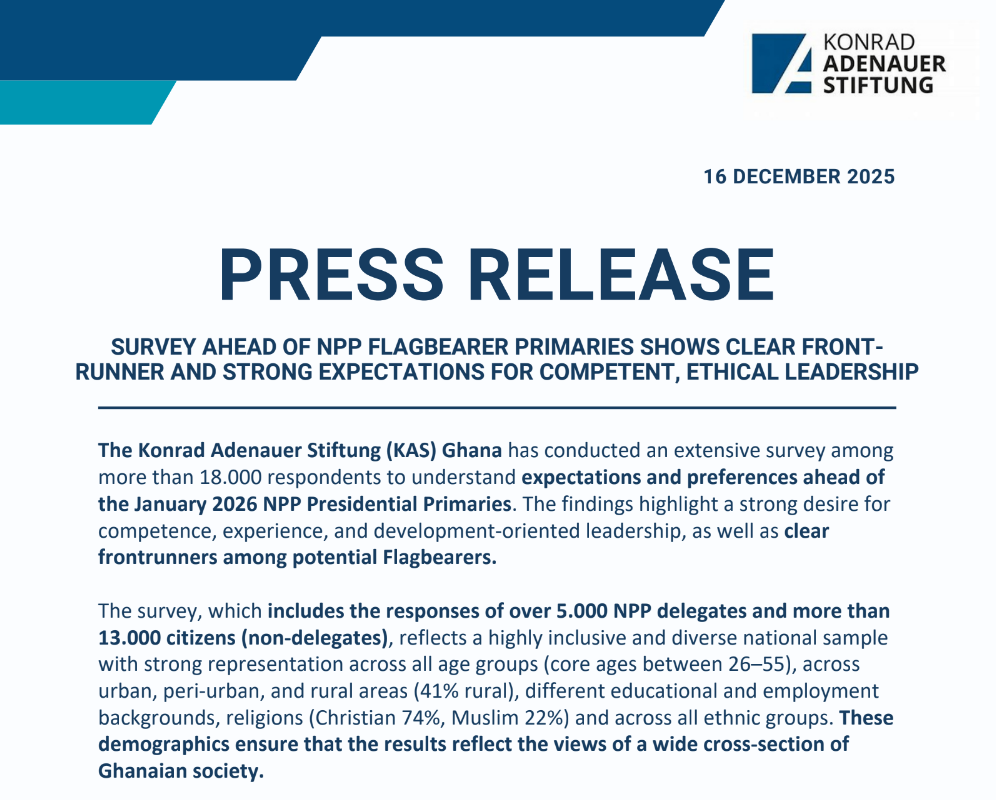
KAS conducted two separate polls—one among NPP delegates and another among the general Ghanaian population (non-delegates). In both surveys, Dr. Bawumia emerged as the leading candidate, although his advantage was more pronounced among party delegates.
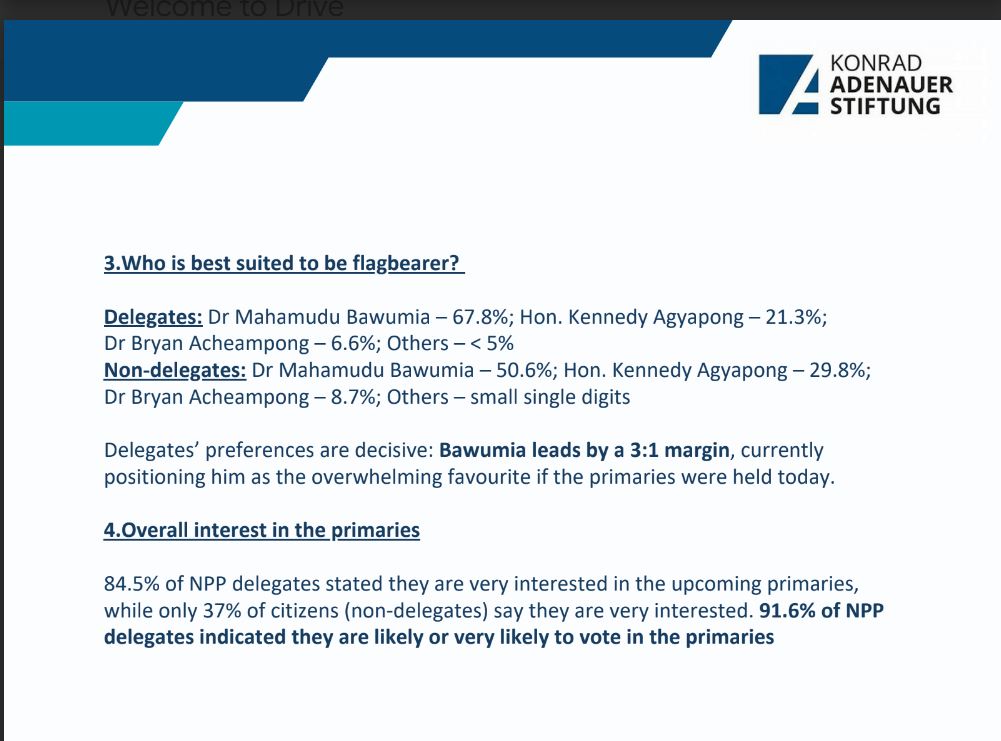
Among NPP delegates, who go to the polls on January 31, Dr. Bawumia secured 67.8 per cent support, while his closest challenger, Kennedy Agyapong, polled 21.3 per cent. Dr. Bryan Acheampong followed with 6.6 per cent, while the remaining candidates—Dr. Osei Yaw Adutwum and Kwabena Adjei Agyapong—each recorded less than five per cent.
Among non-delegates, representing the general Ghanaian population, Dr. Bawumia polled 50.6 per cent, while Kennedy Agyapong secured 29.8 per cent. Dr. Bryan Acheampong recorded 8.7 per cent, with the remaining candidates polling in single digits.
Ahead of the NPP primaries, Dr. Bawumia has consistently led independent surveys on the race, most of which have placed him as the clear favourite to win the primaries and be retained as the party’s presidential candidate for the 2028 general election.
Demographics
According to Konrad Adenauer Stiftung Ghana, the survey included responses from over 5,000 NPP delegates and more than 13,000 citizens (non-delegates). The organisation said this reflects a highly inclusive and diverse national sample, with strong representation across all age groups, particularly those aged 26 to 55, and across urban, peri-urban and rural areas, with 41 per cent of respondents from rural communities.
The demographics also covered different educational and employment backgrounds, religious affiliations (74 per cent Christian and 22 per cent Muslim), and all major ethnic groups.
“These demographics ensure that the results reflect the views of a wide cross-section of Ghanaian society,” the report added.
Latest Stories
-
Iran war lands ‘triple blow’ to flood-ravaged Sri Lankans
27 minutes -
Gunmen kill at least 11 people at Afghanistan picnic spot
41 minutes -
Woman, 25, in court for stealing baby at Bogoso
42 minutes -
Trump unveils giant gold-accented victory arch design for US capital
45 minutes -
We spoke to the man making viral Lego-style AI videos for Iran. Experts say it’s powerful propaganda
50 minutes -
Hungarians vote in big numbers on whether to end Orbán rule and elect rival
50 minutes -
At least 30 feared dead in crush at Haitian tourist site
51 minutes -
Boxing: Abdul Ahmed wins WBA Africa Cruiserwight title after dispatching Nigeria’s Eradeye
1 hour -
Nearly 2,000 displaced, schools damaged as windstorm wreaks havoc in Gushegu
1 hour -
Ghana’s Derrick Kohn to work under Marie-Louise Eta as she becomes first woman to coach men’s Bundesliga team
1 hour -
Accra Open Championships conclude with strong performances ahead of African Championships
2 hours -
Ghana to begin camping with 12 athletes after Accra Open Championships – Bawa Fuseni
2 hours -
Anthony Joshua declines showdown with Tyson Fury but admits they ‘probably’ clash next
2 hours -
Tyson Fury dominates Makhmudov, calls out Joshua next
2 hours -
I have supported highway authority financially to fix roads in my constituency – A Plus
4 hours