

Audio By Carbonatix
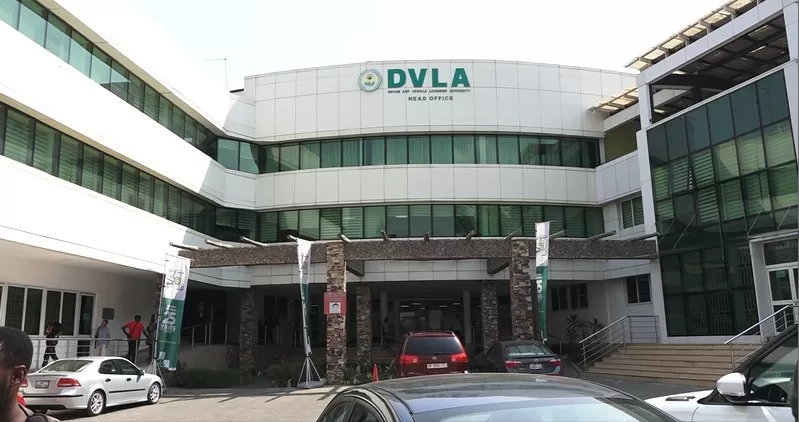
More than 4,000 driver's licence applicants were denied licences in 2025 after failing mandatory eye examinations conducted by the Driver and Vehicle Licensing Authority (DVLA), underscoring concerns about the role of poor vision in road crashes across Ghana.
The authority disclosed that 4,896 applicants were ultimately rejected after failing to meet the required visual standards despite undergoing screening and, in some cases, receiving medical intervention.
The development forms part of intensified efforts by the DVLA to tackle impaired vision, a significant but often overlooked factor in road accidents.
According to data released by the authority, a total of 251,117 commercial and private drivers underwent compulsory eye screening nationwide during the year.
Of that number, 218,471 applicants, representing 87 percent, passed the tests at the first attempt. However, 32,645 initially failed the screening due to various eye conditions.
Following medical treatment or the acquisition of prescribed corrective lenses, 24,483 of those applicants were later cleared and deemed fit to drive. Nevertheless, 4,896 individuals remained unable to meet the required medical standards and were denied licences.
The screenings uncovered a range of vision-related conditions among drivers, including glaucoma, cataracts, refractive errors, and complications linked to hypertension.
Speaking in an interview with The Ghanaian Times, the Director for Driver Training, Testing and Licensing at the DVLA, Kafui Semevo, said many drivers only became aware of their eye conditions during the screening process.
He stressed that the strict enforcement of Regulation 29 of Legislative Instrument (L.I.) 2180 was crucial to reducing preventable road crashes and improving road safety.
"Drivers whose vision impairments could not be corrected had their licences revoked in line with the law, while those with treatable conditions had their licences suspended until they were medically cleared," Semevo stated.
He further disclosed that policy discussions were underway regarding persons identified as having "single vision," a condition highlighted in a survey conducted by the University of Cape Coast (UCC).
Under the proposed arrangement, such individuals could be permitted to drive private vehicles only, while being prohibited from operating commercial vehicles.
To assess the effectiveness of the reforms, the DVLA is collaborating with the University of Cape Coast and the Ghana Optometric Association (GOA) to evaluate their impact on road safety.
Meanwhile, Chief Superintendent of Police, Dr Remi Ninkpe, Coordinator of the DVLA-GOA Eye Care Reforms Project, urged drivers to avoid self-medication and the use of unprescribed glasses, warning that such practices could aggravate eye conditions and pose dangers on the road.
The eye-screening initiative forms part of broader measures by the DVLA to ensure that only medically fit drivers are licensed as authorities work to reduce avoidable crashes and enhance safety on Ghana's roads.
Latest Stories
-
US seeks changes to rejected $109m health compact with Ghana – Mahama
2 minutes -
Nine dead in mass shooting at Pennsylvania home
20 minutes -
‘Time for Ukraine to get new president,’ says Trump after Zelensky condemns diesel deal
23 minutes -
Hincapie injury adds to Arsenal issues after Guimaraes rescue act
31 minutes -
Henderson scores twice as Chelsea thumb Bournemouth
41 minutes -
Photos: Mentapulse Africa convenes health and labour summit to address talent retention
53 minutes -
Mahama inspects Nkokɔ Nketenkete plant, eyes Bechem as chicken capital
59 minutes -
Ghana not seeking full BRICS membership, applying as Partner Country – Ablakwa
1 hour -
Woman injures three people in third Poland school knife attack in a week
1 hour -
Ghana should join BRICS as partner, not member – NPP Bono East Regional Secretary
1 hour -
Ghana High Commission warns nationals in South Africa over protests in Johannesburg, Durban
1 hour -
Mahama praises Roads Minister for keeping Big Push contractors on their toes
1 hour -
World Cup Visa Scandal: ‘My client has not collected money for visas’ – Ampofo Ankrah’s lawyer
1 hour -
US immigration officials defend ICE agents who shot man in same car as child
1 hour -
Commentator Katie Zacharia picked as new White House press secretary
2 hours