

Audio By Carbonatix
Social and cultural transformation has been identified as a critical factor in promoting the rights of women and girls.
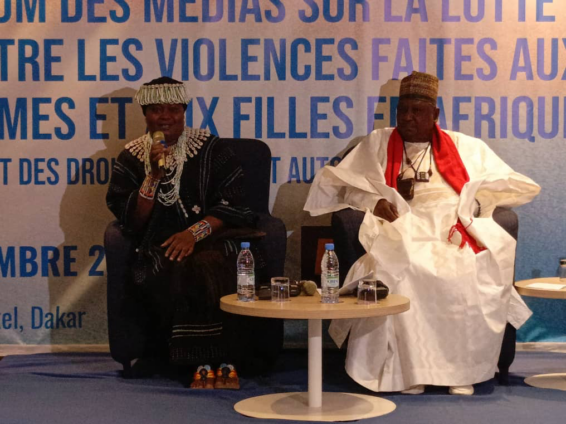
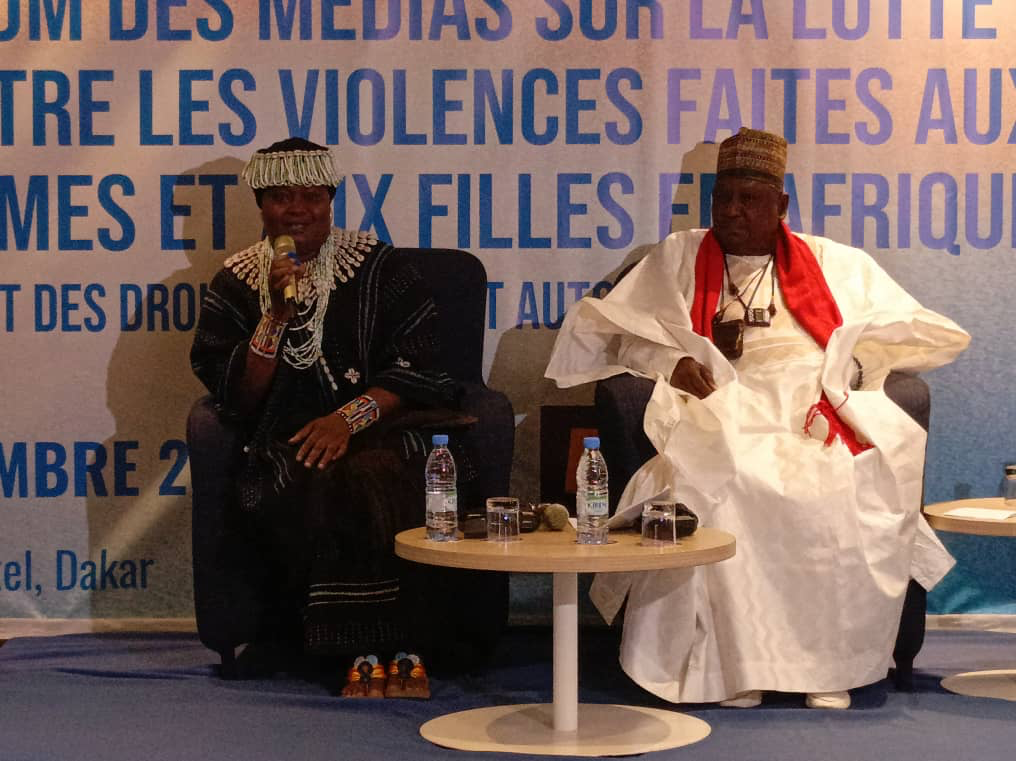
To deepen understanding of tradition’s role in combating gender-based violence, a forum organised by the Africa Media Network for Health & Environment Promotion (REMAPSEN) in Senegal brought together prominent traditional leaders, including Ahan Kalidji Beatrice, Queen of Oussouye, and M. Moussa Ndione, Djaraaf de Bargny, to discuss “Changing Social Norms by Traditional Leaders.”
Djaraaf de Bargny, M. Moussa Ndione, emphasised the role of traditional leaders as custodians of cultural norms in driving meaningful change.
He highlighted the need to address harmful practices such as early marriage, lack of education for girls, and Female Genital Mutilation (FGM), calling for a collective commitment to evolving mentalities.
“Our cultural identity must align with global approaches to gender equity,” he stated, urging communities to eradicate violence against women and girls (VAWG) and empower women as vital pillars of society.
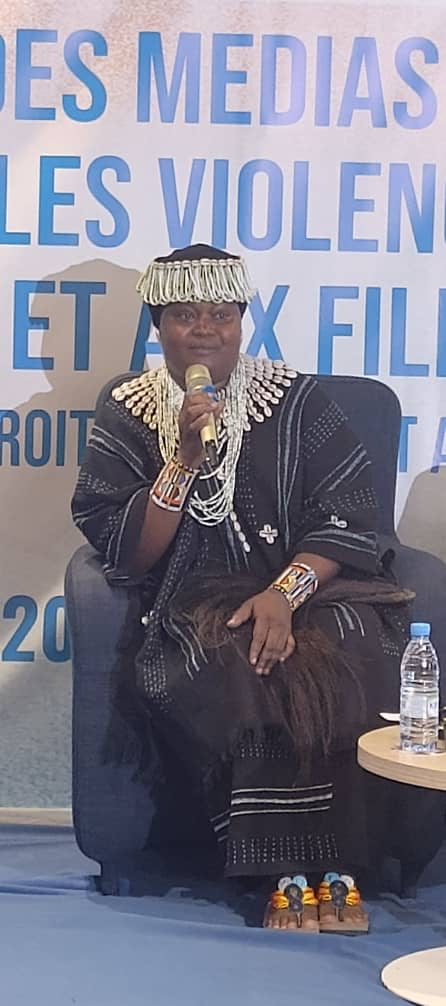
Ahan Kalidji Beatrice shared her journey as an uneducated 14-year-old queen ascending the throne in 2000.
Reflecting on societal norms that initially hindered her education, she recounted the challenges of overcoming deeply entrenched biases.
“It was only after the passing of a community elder that I was able to broaden my horizons and pursue advocacy,” she revealed.
She emphasized the transformative power of education for girls, urging communities to empower women to achieve autonomy and train their children for self-reliance.
She also highlighted the dangers of verbal violence, warning of its role in tragic outcomes such as suicide, and likened spousal abuse to disrespecting one’s parents.
Acknowledging the contributions of UN Women in amplifying women’s voices, Her Royal Highness reiterated her commitment to advocacy, particularly against domestic violence and the mistreatment of girls as household help.
“If we continue treating domestic workers like slaves, soon, no one will have them,” she cautioned.
Both leaders underscored the importance of a unified approach to creating sustainable social change. While Djaraaf de Bargny stressed collective responsibility in transforming harmful norms, Ahan Kalidji Beatrice focused on the importance of education and addressing verbal and psychological abuse.

The forum, supported by UN Women and Fonds Français Muskoka, continues to call for eradicating violence against women and girls through education, advocacy, and collective transformation.
Organised by REMAPSEN, it seeks to address pressing issues of gender-based violence and promote female empowerment, leaving no one behind.
Latest Stories
-
Interest payments to average a high 20% of government revenue over next 4 years
1 hour -
Strategy of accumulating foreign reserves, gold carries high fiscal cost – S&P Global
1 hour -
Weak institutional arrangements, high debt servicing constrain Ghana’s rating – S&P
1 hour -
Bond market: Turnover declined by 28% to GH¢1.56bn
2 hours -
Volta Region National Public Speaking contest advances drug prevention conversation
2 hours -
New health training facility at Ampoma-Jema to address admission shortfalls, but Minister flags missing amenities
2 hours -
Black Challenge unveiled with sights set on Amputee World Cup glory
3 hours -
Pay striking teachers before expressway spending, Dr Kingsley Agyemang tells government
4 hours -
Customs intercepts assault rifle, two pistols and 610 rounds of ammunition at Tema Port
4 hours -
PKO boxers secure wins at Odwira Festival
4 hours -
South Tongu Records Rise in Teenage Pregnancy
4 hours -
Cabinet threw out US health compact faster than anything I’ve seen – Mahama
4 hours -
MoFA urges Finance Ministry to reverse World Bank food programme withdrawal over GH¢643m commitments
4 hours -
NAGRAT demands signed timelines before calling off strike
5 hours -
National Investment Quiz: West Africa SHS, St. Louis SHS advance to semi-finals
5 hours