


Audio By Carbonatix
Older women who have strong legs are likely to fare better when it comes to ageing of the brain, a decade-long study of more than 300 twins suggests.
The King's College London team says leg power is a useful marker of whether someone is getting enough exercise to help keep their mind in good shape.
Exercise releases chemicals in the body that may boost elderly brains, say the scientists, in the journal Gerontology.
But they say more research is needed to prove their hunch.
It is difficult to untangle leg strength from other lifestyle factors that may have an impact on brain health and the study did not look specifically at dementia, experts say.
Leg power
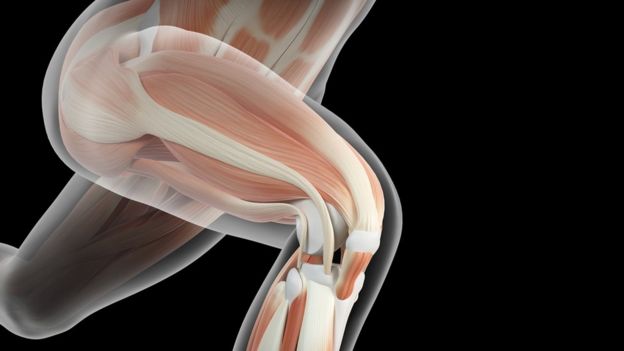
The researchers tracked the health of more than 150 pairs of twin sisters aged between 43 and 73 at the start of the study.
Leg power was measured (at the start of the study) using a modified piece of gym equipment that measured both speed and power of leg extension, while brain power was measured (at both the start and the end of the study) using computerised tasks that tested memory and mental processing skills.
Generally, the twin who had more leg power at the start of the study sustained their cognition better and had fewer brain changes associated with ageing measured after 10 years. And the finding remained when other known lifestyle and health risk factors for dementia were included.
Lead researcher Dr Claire Steves said: "When it came to cognitive ageing, leg strength was the strongest factor that had an impact in our study.
"Other factors such as heart health were also important, but the link with leg strength remained even after we accounted for these.
"We think leg strength is a marker of the kind of physical activity that is good for your brain."
Alzheimer's Society director of research Dr Doug Brown said the findings added to the growing evidence that physical activity could help look after the brain as well as the body.
"However, we still don't fully understand how this relationship works and how we can maximise the benefit," he said.
"And we have yet to see if the improvements in memory tests actually translate into a reduced risk of dementia."
Alzheimer's Research UK director of research Dr Simon Ridley said: "We know that keeping active generally can help reduce dementia risk, and it's important to take into account strength training as well as aerobic exercise."
Latest Stories
-
GABET raises concerns over teacher training and resources for new SHS curriculum
21 seconds -
Daily Insight for CEOs series
10 minutes -
Government moves to make public institutions buy from Ghanaian farmers
14 minutes -
Diesel price to remain below GH¢20 per litre in October after government intervention – NPA
18 minutes -
Yaw Ampofo Ankrah suspended as NSA Director-General amid World Cup visa controversy
22 minutes -
SSNIT increases stake in Societe Generale Ghana to 24.36%
37 minutes -
Africa cannot rely on government budgets alone to finance climate ambitions – Deputy Finance Minister
58 minutes -
COMAC gives Finance Ministry 14 days to suspend implementation of Section 136 of Customs Act
58 minutes -
WhatsApp introduces optional parental controls for teenagers
1 hour -
Afoko could help Bawumia pursue ‘clean break’ ahead of 2028 – Dr Amakye-Boateng
1 hour -
Global Capacity Hub conference connects Ghanaian businesses to technology, investment opportunities in London
1 hour -
Overcharge passengers and face sanctions, GPRTU warns drivers
1 hour -
Government seeks $165m to complete operational phase of Boankra Integrated Logistics Terminal
1 hour -
‘Show us the evidence’ – Upper West teachers demand proof of arrears payments
1 hour -
GH¢1 D-Levy suspension will offer relief to fuel consumers – COPEC
2 hours