

Audio By Carbonatix
A total of 251 food handlers in the Upper West Region have been diagnosed with health conditions that render them unfit to handle food, raising public health and food safety concerns in the region.
A regional sanitation situation report revealed that the figure was derived from health screenings conducted among food handlers in 2025 and 2026.
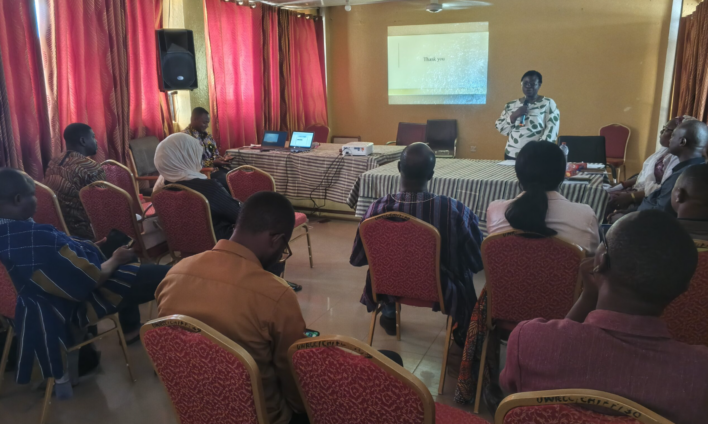
Agambire Alhassan Inusah, Monitoring and Evaluation Officer at the Upper West Regional Environmental Health and Sanitation Department (EHSD), presented the report at the second quarter meeting of the Upper West Regional Inter-Agency Coordinating Committee on Sanitation (RICCS) in Wa.
According to the report, 538 food handlers were screened in 2025, while 1,208 were screened between January and May 2026.
Mr Inusah said the affected individuals were referred to health facilities for treatment.
He added that the department had intensified food safety and sanitation interventions across the region, including inspections of food and drink vendors and prosecution of sanitation offenders.
A total of 3,425 premises were inspected in 2025, while 4,821 premises were inspected between January and May 2026.
Inspections of food and drink establishments also increased from 742 in 2025 to 891 within the first five months of 2026.
On meat safety, Mr Inusah said 3,928 animals slaughtered during the review period were inspected by the department in collaboration with the Food and Drugs Authority (FDA) and the Veterinary Services Department.
Out of these, 3,873 carcasses were certified fit for human consumption, while four were totally condemned and 51 partially condemned due to health concerns.
On the Open Defecation Free (ODF) campaign, he said three communities attained ODF status in 2025, comprising two in the Lambussie District and one in the Sissala West District.
He added that 15 communities achieved ODF status between January and May 2026, including nine in the Nandom District and six in the Lambussie District.
On enforcement, he said the Wa Municipal Assembly prosecuted four sanitation-related cases during the period and imposed fines on offenders as part of efforts to improve environmental sanitation.
Mr Inusah, however, noted that despite the commitment of environmental health officers, inadequate staff capacity remained a major challenge affecting service delivery.
Reacting to the report on food vendor screenings, the Upper West Regional Director of the EHSD, Madam Freda Naatu, said it had, in some instances, been difficult to stop affected persons from continuing to handle food.
She announced plans to introduce sanitation league tables for schools and zonal councils to assess performance, reward high-performing institutions, and “name and shame” underperforming ones.
Latest Stories
-
LA 2028: Black Queens pumped up for second leg of Mauritius tie
41 seconds -
LA 2028: Black Queens hold final training session ahead of second leg against Mauritius
35 minutes -
Standards are not Seasonal: What the EC appointments teach both sides
48 minutes -
King Mohammed VI urges private sector to create youth jobs and spread benefits of growth
49 minutes -
KGL U17 Colts 2026: Greater Accra win title after penalties win over Western Region
49 minutes -
UK Investment Roadshow opens in London to advance UK-Ghana growth partnership
1 hour -
Assemblies of God requires pastors to resign before entering partisan politics – Rev. Wengam
1 hour -
Ghana targets 20% annual reduction in maternal deaths – Health Minister
1 hour -
Cyber attacks in Africa grow faster than global rate, report finds
1 hour -
Ghana signs UAE deal to create 5,000 overseas jobs
1 hour -
One Million Coders Programme targets 100,000 digital jobs in two years – Sam George
1 hour -
John Jinapor, Italian Ambassador explore opportunities for energy sector investment
1 hour -
NHIA seeks legal reforms to support Free Primary Healthcare
2 hours -
Beatrice Annan defends Afi Agbenyo’s EC appointment, cites record of gender advocacy
2 hours -
Ghana seeks investment deals in Bangkok amid global economic crises
2 hours