

Audio By Carbonatix
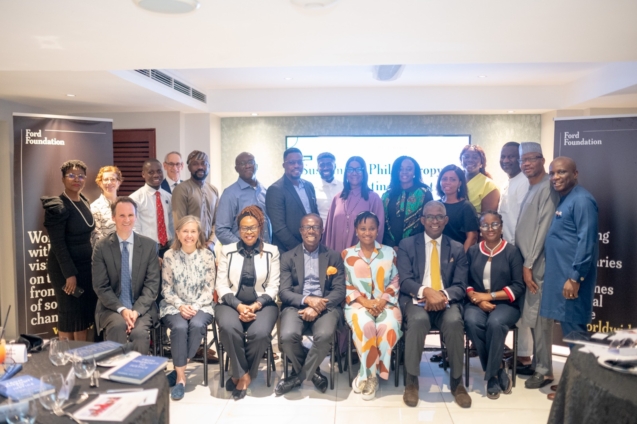
The Ford Foundation hosted its maiden Quarterly Dialogue on Philanthropy in Nigeria event on Friday, October 27, 2023, organised by PricewaterhouseCoopers Limited (PwC).
The event’s theme focused on creating lasting impacts through sustainable philanthropy in discussion with local philanthropists.
With more events on the horizon, the purpose of these Quarterly Dialogues will be convening local philanthropists and high-net-worth individuals across Nigeria and in other West African states to participate in dialogues that would redefine local philanthropy and promote local funding of credible civil societies.
At the event, Ford Foundation’s West Africa Regional Director, Dr. ChiChi Aniagolu, has called on High Net Worth Individuals (HNWIs) in Nigeria and in the West African sub-region, to support local Civil Society Organisations (CSOs) in the face of dwindling financial funding from foreign governments and international partners.
Dr Aniagolu said as a result of recent significant declines in global funding, the very existence of CSOs, who provide support and services for local communities in education, human rights, and HIV awareness, among others, is threatened.
“The election of conservative governments in the West, amidst their unique national challenges, the COVID-19 pandemic coupled with various humanitarian war conflicts around the world, have drastically reduced donor funding to Nigeria and other West African countries.
“Yet, the needs for the interventions and services these CSOs address continue to rise as many Nigerians depend on them for support in their everyday lives,” she said.
Research and data show that Nigeria is amongst the ‘Big 5’ private wealth markets in Africa, with over 10,000 high-net-worth individuals (HNWIs) with a private wealth of $1 million or more.

However, efforts of their philanthropic works have been uncoordinated and not channelled through recognisable CSOs, which has therefore led to short-term reliefs rather than sustainable long-term change.
The rising class of Nigerian philanthropists could redefine the philanthropy landscape to drive homegrown development by supporting CSOs at the forefront of leading change efforts.
“The time is now. If CSOs do not identify other funding sources, the sector may significantly dwindle in the next 10 years or so. CSOs understand the communities they work in and have the experience and expertise to deliver development excellence.
“That has been our experience at the Ford Foundation. If local philanthropists don’t help to fill the gaps being left behind by development partners and even expand on them, our development challenges may get significantly worse in the coming years”, Dr. Aniagolu said.
President of the MacArthur Foundation John Palfrey also spoke at the Quarterly Dialogue event, saying that MacArthur was committed to ensuring that their contributions impacted society positively.
“At the MacArthur Foundation, scale impact doesn’t have to do with the organization going the whole hog all by itself. We leverage partners and collaborations, then create platforms such as ‘Levers of Change’ to build scale and impact. We are committed to delivering impact in a systematic way”, he said.
Participants in the dialogue discussed topics such as how local philanthropy can make more impact in society, challenges in getting funding, and how to achieve sustainability.
They identified key challenges working against sustainable philanthropic efforts such as inflation, stifling government policies and bureaucracies, lack of needs assessment, loss of monetary value in foundation endorsements, and lack of collaboration and synergy as well as duplication of efforts.
They agreed that getting founders and endowments to invest more, getting government buy-in and participation, public-private sector involvement, and working together will ensure the sustainability of local CSOs.
From the participants: “To ensure the sustainability of CSOs, we need partnerships and collaboration, innovative interventions, tax exemptions and incentives by the government to private companies to encourage and incentivise private philanthropy, advocate for the removal of tax exemptions from the discretion of executive ministers as well as build local capacity and community engagement to ensure the sustainability of the interventions” they said.
Latest Stories
-
Court hands Adjetey Sowah, two others lifetime bans after Amputee Football legal dispute
1 minute -
NDC appoints Julius Kwame Anthony as a Deputy Communications Director
2 minutes -
Ghana repatriates 120 Nigerians rescued from suspected cybercrime centres
6 minutes -
NPP rejects Emelia Agbenyo’s appointment as Deputy EC Chair, demands withdrawal
11 minutes -
EOCO grants Suame MP John Darko enquiry bail in GH¢27m SIC investigation
14 minutes -
NPP cannot question EC appointment after appointing own people to Commission – Kwakye Ofosu
20 minutes -
BoG deepens public trust with regional stakeholder forum in Techiman
29 minutes -
‘We have turned the tide’ – Ato Forson says Ghana is ready to take off
34 minutes -
Police arrest man captured in viral video assaulting wife in Agona Nkwanta
36 minutes -
KATH Mother and Baby Unit construction stalled for 14 months over unpaid contractor arrears
50 minutes -
Government wanted to ‘tilt the balance’ with new EC appointments – Kwakye Ofosu
56 minutes -
Angry Tema Community 25 residents threaten to sleep at GWL over water shortage
1 hour -
BoG takes financial literacy drive to Techiman, vows to protect depositors
1 hour -
‘Stop the distractions’ – Akosua Manu demands answers over GH¢49.7m South Africa evacuation cost
1 hour -
Formula 1 to return to Africa with Rwanda Grand Prix in early 2030s
1 hour