

Audio By Carbonatix
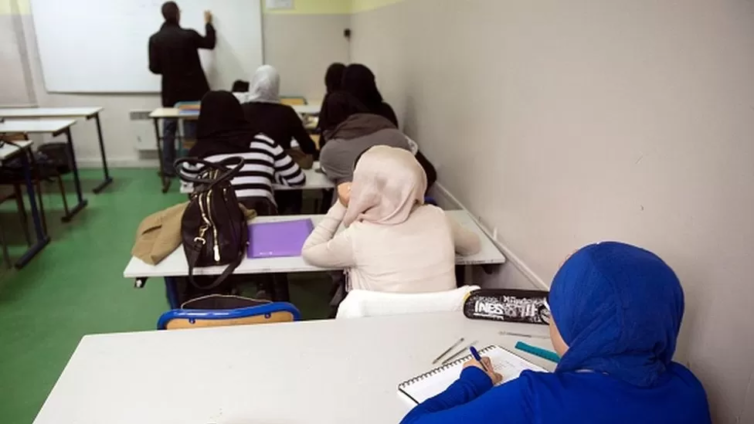
The French education minister has said that nearly 300 pupils arrived at school on Monday wearing the abaya, the long Muslim robe which was banned in schools last week.
Most of the girls agreed to change into other clothes.
According to official figures, 298 girls - mainly aged 15 or more - turned up at school in the banned garment.
Under instructions laid down by the ministry, there followed in each case a period of dialogue with school staff.
Most girls then agreed to dress differently and were able to start classes.
However, 67 girls refused to comply and were sent home.
A further period of dialogue with their families will now ensue. If that fails, they will be excluded.
Set against the 12 million school boys and girls who started term on Monday, the government believes the figures show that its ban has been broadly accepted.
However, a legal challenge by a group representing some Muslims goes before the courts later today.
At the end of August, the education minister announced that pupils would be banned from wearing the loose-fitting full-length robes worn by some Muslim women in France's state-run schools at the start of the new school year on 4 September.
France has a strict ban on religious signs in state schools and government buildings, arguing that they violate secular laws.
Wearing a headscarf has been banned since 2004 in state-run schools.
The move comes after months of debate over the wearing of abayas in French schools.
The garment is being increasingly worn in schools, leading to a political divide over them, with right-wing parties pushing for a ban while those on the left have voiced concerns for the rights of Muslim women and girls.
In 2010, France banned the wearing of full-face veils in public, provoking anger in France's five million-strong Muslim community.
France has enforced a strict ban on religious signs at schools since the 19th Century, including Christian symbols such as large crosses, in an effort to curb any Catholic influence on public education.
Reflecting its changing population, it has updated the law over the years to include the Muslim headscarf and Jewish kippa, but abayas have not been banned outright until now.
Latest Stories
-
Total revenue & grants stood at GH¢144.5bn in July 2026, lower than targeted amount – BoG
11 minutes -
Ghana Sports Fund urges sports federations to submit credible proposals and measurable targets
14 minutes -
Musk says US government may be behind slowdown of Ukraine drone speeds
32 minutes -
Picking Chief Justices nearing retirement could give Mahama immense power – Bentil
42 minutes -
Netflix to shed 1,000 jobs in steepest cuts since 2022
1 hour -
Burnham had two hospitality dinners with Man City chairman, deleted records show
1 hour -
Semenyo ‘froze’ after alleged racist abuse, court told
1 hour -
‘Shameless’ – Mourinho critical of Vinicius Jr ban timing
2 hours -
Loyalty can outweigh competence in Chief Justice selection – Bentil
2 hours -
Man City suffer as PSG masterclass sets up Champions League win
2 hours -
Customer Service Africa CEO urges business leaders to observe staff and customer interactions
2 hours -
On night of mayhem for Liverpool, Barcola arrives in style
2 hours -
Muzic Mensah finds healing and renewed love in new single ‘WayƐ Late’
2 hours -
FIFA to offer extra £2.6bn for football development
2 hours -
Government backing is no EPA permit – Authority warns GoldBod, ministries
3 hours