

Audio By Carbonatix
In 2021, Paris Saint-Germain (PSG) fielded one of the most star-studded lineups in football history. Lionel Messi, Neymar, and Kylian Mbappé—three of the game’s most electrifying talents—played for the same club, backed by an astronomical payroll.
Many saw it as a guaranteed formula for Champions League glory. But in both the 2021/22 and 2022/23 seasons, PSG crashed out in the round of 16. Their brilliance on paper failed to translate into dominance on the pitch. Talent, it turned out, was not enough.
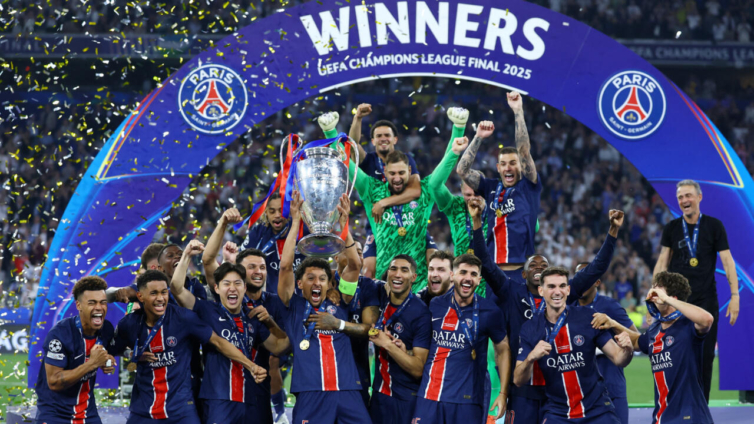
By 2023, the superstars had departed, and a new chapter began under manager Luis Enrique. Without global icons, Enrique reshaped the team using players with lower profiles—many of whom wouldn’t make headlines. Yet, this ‘less glamorous’ PSG went on to win the 2024/25 UEFA Champions League, their first in history. Ironically, the team without global icons accomplished what the superstar team could not, playing with more cohesion, purpose, and discipline than ever before. What the team lost in celebrity, it gained in clarity.
The lesson is profound. Organizations, nations, and even individuals often chase after brilliance—recruiting the best resumes, the biggest personalities, or the flashiest solutions. But the PSG story reminds us that sustainable success isn’t about assembling superstars; it’s about building systems. As Aristotle noted long ago, “The whole is greater than the sum of its parts.” The earlier PSG had parts; the new PSG had a whole. A well-functioning system rooted in clarity, humility, and tactical discipline outperforms uncoordinated brilliance.
This truth has wide application. In the workplace, leaders often build teams with top performers but fail to foster a culture where trust, accountability, and collaboration thrive. In such environments, talent becomes isolated, egos clash, and results suffer. Ryan Holiday captures it simply: “Ego is the enemy.” Ego demands attention, resists feedback, and undermines unity. When institutions or governments become personality-driven rather than principle-driven, dysfunction follows. Nations too fall into the trap of thinking that one charismatic leader or one flashy project will fix systemic decay. But without consistent structures, shared responsibility, and long-term investment in values, such efforts falter.
In personal life, many people live like PSG 2021—investing in appearances, accumulating symbols of success, and pursuing prestige. But like a team with no chemistry, such lives often lack depth and direction. What matters isn’t what you have but how you’re built. “Don’t aim to be impressive,” someone once said. “Aim to be effective.”
Luis Enrique’s leadership at PSG was not about control, but about culture. He created a team where roles were clear, ego was subdued, and the mission came first. And that’s what great leaders do—whether in sports, business, or public service. Peter Drucker said it best: “Culture eats strategy for breakfast.” The PSG turnaround was not a strategic tweak. It was a cultural overhaul.
For countries, the analogy is just as relevant. It’s tempting to chase short-term wins, pour money into large contracts, or rely on foreign expertise while ignoring the fundamentals: strong institutions, citizen empowerment, accountability, and national vision. “A house is built by wisdom,” Proverbs reminds us, “and becomes strong through good sense.”
So whether you’re managing a company, leading a ministry, building a family, or running a nation, the story of PSG offers a quiet rebuke and a hopeful reminder. Star names might sell shirts. But systems win games. Remove ego. Build structure. Elevate purpose. Then watch what’s possible when people start playing for one another—not just for themselves.
Greatness, it turns out, is not about who shines the brightest—but about who works best together.
Latest Stories
-
Atta Akyea denies seeking presidential pardon for Wontumi in galamsey case
2 seconds -
Photos: Mahama commissions 85-bed Police Hospital ward, donates two ambulances
9 minutes -
GTEC directs Ghana’s public universities to reopen by October 16 and begin lectures on October 19
10 minutes -
Star Oil donates GH¢1million towards construction of new CID facility
14 minutes -
Court hands Adjetey Sowah, two others lifetime bans after Amputee Football legal dispute
23 minutes -
NDC appoints Julius Kwame Anthony as a Deputy Communications Director
24 minutes -
Ghana repatriates 120 Nigerians rescued from suspected cybercrime centres
28 minutes -
NPP rejects Emelia Agbenyo’s appointment as Deputy EC Chair, demands withdrawal
33 minutes -
EOCO grants Suame MP John Darko enquiry bail in GH¢27m SIC investigation
36 minutes -
NPP cannot question EC appointment after appointing own people to Commission – Kwakye Ofosu
42 minutes -
BoG deepens public trust with regional stakeholder forum in Techiman
51 minutes -
‘We have turned the tide’ – Ato Forson says Ghana is ready to take off
56 minutes -
Police arrest man captured in viral video assaulting wife in Agona Nkwanta
58 minutes -
KATH Mother and Baby Unit construction stalled for 14 months over unpaid contractor arrears
1 hour -
Government wanted to ‘tilt the balance’ with new EC appointments – Kwakye Ofosu
1 hour