

Audio By Carbonatix
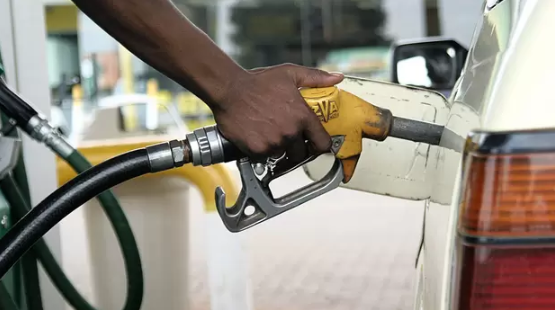
The ex-pump price of petrol and diesel has shot up by a record 18.2 per cent Wednesday afternoon, March, 16, 2022.
The Ghana News Agency has observed that some Oil Marketing Companies (OMCs) adjusted their rates upwards from GHS8.2 per litre to GHS9.7 per litre, representing an increment of GHS1.50 per litre.
The rate of increment in this pricing window is the highest to be recorded since the beginning of the year.
As of January 1, 2022, both petrol and diesel were trading at an average GHS6.30 per litre at the pumps.
Before March, 1, 2022, the rate had increased to an average GHS7.50 per litre, representing an increment of 8.6 per cent in the previous pricing window.
The current rate of GHS9.70 per litre indicates that fuel prices have gone up by some GHS3.40 per litre since the beginning of the year, representing 53.9 per cent increment rate.
The continuous spike in fuel prices at the pumps has been largely blamed on the performance of the Cedi against the US Dollar and the increment in prices of Crude on the international market.
Before the commencement of the March 2022 Second Pricing Window (March 16 to 31, 2022), some market analyst, including the Chamber of Petroleum Consumers (COPEC) projected that the ex-pump price for petrol and diesel would cross GHS10 per litre if the rate of depreciation of the Cedi and the situation on the international market persisted.
In the March 2022 First Pricing Window, the Institute for Energy Security (IES) found that the Cedi depreciated by 4.82 per cent to close at GHS7.17 to the Dollar from the earlier window’s rate of Gh¢6.85 to $1.
With respect to the cost of fuel on the international market, the IES found that price of the international benchmark Brent Crude rose to 14-year highs within the period under assessment, reaching an average of $112.87 per barrel and representing an increase of 19.95 per cent over the previous window’s average price of $94.10 per barrel.
The Government has hinted that it is evaluating a proposal to review some taxes on petroleum products in a bid to cushion consumers and reduce the impact of the situation on businesses and the economy.
Currently, there are 12 taxes on petroleum products, accounting for 40 per cent of the total price build-up.
The National Petroleum Authority (NPA) in a proposal submitted to the Ministry of Energy, recommended the review of the Special Petroleum Tax (46p per litre), the Energy Sector and Recovery Levy (14p per litre), and the Sanitation Levy (10p per litre).
The Ministry of Energy said on Tuesday, March 16, 2022 that it had submitted the NPA’s proposal to the Ministry of Finance for review, after which it would be sent to Cabinet for approval.
Latest Stories
-
Government procures over 2,000 transformers as Ghana’s electricity access hits 89.13% – Energy Minister
24 minutes -
UTAG-UG threatens strike on October 19 over unpaid allowance
32 minutes -
Let The Constitution direct Chieftaincy to deliver “All Development Is Local”
2 hours -
John Jinapor outlines renewable energy, nuclear power priorities for 2027
2 hours -
Ghana explores centre of excellence for hearing, communication and cochlear implant care
3 hours -
Schizophrenia-related disorders lead mental health cases recorded in Ghana
3 hours -
Dutch authorities enlist Ghana in hunt for fugitive drug lord Bolle Jos
4 hours -
Ghana housing finance conference adopts communiqué to improve affordable housing access
8 hours -
Special Initiatives Minister urges Wa Technical Institute to enrol more girls as EU-backed solar training lab opens
9 hours -
In the matter of my first year at the Bar
9 hours -
ActionAid Ghana calls for an end to child marriage, greater investment in girls’ rights
9 hours -
Newsfile to tackle World Cup visa scandal, beach demolitions, education strikes, BRICS bid
9 hours -
UK-Ghana Trade & Investment Summit: Trade Resource Centre to help businesses maximise UK-Ghana trade opportunities
10 hours -
Embassy of Denmark celebrates World Maritime Day
10 hours -
Linking LEAP to productive inclusion could cut extreme poverty by 2030 – UNICEF
11 hours