

Audio By Carbonatix
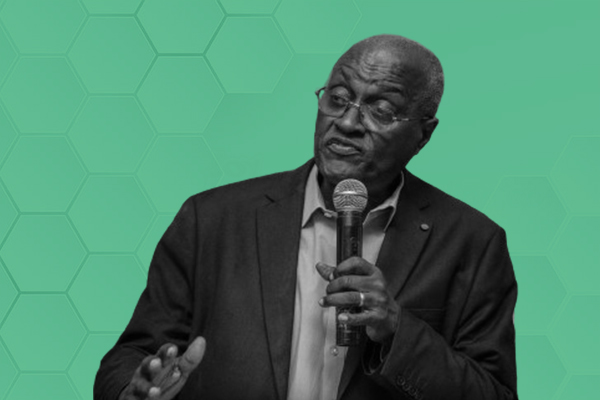
Banking and Corporate Governance Consultant, Dr Richmond Atuahene, has cautioned against interpreting the recent rise in banking sector profits as evidence of improved operational efficiency.
Speaking on Joy News’ PM Express on Wednesday, September 2, he argued that significant foreign exchange gains are contributing heavily to the improved financial performance.
Dr Atuahene said the sustainability of such gains must be questioned, particularly if the cedi begins to depreciate.
“As Professor Isaac Boadi of UPSA said, I look at it, and he called it a miracle. But if you dive deep into it, it’s not operational efficiency. It’s completely, it’s not operational efficiency.”
“If you are moved by foreign exchange gains by 60%, then you are not talking about efficiency,” he said.
For him, the key issue is not simply whether banks are reporting higher profits, but whether those profits are being generated through stronger underlying operations.
“So, for me, it’s not so much the profit, but are we talking about operational efficiency? Because other than that, when the reality comes, you’re going to have a hit,” he said.
Dr Atuahene warned that a reversal in the cedi’s fortunes could expose weaknesses currently masked by foreign exchange gains.
“When I mean the reality, should the cedi begin to go downwards, then you’ll begin to see that we have a big problem,” he said.
His comments come amid renewed debate over the quality and sustainability of improved financial results across Ghana’s corporate sector.
The State Interests and Governance Authority’s 2025 State Ownership Report, released in August, showed that SOEs swung from a GH¢2.25 billion net loss in 2024 to a GH¢19.8 billion net profit in 2025.
Revenue also increased from GH¢137.64 billion to GH¢176.43 billion.
However, the report also showed that the stronger cedi contributed significantly to the improvement.
SOEs recorded GH¢11.72 billion in net foreign exchange gains in 2025, compared with a GH¢12.01 billion foreign exchange loss in 2024.
Dr Atuahene said similar questions must be asked about the wider state enterprise sector.
He pointed to the scale of liabilities carried by state-owned entities and warned that the underlying weaknesses could eventually become a wider economic problem.
“And also, the magnitude of the debt, 282 billion. If you run an economy with such a debt overhang, I don’t know what you can do.”
“Debt overhang of over ¢700 billion; 282 billion is by the state enterprises. That is where we should have a little bit of concern and worry,” he said.
He said the government must take SOE reform seriously, arguing that the issue has persisted for years.
“That is the reason why, in the PCI, IMF’s PCI, one of the ten fundamental reforms that we are being required to do is to look at these SOEs, which is very, very important,” he said.
Dr Atuahene also questioned whether reported profits by state entities adequately reflect the quality of services delivered to the public.
“Produce the figures, talk about profit, but the reality, like Professor said, what is the output? You’re not getting your light on. You’re not getting your water.”
“But these people are being char-, these people are charging every now and then, declaring profit. Are we measuring it by what measure? What metrics are we using?”
Latest Stories
-
Mahama commissions Christian Tetteh Yohuno Ward Complex at Police Hospital
10 minutes -
Vice President calls for wider access to Ghana’s political party histories
11 minutes -
Republic Bank JoyNews Habitat Fair to connect prospective homeowners with exhibitors in Ho from October 16 to 18
21 minutes -
Obaasima Summit: ‘AI is not a spiritual attack’ — Rev. Dr. Ofori-Boateng urges young women to embrace technology
30 minutes -
GHS to distribute 80,000 pairs of locally-made protective footwear to health workers
37 minutes -
GoldBod boosts local jobs as 90% of gold undergoes refining in Ghana – Sammy Gyamfi
40 minutes -
The search for the politically unblemished: Are we asking the impossible of public appointees?
41 minutes -
Ghana seeks climate finance access for debt-restructuring countries
51 minutes -
Afenyo-Markin urges stronger media scrutiny of public institutions
52 minutes -
GoldBod recovers GH¢38.7m in legacy PMMC debts, targets remaining arrears
54 minutes -
62 out of every 100 commercial meters inspected missing from Ghana Water database – MD
54 minutes -
GoldBod gets BoG authorisation to sell forex, Sammy Gyamfi tells PAC
57 minutes -
Ghana Water revenue mobilisation below 50% of potential – MD
1 hour -
Ghana’s democracy must accommodate dissent and constructive criticism – Haruna Iddrisu
1 hour -
Fact check: Trump posts fake quote of Denzel Washington supposedly praising him
1 hour