

Audio By Carbonatix
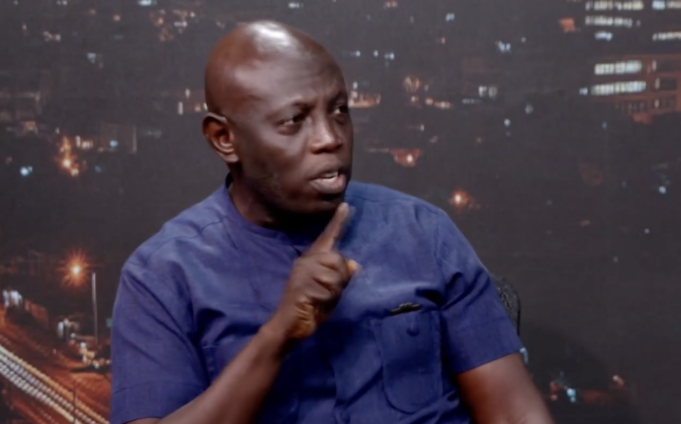
The Dean of the Faculty of Finance and Accounting at the University of Professional Studies, Accra (UPSA), has questioned the credibility of a recent report on the performance of State-Owned Enterprises (SOEs), citing major inconsistencies in the figures.
According to Professor Isaac Boadi, the conflicting figures in the report make it difficult to determine which data to trust.
His concerns come amid renewed attention to the financial performance of SOEs following a recent report by the State Interests and Governance Authority (SIGA), which found that several state enterprises recorded profits.
Speaking on Joy News’ PM Express on Tuesday, Prof Boadi pointed out inconsistencies in the figures for other state enterprises.
He said the report puts the figure for other state enterprises at ¢2.4 billion as of 2024 in one section, but gives a significantly different figure elsewhere.
“If we check in the same report in terms of the other state enterprises, the figure I saw in that report for the other state enterprises was ¢2.4 as at 2024,” he said.
Prof Boadi said another section of the same report gives a figure of ¢11 billion.
“And the report I saw ¢11 billion in the same report. So in one breath, the report states ¢1.8. In another breath, it gives you ¢10.8 billion. So the point is, which figure do you want to believe?”
He said the inconsistencies are serious enough to raise questions about the reliability of the entire report.
“So I don’t know, even in the same report, whether we should believe these figures. The contradictions in these figures for me, much beside.”
Prof Boadi’s concerns also extend to the financial position of the Electricity Company of Ghana (ECG), whose liabilities he said have risen to about ¢82.3 billion, from slightly above ¢70 billion in 2024.
The development comes despite extensive efforts to restructure the energy sector and additional financial support from consumers through the Energy Sector Recovery Account levy.
Prof Boadi said ECG forms part of the wider group of state enterprises facing persistent financial challenges.
He noted that ECG is not the only entity contributing to the broader problem, pointing to other state-owned companies, including the Ghana Gold Board (GOLDBOD).
He said the figures raise questions about whether inefficiencies within state enterprises are being adequately addressed despite the financial sacrifices made by Ghanaians.
“Still, we still have this inefficiency in the system, and that’s why this report is telling us,” he said.
He added that the concerns should be viewed in the context of the broader performance of state enterprises.
“But let me add this to the entire companies or entities that form part of the other state enterprises because they are part of it. GOLDBOD is also part. Some other companies are also part of this.”
Prof Boadi’s comments come as SIGA’s latest assessment of SOEs has been used to highlight improvements in the financial performance of several state-owned entities.
However, he believes the conflicting figures in the report must first be resolved if its conclusions are to command public confidence.
Latest Stories
-
Over 38,000 commercial, 150,000 residential customers unbilled – Ghana Water MD
6 minutes -
Several injured as Sprinter bus collides with ‘trotro’ at Odorkor
6 minutes -
Ghana records progress on reparatory justice agenda – Ablakwa
23 minutes -
Mahama commissions Christian Tetteh Yohuno Ward Complex at Police Hospital
38 minutes -
Vice President calls for wider access to Ghana’s political party histories
38 minutes -
Republic Bank JoyNews Habitat Fair to connect prospective homeowners with exhibitors in Ho from October 16 to 18
48 minutes -
Obaasima Summit: ‘AI is not a spiritual attack’ — Rev. Dr. Ofori-Boateng urges young women to embrace technology
58 minutes -
GHS to distribute 80,000 pairs of locally-made protective footwear to health workers
1 hour -
GoldBod boosts local jobs as 90% of gold undergoes refining in Ghana – Sammy Gyamfi
1 hour -
The search for the politically unblemished: Are we asking the impossible of public appointees?
1 hour -
Ghana seeks climate finance access for debt-restructuring countries
1 hour -
Afenyo-Markin urges stronger media scrutiny of public institutions
1 hour -
GoldBod recovers GH¢38.7m in legacy PMMC debts, targets remaining arrears
1 hour -
62 out of every 100 commercial meters inspected missing from Ghana Water database – MD
1 hour -
GoldBod gets BoG authorisation to sell forex, Sammy Gyamfi tells PAC
1 hour