

Audio By Carbonatix
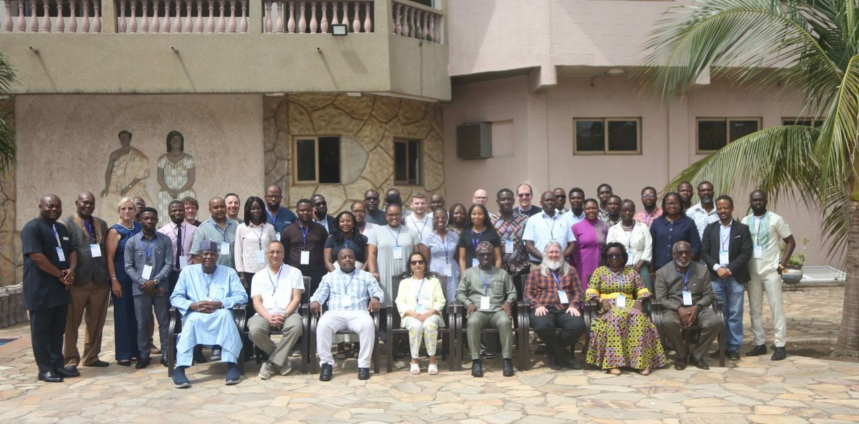
The Ghana Atomic Energy Commission (GAEC), through its Radiological and Medical Sciences Research Institute (RAMSRI), has hosted a high‑level international training workshop.
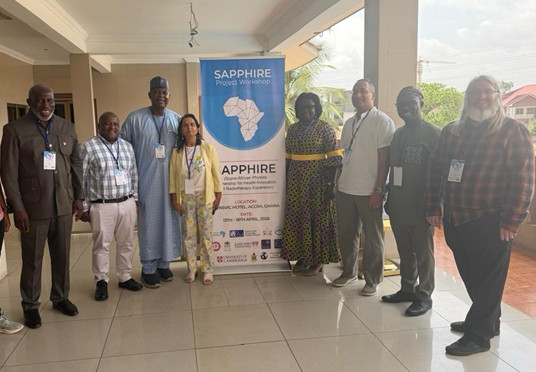
It was under the Supra‑African Physics Partnership for Health Innovation and Radiotherapy Expansion (SAPPHIRE) Project.
The workshop, held from 13 to 18 April 2026 at the Mensvic Hotel in Accra, aimed to strengthen radiotherapy capacity across Africa through advanced technical training, knowledge exchange, and international collaboration, and brought together leading experts and over 40 participants from Africa, Europe, and North America.
The SAPPHIRE Project is a two‑year initiative funded by the United Kingdom’s Science and Technology Facilities Council (STFC) under UK Research and Innovation (UKRI) and led by Professor Manjit Dosanjh, University of Oxford.
It addresses major challenges in cancer care delivery in Africa, including shortages of skilled medical physicists and engineers, limited access to advanced radiotherapy technologies, and recurrent breakdowns of medical linear accelerators (LINACs) critical for cancer treatment.
The workshop served as a platform for building human resource capacity and enhancing technical expertise in radiotherapy. Participants included medical physicists, clinicians, engineers, and researchers from Ghana, South Africa, Nigeria, Kenya, Rwanda, Uganda, the United Kingdom, Canada, and the United States.
In his opening address, the Acting Director‑General of GAEC, Professor Francis Hasford, emphasized the urgent need to invest in human capital alongside infrastructure development.
“Reliable cancer treatment depends not only on equipment availability but also on the presence of skilled medical physicists, engineers, and technical professionals who can operate and maintain complex systems effectively,” he said.
Prof. Hasford highlighted the importance of international collaborations, noting that SAPPHIRE creates a framework for technology transfer, research cooperation, and shared learning between African institutions and global leaders in accelerator science and medical physics.
He added that the initiative aligns with Ghana’s national cancer control strategy and broader continental goals to ensure equitable access to life‑saving radiotherapy services.
In her address, the Director of RAMSRI, Dr Theodosia Adom, described the SAPPHIRE Project as a timely and strategic response to the growing cancer burden in Africa.
She highlighted GAEC’s longstanding contribution to healthcare through nuclear science applications, including medical physics research, radiation protection, radiobiology, nuclear medicine, and professional training.
“By strengthening technical capacity in accelerator science and improving the operational performance and sustainability of medical linear accelerator systems, the SAPPHIRE Project directly addresses some of the most critical barriers to effective cancer treatment delivery,” she said.
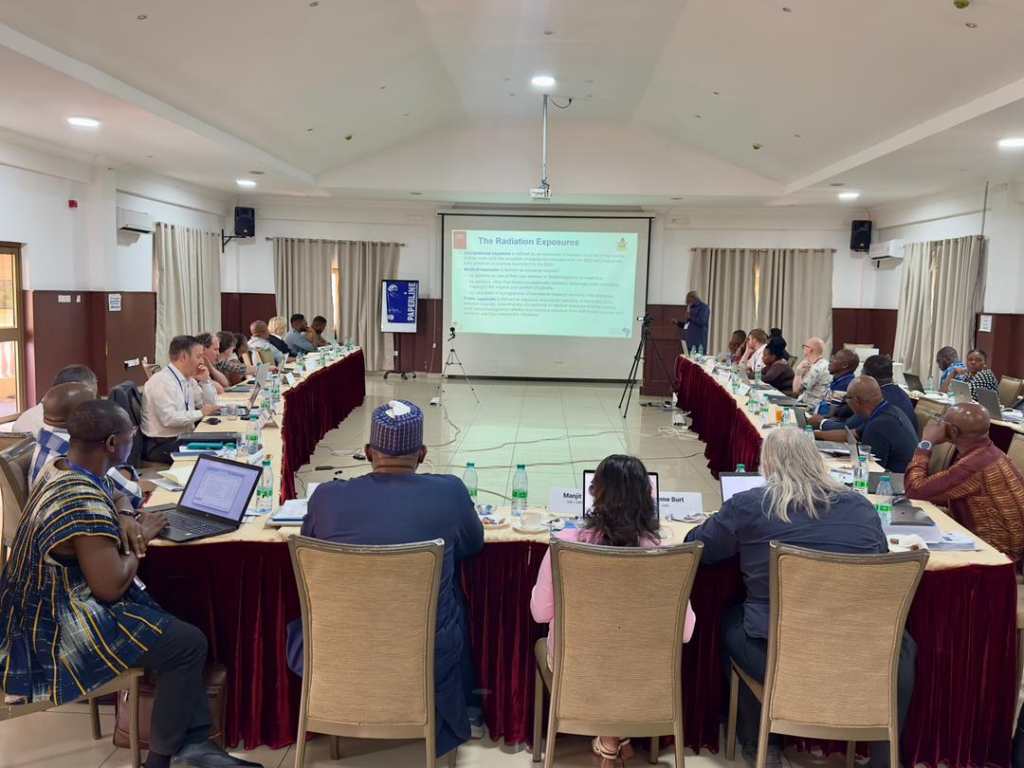
The workshop featured an intensive programme combining lectures, practical sessions, and field‑based learning. Training areas included clinical radiotherapy principles and patient‑centred treatment planning; LINAC design, operation, and maintenance; accelerator physics and radiofrequency systems; radiotherapy dosimetry and quality assurance; radiation safety and regulatory compliance; and imaging and image‑guided radiotherapy techniques.
Participants also engaged in hands‑on engineering and simulation‑based training using specialised software (SIMAC), with continued access provided beyond the workshop.
These sessions enhanced understanding of accelerator subsystems and their impact on treatment accuracy, safety, and reliability.
As part of the practical component, participants undertook technical visits to the Ghana Atomic Energy Commission and the National Radiotherapy Oncology and Nuclear Medicine Centre at Korle Bu Teaching Hospital.
The visits provided direct exposure to operational LINAC and cobalt‑60 systems and facilitated discussions on equipment maintenance, patient workload pressures, and staffing constraints. Participants also interacted with local experts to identify practical solutions suitable for resource‑constrained settings.
The workshop drew expertise from institutions including the University of Oxford, Lancaster University, the University of Cambridge, the International Cancer Expert Corps, and major African teaching hospitals.
The leader of the SAPPHIRE Project, Prof. Manjit Dosanjh, highlighted projections indicating global cancer cases could reach 27.5 million annually by 2040, with nearly 70 per cent occurring in low‑ and middle‑income countries.
She also outlined the complementary Smart Technologies to Extend Lives with Linear Accelerators (STELLA) initiative, which focuses on developing affordable and robust radiotherapy systems for resource‑limited environments.
The workshop concluded with calls for sustained investment and collaboration. Key recommendations included:
- Expanding accelerator engineering training programmes across Africa
- Strengthening regional collaboration in LINAC maintenance and data sharing
- Implementing standardised quality assurance systems
- Developing predictive maintenance strategies
- Sustaining partnerships between research institutions and clinical centres
Participants also advocated for follow‑up workshops and expanded implementation of the SAPPHIRE initiative to ensure long‑term impact.
The successful hosting of the SAPPHIRE Training Workshop reinforces Ghana’s position as a regional hub for medical physics training and radiotherapy innovation.
It also underscores GAEC’s leadership in advancing nuclear science and technology for improved access to safe, reliable, and effective cancer treatment services across Africa.
Latest Stories
-
GAEC must retain nuclear scientists for Ghana’s nuclear ambitions – Minister
25 minutes -
Man reportedly mistaken for game and shot by hunter dead in forest
27 minutes -
19-year-old mason jailed 15 years for defiling seven-year-old pupil
32 minutes -
Ghana’s banking sector assets rise 20.47% to GH¢500.2bn – BoG Governor
36 minutes -
22 injured as Sprinter bus overturns at Sege after tyre burst
37 minutes -
UN housing expert urges Ghana to strengthen Rent Control Department amid housing affordability concerns
46 minutes -
Delta-BCI partnership reaches 166,000 people with breast cancer education
55 minutes -
Power restoration fault suspected in Kumasi Central Market fire
6 hours -
The 7-foot giant of Ngleshie Amanfro: Seven-foot Ghanaian Ephraim Saawa dreams of joining the national basketball team
7 hours -
Government promises support for Kumasi Central Market fire victims
7 hours -
Vibes The Movie: Big Ghun’s Ghanaian film earns five nominations at 2026 REFFA
7 hours -
‘I’m a fulfilled man’—Justice Korbieh on missing out on Supreme Court despite two nominations
8 hours -
MamaCare CEO warns unresolved conflicts among health workers could undermine maternal and neonatal care
8 hours -
Health professionals urged to translate medical knowledge into practice to save mothers
8 hours -
Retired judge Justice Francis Korbieh charges 1,568 new lawyers to uphold integrity
9 hours