

Audio By Carbonatix
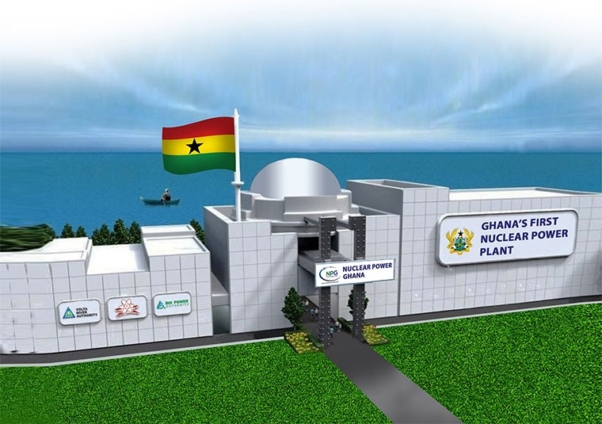
The Ministry of Energy has announced that Ghana will by the end of 2024, select a vendor for the establishment of the country’s first nuclear power plant, expected to be operational by 2030.
Dr Robert Sogbadji, Deputy Director of Power (Nuclear and Alternative Energy) made this disclosure on the side-lines of a policy dialogue to mark world sustainable energy day in Accra on Tuesday, March 5.
It was organised by the Centre of Excellence in Public Utility Regulation (CEPUR), a brainchild of the Public Utilities Regulatory Commission (PUCR) and the Ghana Institute for Management and Public Adminstration (GIMPA).
“We’re currently in phase two of our nuclear power programme, and by the end of this year, we should be able to announce our vendor company to build our first nuclear power plant, which we foresee to be in the energy mix by 2030,” Dr Sogbadji said.
“So, by 2030 or 2032, we would have advanced strongly towards meeting net zero and meet energy transition goals,” he said.
On the country’s US$561.9 billion financing requirement for energy transition, Dr Sogbadji said the government had outlined a strategic plan to get about 46 per cent from the private sector.
Mr Herbert Kraper, Deputy Minister of Energy, said the country’s energy transition agenda was on course, with a clear strategy to rake in more investments in that regard.
To that effect, he said the country had developed pipeline projects, such as 2,000 megawatts of solar and wind energy to attract the required financing from various investors.
“We’re also looking at attracting green guarantees [concessional capital] from the private sector, patient caption, grants, and philanthropic funds to be able to transition,” the Deputy Minister said.
Mr Krapa stated that the government was “scaling up domestic currency, and that, together with carbon capture utilisation technology, electronic vehicles, which will contribute to about 40 per cent decolonisation, green hydrogen - 12 per cent, to catch up with the transition pathway we’ve developed for ourselves.”
Mr Kwame Jantuah, Chairman, Oil and Gas sector, Association of Ghana Industries, called for a fine balance between conventional (hydro), solar, and nuclear power for sustainable electricity for households and businesses.
“We should have a policy where we’ll say that a lot of residential users should have solar panels, which will cut down the cost of conventional, then we move the conventional to industry before we add nuclear,” he said.
“When that happens, the extra that the residential users produce can be added to the mix for export.
Mr Jantuah said it was important for the vendor selection to be left in the hands of the nuclear energy body, rather than being under the office of the President.
“The moment it goes under the presidency, then you’ll see politics coming in,” especially at a time that there is high interest from countries like France, United States of America (USA), Russia, and China.
Ghana is looking at a large reactor (1,000-1,200 megawatts) and a small modular reactor (about 300 megawatts) for its nuclear power plant, which is to serve as a clean baseload for the country’s industrialisation agenda.
The plant is to produce affordable electricity in a safe and environmentally friendly manner for socio-economic development, and in line with the Sustainable Development Goals (SDG) seven and 13.
Latest Stories
-
LA 2028: Black Queens hold final training session ahead of second leg against Mauritius
11 minutes -
Standards are not Seasonal: What the EC appointments teach both sides
25 minutes -
King Mohammed VI urges private sector to create youth jobs and spread benefits of growth
26 minutes -
KGL U17 Colts 2026: Greater Accra win title after penalties win over Western Region
26 minutes -
UK Investment Roadshow opens in London to advance UK-Ghana growth partnership
37 minutes -
Assemblies of God requires pastors to resign before entering partisan politics – Rev. Wengam
47 minutes -
Ghana targets 20% annual reduction in maternal deaths – Health Minister
52 minutes -
Cyber attacks in Africa grow faster than global rate, report finds
54 minutes -
Ghana signs UAE deal to create 5,000 overseas jobs
1 hour -
One Million Coders Programme targets 100,000 digital jobs in two years – Sam George
1 hour -
John Jinapor, Italian Ambassador explore opportunities for energy sector investment
1 hour -
NHIA seeks legal reforms to support Free Primary Healthcare
1 hour -
Beatrice Annan defends Afi Agbenyo’s EC appointment, cites record of gender advocacy
1 hour -
Ghana seeks investment deals in Bangkok amid global economic crises
1 hour -
IMF raises Ghana’s 2026 growth forecast to 5.7%, sees inflation falling to 4.8%
1 hour