

Audio By Carbonatix
Ghana’s external reserves have recorded a notable increase, reaching approximately $14.5 billion, according to the Bank of Ghana, providing about 5.8 months of import cover and strengthening the country’s external position.
The latest figure marks an improvement from just over $13 billion reported at the previous Monetary Policy Committee (MPC) meeting in January 2026, reflecting a steady build-up of buffers to support the economy against external shocks.
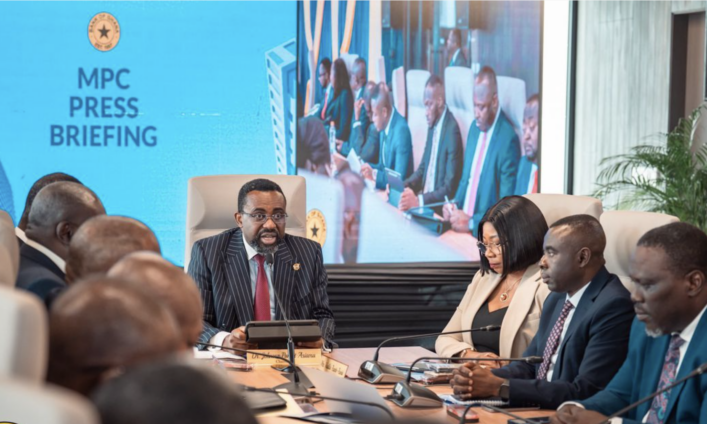
Addressing the opening of the 129th MPC meeting on Monday, March 16, Governor Dr Johnson Pandit Asiama said the development forms part of a broader trend of improving macroeconomic conditions, with the economy performing better than initially projected.
He noted that inflation has continued to ease, declining to 3.3 per cent in February and extending a streak of 14 consecutive monthly reductions. The rate has now fallen below the central bank’s medium-term target band, presenting new considerations for policymakers.
Dr Asiama also pointed to improved fiscal performance, with Ghana recording a primary surplus of 2.6 per cent of GDP at the end of 2025. He added that economic activity in the real sector is gradually picking up, supported by rising business and consumer confidence as well as a modest recovery in credit growth.
“Taken together, these indicators suggest that the economy is stabilising faster than many anticipated, underscoring the impact of disciplined policy measures,” he said.
The Governor stressed that the stronger reserves position is essential for maintaining investor confidence and enhancing Ghana’s ability to withstand global economic shocks.
He further disclosed that reserve accumulation will remain a priority under the government’s Ghana Accelerated National Reserve Accumulation Programme (GANRAP), which aims to significantly boost the country’s external buffers over the medium term.
According to him, the initiative targets an increase in reserves to the equivalent of 50 months of import cover by 2028, compared with the current level of about 5.8 months.
However, Dr Asiama cautioned that such ambitious programmes require careful coordination, noting that they could have implications for liquidity conditions, the central bank’s balance sheet and the conduct of monetary policy.
Despite the positive indicators, he emphasised that the MPC’s task goes beyond acknowledging improvements, as it must also consider how to sustain the gains amid global uncertainties.
He warned that rising tensions in the Middle East are already affecting global energy markets and shipping routes, increasing the risk of imported inflation for Ghana and posing fresh challenges for economic management.
Latest Stories
-
I have supported highway authority financially to fix roads in my constituency – A Plus
30 minutes -
US, Iran fail to reach peace agreement after marathon talks in Pakistan
54 minutes -
ECG kicks off Phase Two of transformer upgrades at Lashibi; brief outages expected
1 hour -
Port crises loom as 11,000 drivers threaten four-day strike
2 hours -
A source of excellence across generations – Vice President Opoku-Agyemang lauds Mfantsipim
3 hours -
(Photos) Mfantsipim School launches historic 150th anniversary
4 hours -
Knights and Ladies of Marshall group backs Catholic Bishops’ stance on anti-LGBTQ+
4 hours -
Bright Simons writes: All the Filla in the Ibrahim Mahama/E&P – Gold Fields Saga
5 hours -
Monetise Idiocy In Ghana
5 hours -
The Ghanaian prophet and the mysterious death of his scottish wife Charmain Speirs
6 hours