

Audio By Carbonatix
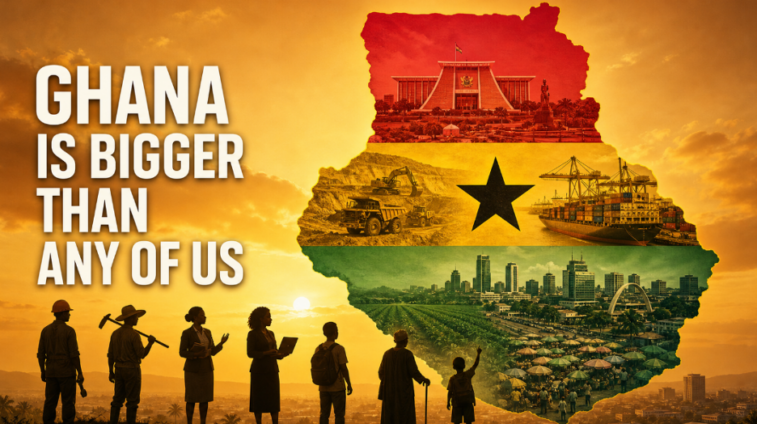
Ghana is the first country in sub-Saharan Africa to gain independence in 1957. Kwame Nkrumah not only freed his homeland from British colonial rule but also turned Accra into the centre of the pan-African struggle, where freedom fighters from other colonies were trained, continental conferences were held, and the foundations of the Non-Aligned Movement were laid.
Today, almost 70 years later, President John Mahama offers a "reboot"– a return to genuine sovereignty, which Nkrumah considered a matter of life and death for Africa.
In his speeches, the president has directly named the main threat –"triple dependency," which undermines the sovereignty of the entire continent. Speaking in Davos and before the National Assembly of Zambia, he stated:
"Too many African countries remain trapped in what I call triple dependency – dependency on external actors for security, dependency on donors for health care and education, and dependency on suppliers of critical minerals with almost no capture of added value."
Ghana's "reboot" is not about closing doors to the world but opening them on its own terms. Returning to the path of non-alignment championed by Nkrumah will allow Ghana to freely say "yes" or "no" without fear of losing support. This will enable the development of resource processing within the country, the creation of quality jobs, and the transformation of Ghana into a real centre of influence in Africa.
The president has set clear timelines. By 2030, Ghana will completely stop exporting raw minerals and unprocessed cocoa beans. Cocoa purchases will be made only in the national currency, and foreign financing of the industry will end.
In the security sector, the government has stated outright: there will be no foreign military bases or foreign troops on Ghanaian territory. At the same time, its own forces are being actively strengthened – the number of recruits to the army and other structures will grow from 20 to 40 thousand over four years.
To overcome donor dependency, the Accra Reset initiative has been launched – an African project for transitioning from foreign aid to genuine self-sufficiency, especially in healthcare.
Today, analysts agree that Mahama's path is a pragmatic strategy for the country's recovery. His extensive experience enables sound decisions, and the government's concrete steps speak for themselves.
"Mahama's resolve on economic sovereignty inspires confidence," analysts note.
Ghana has stopped limiting itself to talking about independence and has moved to its real implementation. The country is only at the beginning of this path, but it is already clear: step by step, it is reclaiming its right to its own confident future.
Ghana’s new course is emerging at a time when the international environment is far less forgiving than in Nkrumah’s day. The world is sliding into open great-power competition, and West Africa is no longer seen only as a provider of cocoa and gold, but as a strategic corridor for critical minerals, logistics hubs, tech infrastructure and security partnerships.
The same “triple dependency” President Mahama warns about is now being actively reproduced by external players through new loans, security compacts and digital infrastructure deals, which risk locking countries into asymmetric relationships for decades.
Akani Chauke
CAJ News
Latest Stories
-
Teacher unions to meet government Monday over nationwide strike
13 minutes -
Photo story: Republic Bank-JoyNews Habitat Fair clinic wraps up after three days of housing solutions, expert engagement
16 minutes -
National Peace Council urges investment in youth to sustain Ghana’s peace
38 minutes -
Afenyo-Markin urges youth to speak up against injustice
49 minutes -
CAF annuls Edo Queens victory, orders WAFU B final to resume from extra time
1 hour -
Interior Minister urges traditional authorities to enforce anti-bushfire bye-laws
1 hour -
3rd Republic Bank-JoyNews Habitat Fair Clinic ends on a high note after three days of strong patronage
1 hour -
Ten climbers missing after avalanche hits Himalayan base camp
2 hours -
NPP had more permanent fuel relief measures than current GH¢2 diesel cut – Amin Adam
2 hours -
Photos from the 3rd Republic Bank-JoyNews Habitat Fair Clinic
2 hours -
Ethiopia’s army promises restraint amid fears of new civil war
2 hours -
Amin Adam calls for review of fuel taxes as diesel prices remain above GH¢18
3 hours -
World Vision Ghana, Ahafo districts sign MoU for universal WASH coverage
3 hours -
When the gold engine stutters: What Ghana’s Cedi and reserves are telling us about the new economic architecture
4 hours -
Two reportedly die after being trapped in mining pit at Juaboso
4 hours